
Master Business Awards Application for Local Success
Learn the business awards application process with clear, step-by-step guidance to boost your local business recognition and community presence.
Master Business Awards Application for Local Success

Every year, thousands of American companies compete for business awards that can transform credibility and visibility. With so many options and strict requirements, even the most experienced teams find the process challenging. Learning how to identify relevant awards, prepare compelling applications, and manage submissions—while standing out in a crowded field—makes all the difference. This guide reveals proven strategies and insider tips to help your American business get recognized where it matters most.
Table of Contents
- Step 1: Research Relevant Business Awards Opportunities
- Step 2: Gather Key Business Information and Evidence
- Step 3: Compose Persuasive Application Narratives
- Step 4: Submit the Business Awards Application Properly
- Step 5: Track Application Status and Prepare for Next Steps
Quick Summary
| Key Point | Explanation |
|---|---|
| 1. Research Specific Awards | Identify business awards that align with your industry, size, and strengths for better recognition opportunities. |
| 2. Collect Compelling Evidence | Gather quantifiable data and testimonials that showcase your business achievements to strengthen your application. |
| 3. Craft an Engaging Narrative | Transform your data into a captivating story focused on challenges, solutions, and impacts to attract judges’ attention. |
| 4. Follow Submission Guidelines | Ensure your application meets all requirements and deadlines for a professional and complete submission. |
| 5. Track and Prepare Post-Submission | Monitor application status and prepare for various outcomes, maintaining a proactive approach for future growth. |
Step 1: Research Relevant Business Awards Opportunities
Researching business awards requires strategic planning and a systematic approach. Your goal is to identify opportunities that align perfectly with your business profile and achievements.
Start by creating a comprehensive list of potential awards in your industry. Look beyond generic recognitions and focus on awards that specifically match your business sector, size, and unique strengths. Some awards, like the Shingo Prize for Organizational Excellence, recognize outstanding operational performance across various industries. Others, such as the Global Award for Entrepreneurship Research, target specific professional achievements.
Utilize multiple research channels to compile your list. Check industry associations, local chambers of commerce, regional business journals, and professional networks. Many awards have specific eligibility criteria, so carefully review requirements before investing time in an application. Some key sources to explore include:
- Local business associations
- Regional economic development organizations
- Professional industry groups
- Online award directories
- State and national business recognition programs
Pro tip: Create a tracking spreadsheet to document potential awards, their deadlines, submission guidelines, and alignment with your business strengths. This organized approach will help you prioritize and prepare targeted applications efficiently.
In the next step, you’ll learn how to evaluate these awards and select the most strategic opportunities for your business growth.
Step 2: Gather Key Business Information and Evidence
Compiling compelling evidence is the backbone of a successful business award application. Your goal is to transform your business achievements into a persuasive narrative that showcases your unique strengths and measurable results.

Start by collecting comprehensive documentation that demonstrates your business performance. Birmingham City University recommends assembling thorough evidence including client testimonials, detailed project reports, financial statements, and concrete success metrics. Proof Communications emphasizes the importance of quantifiable data that clearly illustrate your business accomplishments.
Organize your evidence strategically across several key categories:
-
Financial Performance
- Revenue growth rates
- Profit margins
- Investment returns
-
Operational Achievements
- Productivity improvements
- Cost reduction strategies
- Efficiency metrics
-
Customer Impact
- Satisfaction ratings
- Testimonials
- Case studies
-
Innovation Metrics
- New product developments
- Process improvements
- Technology implementations
Pro tip: Create a digital folder with clearly labeled subfolders for each evidence category. Include both summary documents and detailed supporting materials. This systematic approach ensures you can quickly reference and extract relevant information during the application process.
In the next step, you will learn how to transform this raw data into a compelling award submission narrative.
Step 3: Compose Persuasive Application Narratives
Crafting a compelling award application narrative is an art form that transforms raw data into an engaging story of business success. Your objective is to create a narrative that not only meets award criteria but captivates the judges with your unique business journey.
Birmingham City University recommends organizing achievements into compelling narratives that highlight your distinctive strengths and directly align with the award’s specific requirements. Proof Communications suggests using clear, concise language that focuses on storytelling and showcases your most impactful business accomplishments.
Structure your narrative around these key storytelling principles:
-
Challenge
- Describe the initial business problem or market obstacle
- Explain the complexity of the situation
- Highlight what was at stake
-
Solution
- Detail your innovative approach
- Showcase your strategic thinking
- Explain how your solution was unique
-
Impact
- Present quantifiable results
- Demonstrate measurable business improvements
- Connect outcomes to broader business goals
Pro tip: Write in an active voice and use specific, vivid language. Instead of saying “improvements were made,” say “we increased productivity by 42% through targeted process redesign.” This approach transforms bland statements into powerful narratives that capture attention.
In the next step, you will learn how to refine and polish your award submission to maximize your chances of success.
Step 4: Submit the Business Awards Application Properly
Submitting your business awards application requires meticulous attention to detail and strategic preparation. Your goal is to ensure a flawless submission that presents your business in the most professional and compelling manner possible.
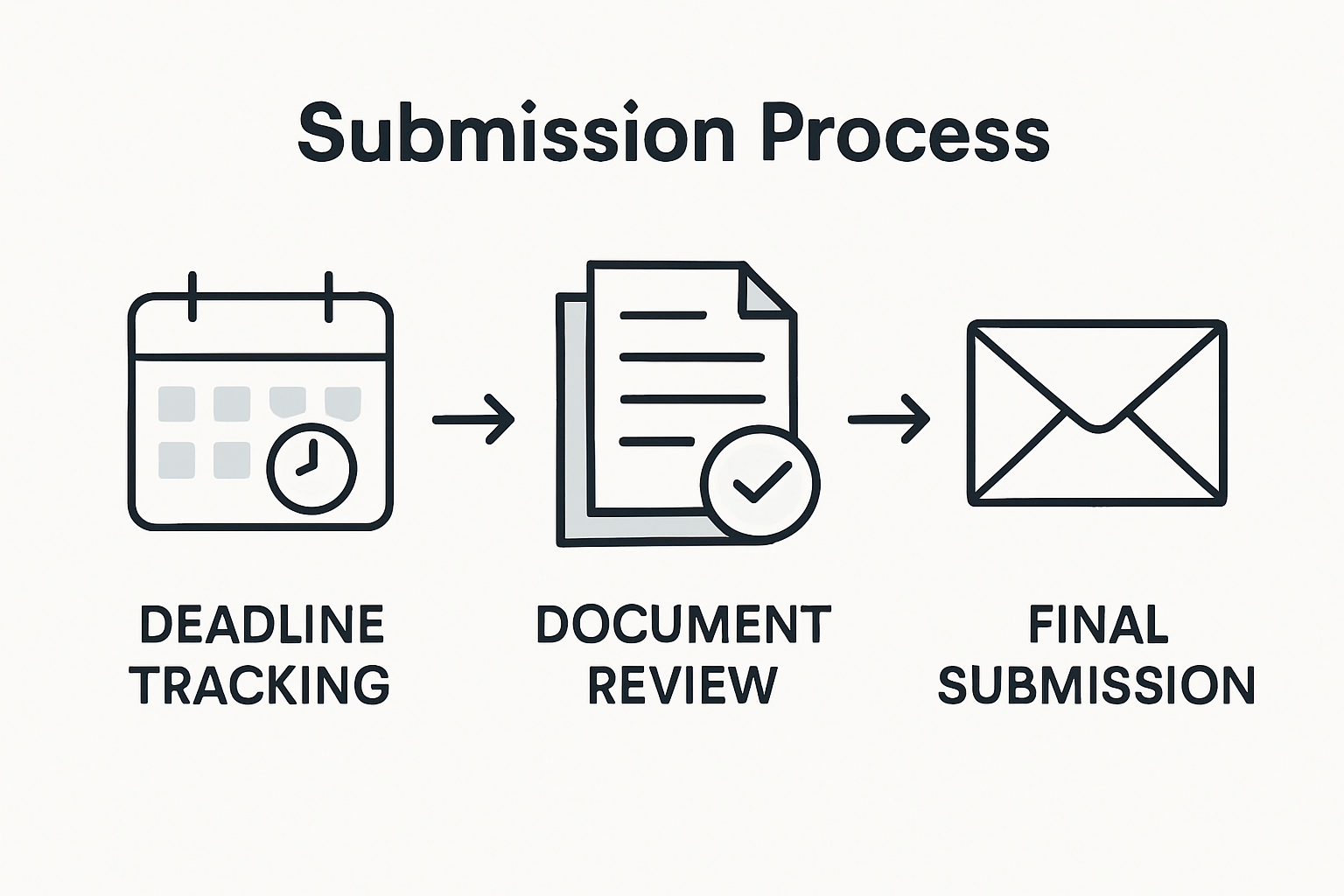
Birmingham City University advises adhering strictly to submission guidelines, emphasizing the critical importance of including all required documents and meeting precise deadlines. Proof Communications recommends a comprehensive final review to verify every aspect of your submission before sending.
Create a systematic submission checklist to guarantee nothing is overlooked:
-
Document Preparation
- Proofread all written materials
- Ensure consistent formatting
- Check spelling and grammar
-
Submission Requirements
- Confirm all required forms are completed
- Attach supporting documentation
- Verify file formats match guidelines
-
Technical Submission
- Double check contact information
- Confirm email or online submission details
- Save copies of submitted materials
-
Deadline Management
- Note submission deadline
- Submit well in advance of cutoff
- Request confirmation of receipt
Pro tip: Create a dedicated email folder or digital archive to store all submission materials and correspondence. This organizational approach provides a safety net and helps you track your application progress.
In the final step, you will learn how to follow up and maintain professional communication after your submission.
Step 5: Track Application Status and Prepare for Next Steps
After submitting your business awards application, proactive monitoring and strategic preparation become crucial. Your objective is to stay informed about your application’s progress while positioning your business for potential recognition.
The Market Research Society provides guidance on navigating the post-submission phase, highlighting the importance of understanding award timelines and preparing for various potential outcomes. Develop a systematic approach to tracking your application and managing potential next steps.
Implement a comprehensive tracking strategy:
-
Communication Management
- Mark award announcement date on calendar
- Set reminder to follow up if no response received
- Prepare email for requesting status updates
-
Outcome Preparation
- Draft congratulatory response for winning scenario
- Develop feedback request template if not selected
- Plan internal communication strategy
-
Performance Review
- Analyze submission strengths and weaknesses
- Identify areas for future improvement
- Document lessons learned for next application
-
Networking Opportunities
- Research event details if shortlisted
- Prepare professional presentation materials
- Consider potential networking strategies
Pro tip: Create a dedicated digital folder with all application materials, correspondence, and potential follow up documents. This organized approach ensures you can quickly adapt to any outcome and maintain professional momentum.
Whether you win or not, this process represents an invaluable opportunity for business growth and self reflection.
Boost Your Local Business Success with Waterlooville.co
Applying for business awards demands clear evidence, persuasive narratives, and meticulous submission strategies to stand out among competitors. If you’re striving to showcase your Waterlooville-based business or service with compelling proof of operational excellence and customer impact this is your moment to connect with the local community at large. Businesses often struggle to collect and present impactful customer testimonials and demonstrate measurable success in a crowded marketplace where local recognition is key.

Discover how Waterlooville.co supports local professionals, from heating engineers to hair salons by providing a trusted platform where your business achievements can shine. Leverage our detailed business directory to gather valuable customer reviews and enhance your application narratives with real feedback. Access the latest community insights and network opportunities to prepare your submission for maximum impact. Don’t let your success go unnoticed—turn your business strengths into award-winning stories today by exploring Waterlooville.co and become a recognizable leader within Waterlooville, Cowplain, Denmead, and Purbrook now.
Frequently Asked Questions
How can I find relevant business awards for my local success?
Research local business institutions, industry associations, and economic development organizations to identify awards tailored to your sector. Create a comprehensive list and evaluate which ones align best with your achievements.
What information do I need to include in my business awards application?
Gather documentation such as financial performance metrics, operational achievements, customer impact data, and innovation metrics. Ensure you have quantifiable evidence demonstrating your business’s success to craft a persuasive application.
How should I structure the narrative for my awards submission?
Organize your application narrative around the challenge you faced, the innovative solution you implemented, and the measurable impact of your actions. Focus on storytelling to effectively convey your unique business journey while highlighting key accomplishments.
What are the best practices for submitting my business awards application?
Adhere strictly to submission guidelines, including proofreading your materials and verifying all required documents are attached. Use a checklist to ensure completeness and submit your application well in advance of the deadline to avoid last-minute issues.
How can I track the status of my business awards application?
Mark important dates such as the announcement date on your calendar and set reminders to follow up if you do not receive a response. Prepare potential communications, such as congratulatory messages or feedback requests, based on various outcomes.
What should I do if I don’t win the award?
Analyze your application’s strengths and weaknesses to identify areas for future improvement. Document lessons learned and consider seeking feedback to enhance your submissions for subsequent award opportunities.