
Community Engagement Steps for Stronger Connections
Discover essential community engagement steps to connect, involve, and empower Waterlooville locals. Follow this easy step-by-step process for real results.
Community Engagement Steps for Stronger Connections

Over half of all American communities say they struggle to engage residents in local decision making. Effective involvement is more than just a buzzword—it shapes safer neighborhoods, better schools, and real progress on challenges close to home. This step by step guide breaks down how to build genuine partnerships, create inclusive programs, and keep your American community connected through every phase of engagement.
Table of Contents
- Step 1: Identify Local Needs And Key Audiences
- Step 2: Build Partnerships With Local Stakeholders
- Step 3: Develop Inclusive Community Initiatives
- Step 4: Promote Activities Across Multiple Channels
- Step 5: Review Participation And Gather Feedback
- Step 6: Adjust Strategies To Strengthen Involvement
Quick Summary
| Key Point | Explanation |
|---|---|
| 1. Understand Local Needs Thoroughly | Engage with diverse community members to accurately identify their unique needs and dynamics. This helps build relevant initiatives. |
| 2. Build Genuine Partnerships | Foster authentic relationships with local stakeholders to create a collaborative environment addressing community challenges. Focus on mutual benefits. |
| 3. Create Inclusive Initiatives | Design programs that involve community members from all demographics to ensure diverse perspectives are valued and represented. |
| 4. Employ Multichannel Outreach Strategies | Utilize various communication platforms to effectively connect with different community segments, ensuring maximum outreach and engagement. |
| 5. Continuously Gather Feedback | Implement systematic feedback mechanisms to assess and adapt your initiatives based on community insights, fostering trust and engagement. |
Step 1: Identify Local Needs and Key Audiences
Successful community engagement starts with understanding the people around you. Your goal here is to map out the unique characteristics, challenges, and potential of your local community through strategic listening and observation.
Begin by conducting targeted research using multiple approaches. Community stakeholder engagement requires more than just surveys - you need direct interaction. Attend local meetings, walk neighborhood streets, and speak with residents, business owners, and community leaders. Pay attention to both verbal feedback and the unspoken dynamics of community interactions.
Your primary targets include demographic groups like local residents, business owners, youth, seniors, and community organizations. Create profiles for each group to understand their specific needs, communication preferences, and potential barriers to participation. Consider factors like age, income, cultural background, and existing community involvement.
Pro Tip: Always approach community research with genuine curiosity and respect. People can tell when you’re authentically interested versus just collecting data.
The insights you gather will form the foundation for meaningful community engagement strategies. By understanding local needs precisely, you’ll be able to design initiatives that truly resonate and create positive momentum.
Step 2: Build Partnerships with Local Stakeholders
Building strong community partnerships is about creating meaningful connections that amplify collective impact. Your mission is to transform individual efforts into a powerful collaborative network that can address complex local challenges.
Strategic relationship building requires a thoughtful and proactive approach. Begin by identifying key stakeholders across different sectors including local businesses, nonprofit organizations, government agencies, educational institutions, and community groups. Reach out personally through emails, phone calls, or face-to-face meetings. Be clear about your goals and demonstrate how collaboration can create mutual benefits.
Leverage diverse partnership opportunities by understanding each stakeholder’s unique strengths and motivations. Some might offer funding, others technical expertise, and some community connections. Create a collaborative framework that allows each partner to contribute meaningfully and see tangible results from their involvement.
Pro Tip: Always focus on building genuine relationships, not just transactional connections. Listen more than you speak and be open to understanding different perspectives.
Successful partnerships are built on trust, transparency, and shared vision. By investing time in nurturing these relationships, you’ll create a resilient network capable of driving significant community progress.
Step 3: Develop Inclusive Community Initiatives
Creating meaningful community initiatives requires a strategic approach that values every voice and perspective. Your goal is to design programs that genuinely reflect the diverse needs and aspirations of your entire community.

Participatory co-creation strategies are essential for developing truly inclusive initiatives. Start by organizing inclusive listening sessions that invite representatives from different community segments. This means reaching out to marginalized groups, young people, seniors, local businesses, and community organizations. Create safe spaces where everyone can share their experiences, challenges, and ideas without judgment.
Sustainable community engagement demands more than just collecting feedback. Transform insights into actionable programs by involving community members in the design and implementation process. Establish working groups that include diverse stakeholders who can contribute their unique perspectives and skills. This collaborative approach ensures that initiatives are not just created for the community but are genuinely created by the community.
Pro Tip: Always maintain transparency about the initiative’s goals, progress, and potential limitations. Regular communication builds trust and keeps everyone invested.
By centering inclusivity and collaborative decision making, you’ll develop initiatives that truly resonate with community members and create sustainable positive change.
Step 4: Promote Activities Across Multiple Channels
Successful community engagement requires a strategic approach to communication that reaches people where they are. Your mission is to create a comprehensive outreach strategy that connects with diverse audiences through multiple communication platforms.
Diverse communication strategies are crucial for maximizing your community outreach. Start by mapping out the communication channels most relevant to different demographic groups. This might include traditional methods like local newspapers, community bulletin boards, and radio announcements, alongside digital platforms such as social media, email newsletters, and community websites. Consider the unique preferences of various age groups and community segments when selecting your communication mix.
Audience-focused storytelling transforms how you share information. Tailor your messaging to resonate with specific community groups by understanding their interests, challenges, and communication preferences. Create compelling narratives that highlight the real impact of community initiatives. Use a mix of visual content, personal stories, and clear calls to action that encourage participation and engagement.
Pro Tip: Track engagement across different channels and be willing to adapt your communication strategy based on what works best for your specific community.
By embracing a multichannel approach, you will ensure that your community initiatives reach and inspire a broader audience, creating more opportunities for meaningful participation and connection.
Step 5: Review Participation and Gather Feedback
Community engagement is an ongoing process that requires continuous reflection and adaptation. Your goal is to systematically assess the impact of your initiatives and create meaningful opportunities for community members to share their honest insights.
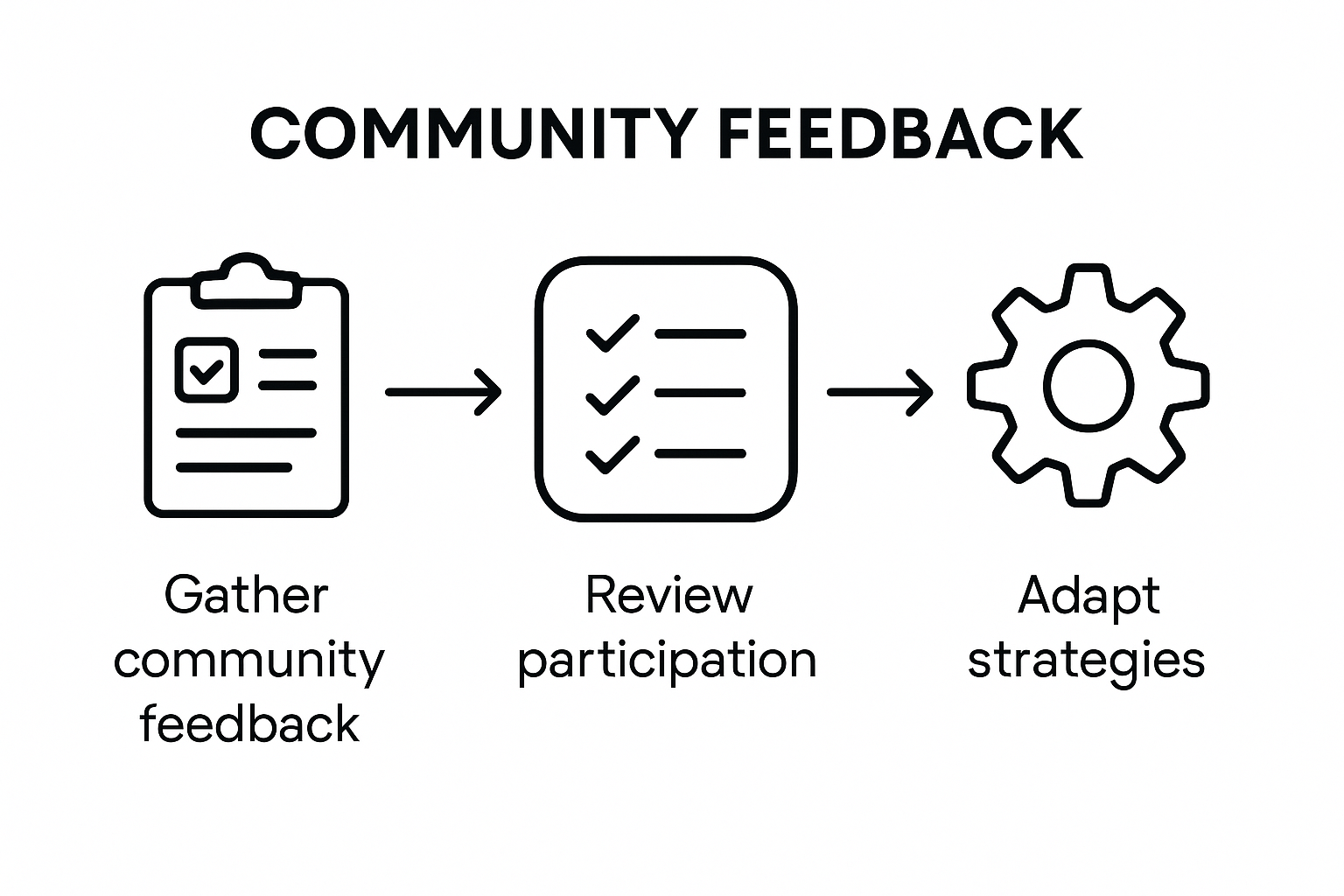
Comprehensive stakeholder feedback collection involves using multiple research methods to capture a holistic view of community experiences. Design surveys that go beyond simple yes or no questions. Create open ended prompts that invite detailed narratives about what worked well and what could be improved. Consider using a mix of online surveys, in person focus groups, telephone interviews, and community feedback sessions to ensure you capture perspectives from diverse community members.
Evaluate participation metrics and qualitative feedback with a critical and compassionate lens. Look for patterns in the responses that reveal deeper community needs and potential areas for improvement. Pay attention not just to what people say, but how they say it. The emotional tone of feedback can be just as informative as the specific words used. Create a transparent feedback loop where you share how community input has influenced future planning and demonstrate that their voices genuinely matter.
Pro Tip: Always follow up and close the feedback loop. When people see their input creating real change, they become more likely to participate in future initiatives.
By treating feedback as a continuous dialogue rather than a one time event, you will build trust and create a more responsive community engagement strategy.
Step 6: Adjust Strategies to Strengthen Involvement
Community engagement is a dynamic process that requires continuous refinement and adaptability. Your mission is to create a flexible approach that responds intelligently to evolving community needs and participation patterns.
Strategic relationship maintenance demands proactive communication and genuine responsiveness. Regularly analyze participation data to identify trends and potential barriers. Look for subtle signals that might indicate waning interest or emerging challenges. This might involve tracking attendance rates, engagement levels, and the depth of community member contributions across different initiatives.
Partnership adaptation strategies are crucial for maintaining momentum. Be prepared to modify your approach based on feedback and changing community dynamics. This could mean adjusting meeting times, introducing more interactive engagement methods, or developing new communication channels that better serve your community’s evolving preferences. Always communicate transparently about why and how changes are being implemented.
Pro Tip: Treat strategy adjustments as collaborative opportunities, not top down mandates. Invite community members to help shape the refinement process.
By remaining nimble and responsive, you will create a community engagement model that grows stronger and more connected with each iteration.
Strengthen Your Community Connections with Waterlooville.co
The challenge of truly engaging every segment of a community requires understanding unique local needs and building genuine partnerships. As the article highlights, inclusive initiatives and multi-channel communication are essential to create meaningful and lasting community involvement. If you are working to enhance participation and foster stronger local connections, easy access to trusted information and local business support plays a crucial role.
Explore Waterlooville.co as your go-to resource to bridge gaps within the community and amplify outreach efforts. Whether you want to connect with local service providers like heating engineers or discover community events that bring residents together, this platform helps you engage every demographic. Stay informed with up-to-date local news and leverage detailed business directories that facilitate collaboration and trust.
Discover local businesses and services that empower your community engagement strategies. Find vital community information to craft inclusive programs that resonate and inspire.

Take the next step to build stronger connections in Waterlooville today. Visit Waterlooville.co to access essential community tools and create initiatives that truly make an impact. Your involvement matters now more than ever.
Frequently Asked Questions
How can I identify local needs for community engagement?
To identify local needs, conduct targeted research by interacting directly with community members. Attend local meetings and hold discussions with residents and business owners to understand their specific challenges and perspectives.
What are effective ways to build partnerships with local stakeholders?
Building partnerships requires proactive outreach to key stakeholders such as local businesses and nonprofit organizations. Initiate personal conversations, clearly communicate your goals, and highlight mutual benefits to foster collaboration.
How do I involve diverse community members in initiative development?
Involve diverse community members by organizing inclusive listening sessions that invite representation from different demographic groups. Create safe spaces for sharing experiences to ensure everyone’s voice is heard and considered in the initiative design.
What communication strategies should I use to promote community initiatives?
Use a variety of communication strategies that resonate with different demographics, such as social media, local newspapers, and community bulletins. Tailor your messaging to highlight the impact of initiatives and encourage community participation.
How can I gather feedback effectively on community engagement initiatives?
Gather feedback by designing comprehensive surveys with open-ended questions that invite detailed input. Use mixed methods, such as online surveys and community feedback sessions, to capture perspectives from diverse community members for a more holistic understanding.
What steps should I take to adjust engagement strategies based on community feedback?
Regularly analyze participation data and community feedback to identify trends and barriers. Be open to modifying your approach, such as adjusting meeting formats or communication channels, to enhance community involvement and responsiveness.
Recommended
- Blog - Waterlooville News, Tips & Community Stories | Waterlooville.co
- Leigh Park - Waterlooville Directory | Waterlooville.co
- Waterlooville Estate Agents League Table 2024 | Compare Reviews & Ratings | Waterlooville.co
- Waterlooville High Street - Waterlooville Directory | Waterlooville.co
- Making Learning Fun: Engaging Activities for Your Kids – The Zoofamily
- Unlock Your Potential: Exercise Motivation Tips to Succeed - LeanAndFit