
Master the Customer Feedback Process for Local Businesses
Learn the customer feedback process step-by-step to gather, analyze, and act on feedback that improves service and boosts engagement in Waterlooville.
Master the Customer Feedback Process for Local Businesses

Over eighty percent of American consumers say that feedback influences where they spend their money. Local business owners in Waterlooville know that understanding customer opinions can make the difference between repeat business and missed opportunities. By using practical feedback methods, you will discover new ways to improve your services and connect with your community more effectively.
Table of Contents
- Step 1: Set Up Effective Feedback Channels
- Step 2: Encourage Customer Participation
- Step 3: Collect and Organize Customer Responses
- Step 4: Analyze Feedback for Key Insights
- Step 5: Implement Improvements and Follow Up
Quick Summary
| Key Insight | Explanation |
|---|---|
| 1. Establish Multiple Feedback Channels | Create various feedback options like digital surveys and comment cards for customer convenience. |
| 2. Foster a Welcoming Environment | Make feedback feel approachable by using conversational language and providing incentives. |
| 3. Systematically Organize Feedback | Use digital tools to categorize feedback for easier analysis and action planning. |
| 4. Analyze Feedback for Deeper Insights | Employ scoring systems to quantify feedback and identify key improvement areas effectively. |
| 5. Communicate Improvements Openly | Keep customers informed about changes made based on feedback to build trust and encourage participation. |
Step 1: Set Up Effective Feedback Channels
Your local business needs smart ways to collect customer insights. Setting up effective feedback channels helps you understand what your customers really think and provides actionable information to improve your services.
Start by creating multiple feedback pathways that make it easy and convenient for customers to share their experiences. The Society for Human Resource Management suggests implementing both formal and informal feedback mechanisms to drive workplace success. This means offering digital surveys, physical comment cards, online review platforms, and face-to-face feedback opportunities.
Consider setting up quick digital surveys through platforms like Google Forms or Survey Monkey that customers can complete in under two minutes. Place QR codes in your physical location linking directly to these surveys. The Center for Creative Leadership recommends designing feedback systems that capture different types of input such as directive feedback about specific performance issues and impact feedback highlighting broader customer experiences.
Ensure your feedback channels are accessible across different platforms. This means having online submission forms on your website, active social media channels where customers can leave comments, and physical feedback stations in your business location. Train your staff to encourage and welcome customer feedback as a positive opportunity for improvement.
Here is a comparison of popular customer feedback collection methods and their business impact:
| Collection Method | Customer Convenience | Type of Insights Provided | Impact on Business Improvement |
|---|---|---|---|
| Digital Surveys | Very high, quick access | Quantitative and qualitative | Enables rapid, trackable changes |
| Comment Cards | Moderate, in-person use | Qualitative, immediate reactions | Provides direct, context-specific input |
| Online Review Platforms | High, public visibility | Broad experience highlights | Builds reputation, identifies trends |
| Face-to-Face Feedback | Personalized experience | Detailed, nuanced feedback | Encourages loyalty, uncovers deeper issues |
Pro tip: Create a dedicated email address specifically for customer feedback to streamline communication and demonstrate your commitment to listening to your customers.
Step 2: Encourage Customer Participation
Motivating customers to share their feedback requires creating an environment that feels welcoming and makes participation simple and rewarding. Your goal is to break down barriers that prevent people from sharing their honest experiences.
The US Environmental Protection Agency emphasizes understanding stakeholder needs as a critical first step in creating meaningful public participation. This means designing feedback channels that feel approachable and demonstrate you genuinely want to hear from your customers. Consider implementing strategies that make sharing feedback feel like a positive interaction rather than a chore.
Start by making your feedback process feel conversational and low pressure. Use friendly language on your feedback forms that sounds like you are talking directly to the customer. Offer multiple ways to provide input such as quick star ratings, short comment boxes, or brief online surveys. Create visual cues in your business location that remind customers their opinions matter by displaying previous customer suggestions that have been implemented.

Remember that customers are more likely to participate when they see tangible results from their input. Publicly acknowledge feedback you receive and share how you are using customer suggestions to improve your services. This creates a cycle of engagement that encourages more people to share their thoughts.
Pro tip: Offer a small incentive like a discount or entry into a monthly drawing to motivate customers to complete feedback surveys.
Step 3: Collect and Organize Customer Responses
Successfully gathering customer feedback requires a systematic approach that transforms raw comments into actionable insights. Your goal is to create a streamlined process that makes collecting and analyzing customer responses both efficient and meaningful.
Recent educational research evaluates best practices in organizing feedback through advanced digital tools and structured survey methods. This means implementing a robust system that can categorize and analyze different types of customer input quickly and accurately. Consider using digital spreadsheets or specialized feedback management software that allows you to tag and sort responses by themes such as service quality, product performance, or customer experience.
Start by creating a standardized template for recording feedback that includes key categories like date, customer identifier, feedback type, and specific comments. Use color coding or tagging systems to quickly identify trends or urgent issues. Digital tools can help you automatically sort responses into predefined buckets such as positive feedback, constructive criticism, or potential improvement areas. This approach allows you to quickly spot patterns and prioritize actions that will have the most significant impact on your business.
Make sure your feedback collection system is flexible enough to capture both quantitative data like ratings and qualitative insights from open ended comments. Regularly review and analyze these responses as a team to ensure you are not just collecting feedback but actively using it to drive meaningful improvements in your business operations.
Pro tip: Set up automated monthly reports that summarize key feedback trends to help your team stay consistently informed about customer sentiments.
Step 4: Analyze Feedback for Key Insights
Turning raw customer feedback into meaningful business strategies requires a systematic and thoughtful approach. Your goal is to transform individual comments into comprehensive insights that can drive real improvements in your local business.
The American Customer Satisfaction Index offers a sophisticated model for converting survey responses into actionable metrics that reveal perceived quality, customer value, and potential loyalty indicators. This means looking beyond surface level comments and understanding the deeper patterns and motivations behind customer experiences. Start by developing a scoring system that helps you quantify different types of feedback across key performance areas such as service quality, responsiveness, and overall satisfaction.
The IMD Business School recommends using advanced technologies like AI and machine learning to segment and analyze customer responses more effectively. Consider using tools that can automatically categorize feedback into themes such as positive experiences, constructive criticism, and potential improvement areas. Look for recurring patterns that suggest systemic issues or opportunities for enhancement. Pay special attention to comments that appear multiple times across different customer groups as these often represent more significant insights.
Develop a quarterly review process where you and your team deeply examine the collected feedback. Create visual dashboards that help you track changes in customer sentiment over time. This approach allows you to not just understand current customer perceptions but also track the impact of improvements you implement based on previous feedback.
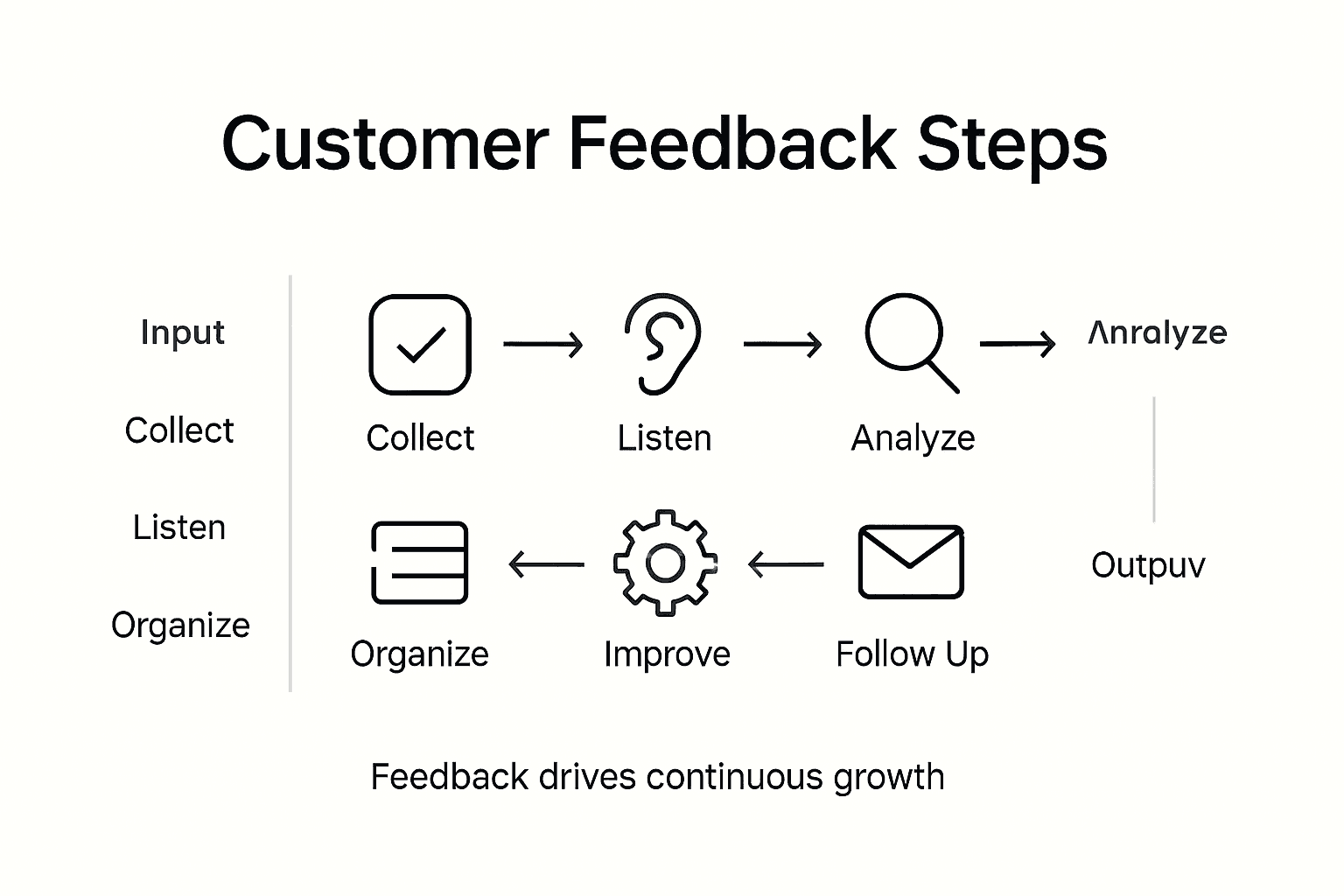
Pro tip: Create a simple scoring system that assigns numerical values to different types of feedback to help quantify and track customer sentiment more objectively.
Step 5: Implement Improvements and Follow Up
Transforming customer feedback into tangible business improvements requires a strategic and transparent approach. Your ultimate goal is to demonstrate that you not only listen to your customers but also take meaningful action based on their insights.
Start by prioritizing improvements that address the most frequent and impactful customer comments. Create a clear action plan that breaks down each improvement into specific steps with assigned responsibilities and realistic timelines. This might involve retraining staff, adjusting service protocols, updating equipment, or modifying your business processes to directly address customer suggestions.
Communicate your improvements transparently with your customers. Use multiple channels such as social media, email newsletters, in store signage, and personal conversations to share how specific customer feedback has led to concrete changes. This approach shows customers that their input genuinely matters and encourages continued engagement. Consider creating a visible feedback loop where you explicitly state customer suggestions and outline the exact improvements you have implemented as a result.
Establish a continuous improvement mindset within your team. Hold regular meetings to discuss customer feedback and brainstorm innovative solutions. Encourage staff members to view customer comments as opportunities for growth rather than criticisms. Celebrate team successes when improvements lead to positive customer experiences and increased satisfaction.
The following table summarizes key steps for turning feedback into actionable improvements:
| Step | Main Action | Resulting Benefit |
|---|---|---|
| Organize Responses | Categorize and tag feedback | Identifies trends and urgent issues |
| Analyze for Insights | Score and segment feedback | Reveals actionable patterns |
| Implement Improvements | Assign tasks and timeline | Demonstrates customer appreciation |
| Communicate Results | Share actions through channels | Builds trust and engagement |
Pro tip: Create a public feedback board or section on your website where customers can see how their suggestions have directly influenced your business improvements.
Unlock the Power of Customer Feedback for Your Waterlooville Business
Understanding and acting on customer feedback is essential for any local business eager to grow and thrive. This article highlights common challenges such as setting up effective feedback channels, encouraging participation, and turning insights into real improvements. If you own a local service in Waterlooville, like a hair salon or heating engineer, mastering these steps can transform your relationship with customers and boost your reputation.
At Waterlooville.co, we bring the community and businesses together by providing a platform where customer reviews and ratings shine. Your business can benefit from increased visibility and trusted feedback that helps attract more local clients. Create your presence among trusted local businesses and demonstrate how you listen and respond to customer needs.

Take the next step to improve your business today. Join the Waterlooville community on Waterlooville.co and showcase your commitment to quality service through verified customer feedback. The sooner you integrate these customer insights, the faster you build lasting trust and loyalty in your neighborhood.
Frequently Asked Questions
How can I set up effective feedback channels for my local business?
To set up effective feedback channels, create multiple pathways for customers to share their experiences. Consider using digital surveys, comment cards, online review platforms, and face-to-face feedback opportunities to ensure accessibility.
What are some ways to encourage customer participation in feedback?
Encourage customer participation by creating a welcoming environment for feedback. Use friendly language in your communication, offer incentives like discounts, and showcase previous customer suggestions that have been implemented to motivate others to share their opinions.
How should I collect and organize customer responses?
Collect and organize customer responses by using a standardized template that categorizes feedback into key areas like service quality and customer experience. Implement digital tools to tag and sort feedback, making it easier to identify trends and urgent issues.
What steps should I take to analyze feedback for meaningful insights?
Analyze feedback by developing a scoring system to quantify different types of comments, identifying recurring patterns, and segmenting responses into categories like positive experiences and areas for improvement. Regular team reviews of feedback will help track changes in customer sentiment over time.
How can I effectively implement improvements based on customer feedback?
To implement improvements, prioritize actions based on frequent feedback and create a clear action plan with specific steps and timelines. Communicate these improvements to your customers transparently to build trust and encourage ongoing engagement.