
How to Register a Local Business for Community Success
Discover how to register a local business step-by-step. Learn the key actions to launch your business and connect with your community successfully.
How to Register a Local Business for Community Success

Launching a new venture in Waterlooville means setting the groundwork for lasting local impact. Many american entrepreneurs find that proper preparation makes the registration process faster and less stressful. With over 60 percent of small businesses failing in their first three years, understanding every step gives you an advantage. This guide will deliver practical advice for organizing paperwork, choosing your legal framework, staying compliant, and building connections in Waterlooville’s dynamic business scene.
Table of Contents
- Step 1: Gather Essential Business Details And Documents
- Step 2: Choose A Suitable Legal Structure For Your Business
- Step 3: Complete Local Registration And Licensing Requirements
- Step 4: Verify Compliance With Local Regulations And Tax Authorities
- Step 5: Promote Your Registered Business Within The Community
Quick Summary
| Key Insight | Explanation |
|---|---|
| 1. Gather Essential Documents | Collect identification, proof of address, and necessary business licenses to streamline registration. |
| 2. Choose a Legal Structure | Assess options like sole proprietorship or LLC to match your business needs and goals. |
| 3. Complete Registration Steps | Understand local registration requirements to officially establish your business entity. |
| 4. Ensure Regulatory Compliance | Regularly check tax and regulatory requirements to avoid penalties and ensure legal operation. |
| 5. Promote Your Business Locally | Engage with your community and use local marketing strategies to build brand awareness and trust. |
Step 1: Gather essential business details and documents
Successfully registering your local business starts with assembling the right paperwork and documentation. Your goal in this step is to collect all the critical information that will help you legally establish your business and demonstrate your professional readiness.
Begin by gathering your personal identification documents. You’ll want a valid government issued photo ID such as a driver’s license or passport. Next, collect proof of your current residential address through utility bills, bank statements, or official correspondence. If you’re operating from a business location, have your lease agreement or property ownership documents ready. For businesses requiring specific professional credentials, compile copies of relevant licenses or certifications. Business registration requirements can vary, so double check local regulations that might apply to your specific business type.
Organize these documents systematically. Create both digital and physical folders to store copies, ensuring you have quick access when needed during the registration process. Consider making multiple copies of essential documents to streamline future administrative tasks. This preparation will significantly reduce stress and potential delays when you begin formal business registration.
Pro tip: Create a digital backup of all important documents using cloud storage to protect against potential loss or damage.
Step 2: Choose a suitable legal structure for your business
Selecting the right legal structure is a pivotal decision that will impact how your business operates, pays taxes, and manages potential risks. Your goal in this step is to understand the different business structures available and match the best option to your specific entrepreneurial vision.
Carefully evaluate the most common business structures to find your ideal fit. Legal business structure options range from sole proprietorship to complex corporate entities. A sole proprietorship works well for solo entrepreneurs with minimal risk and straightforward operations. Partnerships are ideal when you want to share business responsibilities and resources with one or more people. Limited Liability Companies (LLCs) provide personal asset protection and more flexible tax treatment, making them attractive for businesses with potential growth and higher financial risks. Corporations offer the most robust legal protections but come with more complex regulatory requirements and administrative overhead.
Consider your long term business goals when making this decision. Think about your tolerance for personal financial risk, desired management structure, and future plans for expansion or potential investment. Consulting with a local business attorney or accountant can provide personalized insights tailored to your specific business model and regional regulations.
Here’s a quick comparison of common business legal structures to help guide your decision:
| Structure Type | Personal Liability | Tax Complexity | Ideal For |
|---|---|---|---|
| Sole Proprietorship | Owner is fully liable | Simple | Solo entrepreneurs |
| Partnership | Shared among partners | Moderate | Business partners |
| Limited Liability Co. | Limited to investment | Flexible, more complex | Growing small businesses |
| Corporation | No personal liability | Complex reporting needed | Large or expanding firms |
Pro tip: Schedule a consultation with a local business advisor to get personalized guidance on the most tax efficient legal structure for your specific business scenario.
Step 3: Complete local registration and licensing requirements
Navigating local business registration is a critical step that transforms your business concept into a legal operational entity. Your objective is to officially establish your business in the local government system and secure all necessary permits to begin trading.

Local business registration processes involve several key steps that vary depending on your specific business type and industry. Start by contacting your local chamber of commerce or business registration office to understand the precise requirements for your business sector. You will typically need to submit detailed documentation including your business plan, legal structure information, tax identification number, and proof of business address. Some industries require additional specialized licenses such as health permits, environmental certifications, or professional credentials. Pay close attention to sector specific regulations that might apply to your particular business type.
Be prepared to invest time in understanding and completing these administrative requirements. Each local jurisdiction has unique rules, so research thoroughly and consider consulting with a local business advisor who understands the specific regulatory landscape. Allocate sufficient time for processing and be patient with potential bureaucratic procedures. Remember that completing these registrations correctly will protect your business legally and establish a solid foundation for future growth.
Pro tip: Create a comprehensive checklist of all required documents and licenses specific to your business type to streamline the registration process and avoid potential delays.
Step 4: Verify compliance with local regulations and tax authorities
Ensuring your business meets all regulatory and tax requirements is a critical step that protects your company from potential legal and financial complications. Your primary goal is to understand and systematically implement all mandatory reporting and compliance procedures for your specific business type.
Business register and tax administration involves multiple layers of paperwork and ongoing responsibilities. Start by confirming your VAT registration status and understanding your specific tax reporting schedule. Determine whether you need to make quarterly or annual tax submissions, and set up a reliable system for tracking financial transactions. Different industries have unique compliance requirements some of which might include specialized licenses, environmental certifications, or specific employee reporting protocols. Consider consulting with a local tax professional who understands the nuanced regulations specific to your business sector.
Establish a proactive approach to compliance by creating a comprehensive tracking system for all regulatory documentation. Set calendar reminders for key filing deadlines, maintain organized financial records, and stay informed about any changes in local business regulations. Regular review and updates to your compliance procedures will help you avoid potential penalties and maintain your business’s good standing within the local community.
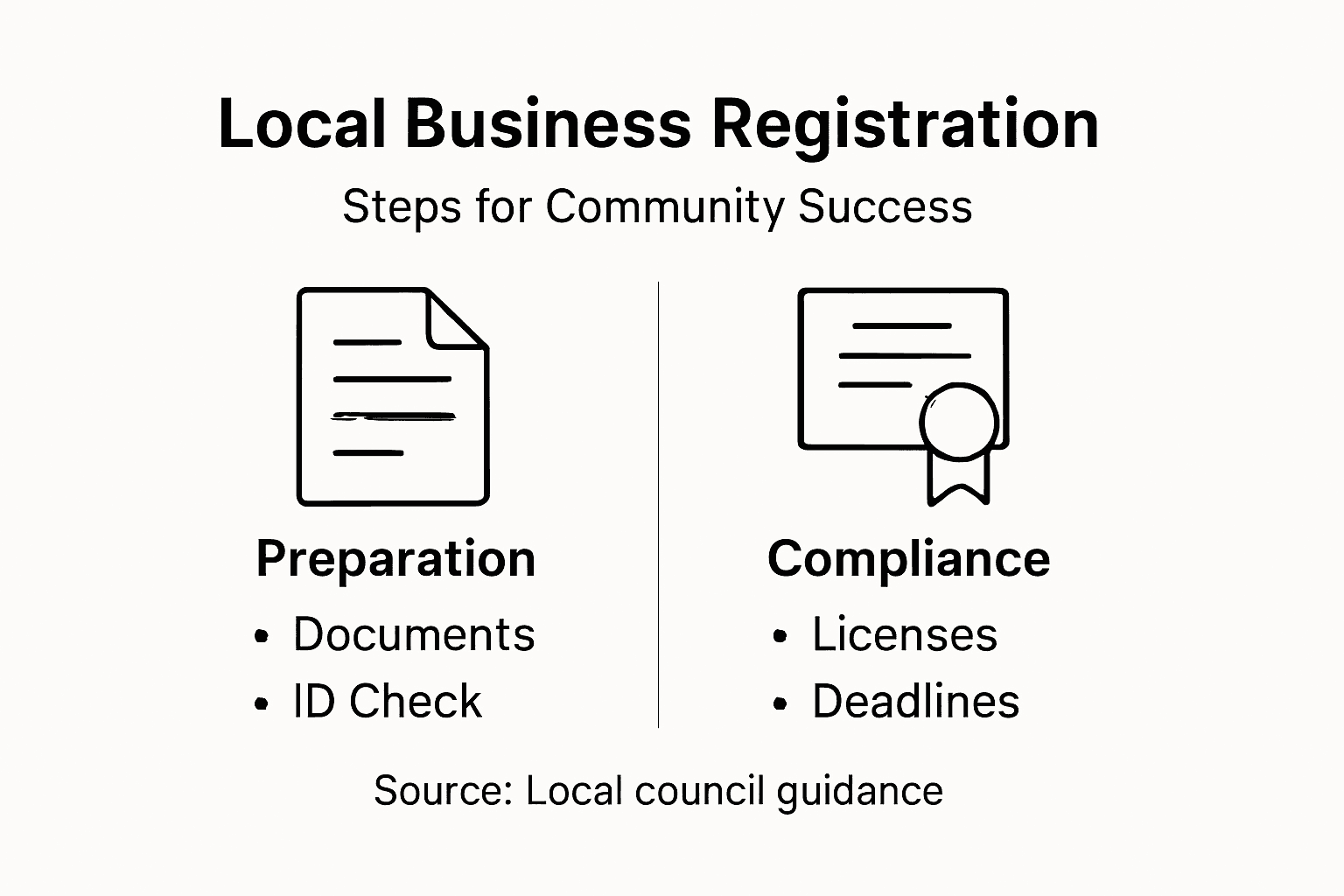
Pro tip: Invest in accounting software that automatically tracks tax deadlines and helps maintain precise financial records to simplify your compliance management.
Step 5: Promote your registered business within the community
Now that your business is officially registered, it is time to connect with your local community and build brand recognition. Your goal is to establish a strong local presence that attracts customers and demonstrates your commitment to the community.
Small business promotion strategies are essential for gaining visibility and credibility. Start by networking with local business groups, attending community events, and joining professional associations relevant to your industry. Create a comprehensive local marketing strategy that includes both online and offline channels. Develop a professional website that highlights your services, leverage social media platforms to engage with local customers, and consider targeted local advertising in community newspapers, local radio stations, or neighborhood bulletin boards. Build relationships with other local businesses who might become potential partners or refer clients to you.
Think strategically about community engagement beyond traditional marketing. Participate in local charity events, sponsor neighborhood activities, or offer free workshops related to your business expertise. These efforts not only increase your visibility but also demonstrate your genuine commitment to the community. By positioning yourself as a local resource and supportive community member, you will build trust and establish a loyal customer base that can provide sustainable growth for your business.
The table below summarizes typical local business promotion tactics and their primary benefits:
| Promotion Method | Expected Benefit | Best For |
|---|---|---|
| Local Networking Events | Build business relationships | Service-oriented businesses |
| Social Media Campaigns | Boost brand awareness | Retail and online businesses |
| Community Sponsorships | Enhance reputation | Locally focused companies |
| Targeted Local Advertising | Attract new local customers | Shops and restaurants |
Pro tip: Create a unique local marketing plan that showcases your business personality and directly addresses the specific needs of your community.
Grow Your Local Business with Waterlooville.co Support
Registering a local business involves navigating complex legal structures, local government requirements, and compliance issues that can feel overwhelming. Entrepreneurs aim to build a strong community presence while avoiding costly delays and administrative headaches. Whether you are finalizing your legal structure or promoting your services locally, having a trusted resource that connects you with your community is essential for success.
Waterlooville.co is your community-focused guide designed to help your new business thrive in Waterlooville, Cowplain, Denmead, and Purbrook. Featuring detailed business directories, customer reviews, and local insights, it empowers you to build lasting relationships and gain immediate visibility. Discover how to showcase your business alongside trusted local providers such as heating engineers and hair salons. Start boosting your credibility and attracting new customers with our carefully curated platform dedicated to supporting local commerce and community engagement.
Looking to establish your business presence where it truly counts

Visit Waterlooville.co now to connect with your community and optimize your local business register journey. Take advantage of insights and resources tailored specifically for Waterlooville entrepreneurs and create meaningful connections that lead to sustainable growth.
Frequently Asked Questions
What documents do I need to register my local business?
To register your local business, you need personal identification, proof of your residential address, and any relevant business licenses or certifications. Collect items like a government-issued photo ID, utility bills for address verification, and your lease agreement if applicable.
How do I choose the right legal structure for my local business?
Selecting the right legal structure, such as a sole proprietorship, partnership, or LLC, is essential for your business’s tax implications and liability protection. Evaluate your long-term goals and consider consulting a professional for tailored advice based on your specific business needs.
What are the steps to complete local registration and obtain necessary licenses?
To complete local registration, contact your local chamber of commerce for specific requirements related to your business type, and prepare to submit necessary documentation. Creating a checklist of required documents will help streamline the registration process and ensure you don’t miss anything.
How can I ensure compliance with local regulations and tax authorities?
To ensure compliance, verify your VAT registration status and understand your tax reporting requirements. Set up a system to track financial transactions and important filing deadlines to avoid penalties and maintain your good standing.
What strategies can I use to promote my registered business in the community?
Start by networking with local business groups and participating in community events to increase your visibility. Developing an online presence through social media and a professional website can also help attract customers and build trust in your community.