
How to Set Up a Community Event: A Step-by-Step Guide
Learn how to set up a community event in Waterlooville with this step-by-step guide. Discover practical actions to plan, organize, and promote your local event.
How to Set Up a Community Event: A Step-by-Step Guide

Almost half of american community organizers report that setting clear goals is the single most important factor in event success. Planning an event can feel overwhelming when you try to meet the needs of a diverse crowd or rally local support. The right approach helps you connect the dots between purpose and participation so you attract people and create a lasting impact. This guide breaks down each step so your community event stands out for all the right reasons.
Table of Contents
- Step 1: Define Event Goals And Audience
- Step 2: Secure A Suitable Venue And Date
- Step 3: Engage Local Partners And Sponsors
- Step 4: Promote The Event In The Community
- Step 5: Coordinate Logistics And Volunteer Support
- Step 6: Assess Event Success And Gather Feedback
Quick Summary
| Key Point | Explanation |
|---|---|
| 1. Define goals and audience | Establish clear event objectives and identify the target audience to guide planning decisions effectively. |
| 2. Choose the right venue and date | Select a venue based on event needs and ensure the date avoids conflicts to maximize attendance. |
| 3. Engage local partners and sponsors | Collaborate with local businesses and organizations to enhance the event’s reach and resource pool. |
| 4. Use multiple promotion channels | Promote the event through various platforms, such as social media, flyers, and local media, to generate excitement. |
| 5. Assess success and gather feedback | Evaluate the event’s outcome against set goals and collect feedback to improve future events. |
Step 1: Define event goals and audience
Successful community events start with crystal clear objectives and a well defined target audience. Before diving into logistics, you need a strategic roadmap that outlines exactly what you want to achieve and who you want to reach.
Begin by asking yourself fundamental questions about your event’s purpose. Are you aiming to educate the public about a specific issue, raise awareness for a local cause, or simply bring people together for community connection? Your goals will determine every subsequent planning decision - from venue selection to marketing strategy.
When identifying your target audience, go beyond basic demographics. Think about their interests, motivations, and potential barriers to participation. A neighborhood cleanup event might appeal to environmentally conscious residents, while a cultural festival could attract diverse community groups. Create audience personas that help you understand who will most likely attend and what would genuinely excite them.
Pro Tip: Always align your event theme and goals with your specific audience expectations to maximize engagement and participation.
Once you have defined your goals and audience, you are ready to move forward with the next critical step of event planning: choosing the perfect location and designing an experience that resonates with your community.
Step 2: Secure a suitable venue and date
Choosing the right venue and date can make or break your community event. This critical step requires thoughtful planning and strategic decision making to ensure maximum participation and success.

Start by examining potential locations that match your event’s specific requirements. Consider factors like venue capacity, accessibility, parking availability, and appropriate facilities. Will your event need audiovisual equipment? Kitchen access? Restrooms? Make a comprehensive checklist of must-have features before scheduling site visits.
When selecting a date, research local community calendars to avoid scheduling conflicts. Checking other community events can help you choose a time that maximizes potential attendance. Think about your target audience’s availability - weekend mornings might work best for families, while weekday evenings could suit working professionals.
Pro Tip: Book your preferred venue at least 3 months in advance to secure your ideal location and date.
Once you have a venue and date locked in, you are ready to move forward with the next crucial step: developing a comprehensive event budget and securing necessary funding.
Step 3: Engage local partners and sponsors
Smart community events leverage collaboration and shared resources to maximize impact and reach. Identifying and engaging the right local partners can transform your event from good to extraordinary.
Connecting with local businesses, nonprofits, and community organizations can dramatically expand your event’s potential. Look for partners whose mission aligns with your event goals. A local environmental group might be perfect for a sustainability fair, while a neighborhood business association could help support a community marketplace.
Form strategic committees with clear roles and responsibilities to distribute workload and leverage diverse skills. Each partner brings unique strengths partners can cross-promote the event through their networks, increasing visibility and potential attendance. When approaching potential sponsors, prepare a compelling pitch that highlights mutual benefits - how supporting your event will help them connect with the community and enhance their local reputation.
Pro Tip: Always draft formal partnership agreements that outline expectations, contributions, and benefits for each party.
With your partnership network established, you are now ready to develop a comprehensive marketing strategy that will attract attendees and generate excitement for your upcoming community event.
Step 4: Promote the event in the community
Successful event promotion is about creating buzz and generating genuine excitement throughout your local community. Your marketing strategy will determine how many people hear about and ultimately attend your event.
Start promoting your event weeks or even months in advance using multiple communication channels. Create eye-catching flyers to distribute in local businesses, community centers, and libraries. Design digital graphics for social media platforms that capture the event’s spirit and include essential details like date, time, and location. Email newsletters can help spread the word to existing community contacts and previous event attendees.
Connect with local media outlets to expand your event’s visibility by writing compelling press releases that highlight what makes your event unique. Local newspapers, radio stations, and community websites are always looking for interesting stories. Leverage your partnership networks to help cross-promote the event through their communication channels, multiplying your potential reach.
Pro Tip: Create a consistent hashtag for your event that participants can use when sharing on social media to increase online engagement.
With your promotion strategy in motion, you are now prepared to shift focus to the final critical stages of event planning and execution.
Step 5: Coordinate logistics and volunteer support
The success of your community event hinges on meticulous planning and seamless coordination. This stage transforms your vision from a concept into a well-orchestrated reality that runs smoothly and efficiently.
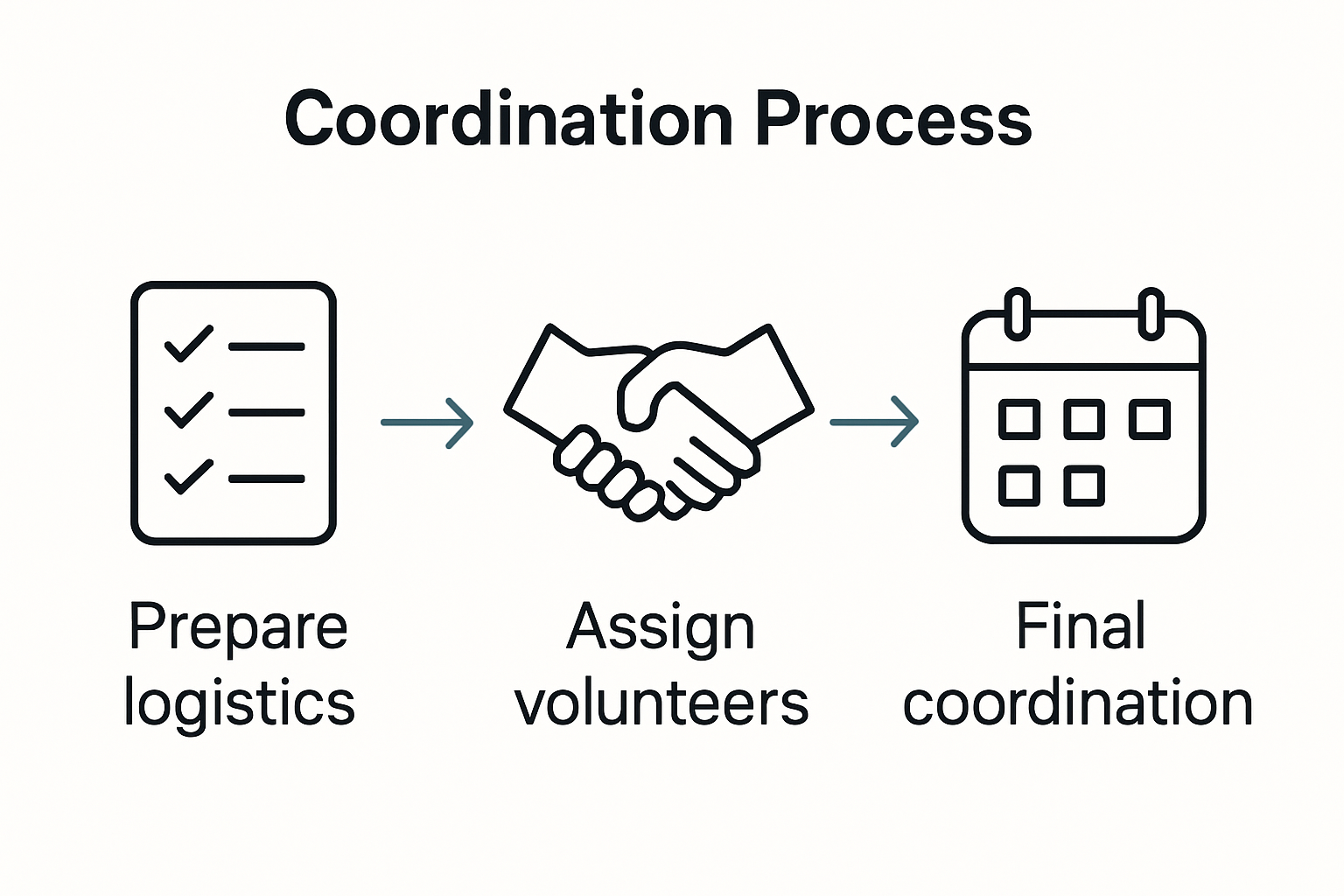
Assemble a dedicated committee with clearly defined roles and responsibilities to manage different aspects of event preparation. Assign specific tasks like registration, setup, equipment management, volunteer coordination, and cleanup. Each team member should understand their exact responsibilities and have the resources needed to execute their role effectively.
Recruit volunteers who are passionate about your event’s mission and provide them with comprehensive training and clear guidelines. Create a detailed volunteer handbook that outlines expectations, schedule, contact information, and specific duties. Consider hosting a pre event orientation session to ensure everyone feels prepared and motivated. Plan for backup volunteers and have contingency strategies in place for unexpected absences or challenges.
Pro Tip: Use digital scheduling and communication tools to keep your volunteer team connected and informed in real time.
With your logistics and volunteer support solidified, you are now ready to execute your event with confidence and precision.
Step 6: Assess event success and gather feedback
The true measure of a community event’s impact goes far beyond the day itself. Thoughtful evaluation helps you understand what worked, what could improve, and how to create even more meaningful experiences in the future.
Establish specific and measurable goals before your event that will serve as benchmarks for success. These might include target attendance numbers, funds raised, community engagement metrics, or specific audience feedback indicators. After the event, conduct a comprehensive review that compares your actual outcomes against these predetermined objectives.
Create multiple feedback channels to capture diverse perspectives. Design short surveys for attendees, volunteers, and partners that ask targeted questions about their experience. Use a mix of rating scales and open-ended questions to gather nuanced insights. Consider hosting a post event debrief meeting with your core organizing team to discuss observations, challenges, and potential improvements for future events.
Pro Tip: Document your findings in a detailed report that can inform and inspire future community event planning.
With your event evaluated and lessons learned, you are now equipped to build even stronger community connections in your future initiatives.
Turn Your Community Event Vision into Reality with Waterlooville.co
Planning a community event can feel overwhelming when you face challenges like finding the perfect venue securing reliable local partners and reaching the right audience. This guide showed the importance of clear goals detailed logistics and strong promotion strategy to bring your event together successfully. You need trusted local connections and up-to-date community insights to maximize your impact and make your event truly resonate.

Discover how Waterlooville.co can be your essential resource to connect with hundreds of local businesses and service providers from catering to technical support. Build your event partnerships through our comprehensive business directory featuring trusted reviews and contact details. Stay ahead by tapping into our detailed community news and event listings to carefully plan around busy dates and trends. Take the stress out of event planning and unite your neighborhood by exploring how we can support every step from venue choice to promotion. Visit Waterlooville.co now and start crafting the unforgettable community experience your town deserves.
Frequently Asked Questions
What are the first steps to set up a community event?
Start by defining clear event goals and identifying your target audience. Write down what you want to achieve and who you want to reach, then move on to logistics like selecting a venue and date.
How can I choose the right venue for my community event?
Research potential venues that meet your event’s requirements, such as capacity and accessibility. Visit these locations and create a checklist of essential features you need, like parking and audiovisual equipment, before making a decision.
What should I consider when selecting a date for my event?
Check local community calendars to avoid scheduling conflicts with other events. Aim to choose a date that aligns with your target audience’s availability, such as weekends for families or evenings for working professionals.
How can I effectively promote my community event?
Use multiple communication channels to create buzz and generate excitement, starting several weeks in advance. Distribute eye-catching flyers, design engaging social media content, and connect with local media outlets to maximize your event’s visibility.
What steps should I take to recruit and train volunteers for my event?
Assemble a team with clearly defined roles and recruit volunteers who are passionate about your event’s mission. Provide them with a comprehensive training guide and consider having a pre-event orientation for clarity and motivation.
How do I assess the success of my community event?
Establish measurable goals before the event, such as target attendance or funds raised. After the event, gather feedback through surveys and conduct a debrief meeting to compare actual outcomes against your initial objectives.
Recommended
- Blog - Waterlooville News, Tips & Community Stories | Waterlooville.co
- Clanfield Guide | Local Businesses, Services & Information
- Leigh Park - Waterlooville Directory | Waterlooville.co
- Things To Do In Waterlooville - Waterlooville Directory | Waterlooville.co
- Success Exhibiting at IFEMA Madrid: The Ultimate Exhibitor Guide