
Local Business Registration Workflow: Step-by-Step Guide
Master the local business registration workflow with this clear step-by-step guide. Learn how to set up, register, and verify your business successfully.
Local Business Registration Workflow: Step-by-Step Guide

Navigating the American business registration process can be daunting for new entrepreneurs. With over 600,000 new companies started each year in the United States, the competition and paperwork can feel never-ending. Getting your documents in order is the first step to building a legitimate business presence and meeting strict government standards. This guide breaks down each stage clearly so you can move from paperwork to an officially recognized American business without confusion.
Table of Contents
- Step 1: Gather Required Business Information
- Step 2: Choose the Appropriate Business Structure
- Step 3: Complete Registration Forms and Documentation
- Step 4: Submit Applications to Relevant Authorities
- Step 5: Verify Registration Approval and Compliance
Quick Summary
| Key Insight | Explanation |
|---|---|
| 1. Collect Essential Business Documents | Gather your proposed business name, legal structure, personal identification, and industry licenses for registration. |
| 2. Choose the Right Business Structure | Consider different legal structures like LLCs, partnerships, and sole proprietorships based on liability, taxes, and growth plans. |
| 3. Complete Forms Accurately | Fill out registration forms with precise information, ensuring all required supporting documents are included for submission. |
| 4. Submit Applications to Proper Agencies | Identify and submit the correct documents to local and state agencies to officially recognize your business. |
| 5. Verify Registration and Compliance | Following approval, confirm your business details match your application and obtain all necessary permits for compliance with local regulations. |
Step 1: Gather Required Business Information
Registering a local business starts with collecting the critical paperwork and details that will define your company’s legal identity. Your goal in this step is to compile all necessary documentation and information that government agencies and local authorities will require during the registration process.
First, you’ll need to assemble key business details such as your proposed business name, planned legal structure (sole proprietorship, partnership, LLC), and a clear description of your products or services. Understanding local government registration requirements helps ensure you capture the precise information needed. This means preparing documents like your business identification number, tax records, ownership details, and proof of your business address. Pay special attention to specifics that local county or state offices might request when you file your official registration paperwork.
Your documentation package should include personal identification for all business owners, articles of organization or incorporation, an employer identification number (EIN), and any professional licenses specific to your industry. Local government registration processes often require comprehensive documentation to verify your business’s legitimacy and operational intent. Take time to review each document carefully and ensure all information is accurate and consistent.

Pro tip: Create a dedicated folder for your business registration documents and make digital and physical copies of everything. This organizational approach will save you significant time and stress during the registration process and help you quickly respond to any additional information requests from local authorities.
Step 2: Choose the Appropriate Business Structure
Selecting the right business structure is a critical decision that will impact your legal responsibilities, tax obligations, and operational flexibility. Your goal is to choose a structure that best aligns with your business goals, personal risk tolerance, and long-term growth strategy.
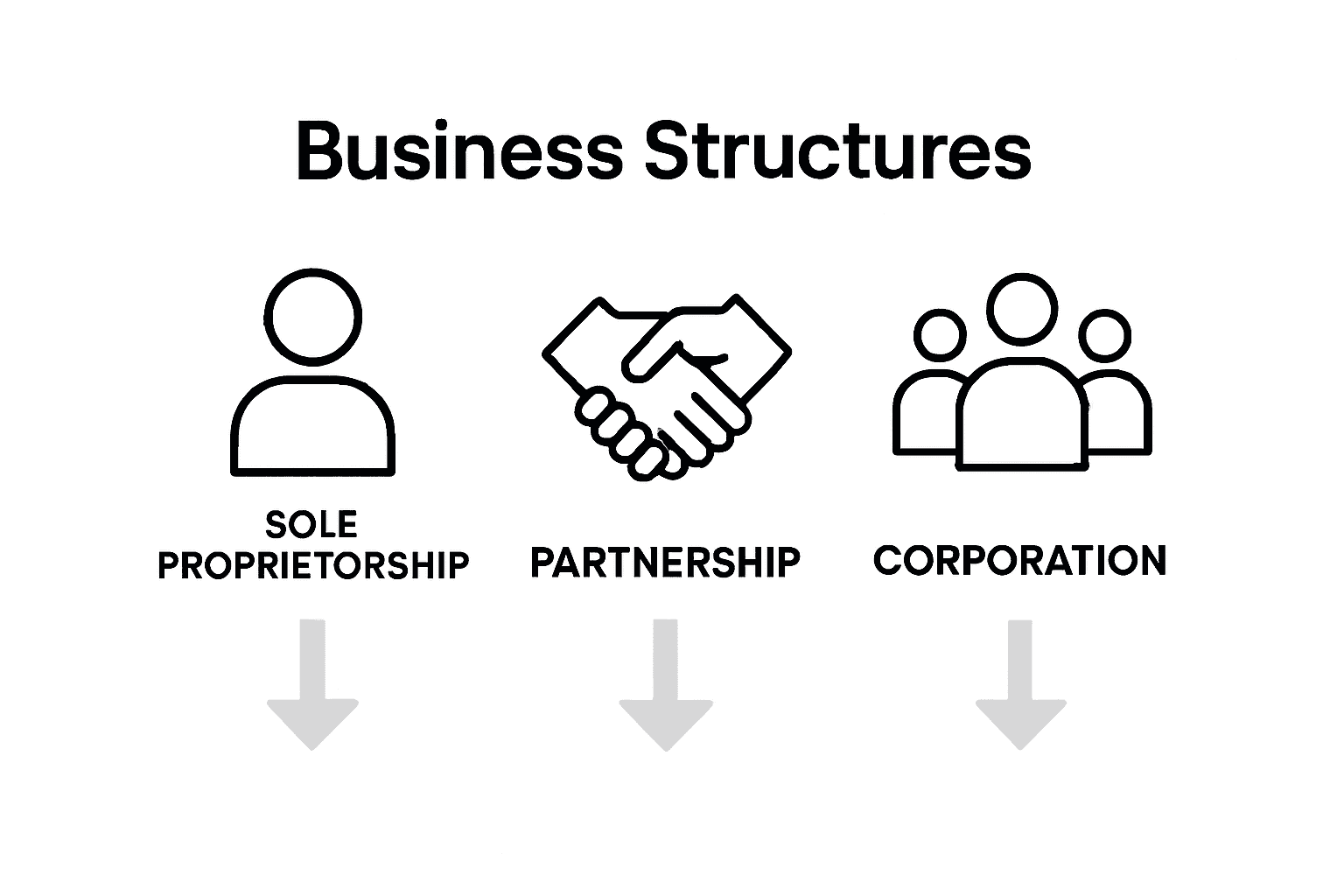
Exploring business structure options reveals several potential approaches for your new venture. Each structure comes with unique advantages and considerations. Sole proprietorships offer simplicity and minimal paperwork but provide no personal liability protection. Partnerships allow shared responsibilities and resources but can create complex legal relationships. Limited Liability Companies (LLCs) provide a flexible middle ground with personal asset protection and potential tax benefits. Corporations offer the strongest liability protection but involve more complex regulatory requirements and administrative overhead.
When evaluating your options, consider factors like your business size, potential revenue, number of owners, and future expansion plans. Conducting business registration research can help you understand the specific legal and financial implications of each structure. Consulting with a local business attorney or tax professional can provide personalized insights tailored to your specific situation and help you make an informed decision.
Pro tip: Don’t rush your business structure selection. Take time to understand each option’s long-term implications, and remember that you can potentially change your business structure as your company grows and evolves.
To help you understand business structure choices, here’s a concise comparison of key factors:
| Structure Type | Liability Protection | Administrative Complexity | Taxation Approach |
|---|---|---|---|
| Sole Proprietorship | No personal protection | Very simple setup | All profits taxed as personal |
| Partnership | Shared liability | Moderate, requires agreement | Split among partners |
| LLC | Owner asset protection | Moderate paperwork | Choice of tax classification |
| Corporation | Strongest protection | Most complex and regulated | Corporate and possible personal |
Step 3: Complete Registration Forms and Documentation
With your business structure selected, you will now focus on navigating the critical process of completing official registration forms and documentation. This step transforms your business concept into a legally recognized entity by carefully preparing and submitting the necessary paperwork to local government authorities.
Registering your business requires comprehensive documentation that goes beyond basic paperwork. You will need to gather critical documents including your articles of organization, employer identification number, business licenses, and potentially a Doing Business As (DBA) registration form. Pay close attention to specific requirements from your local county clerk or state registration office. Each form demands precise information about your business structure, ownership details, contact information, and operational scope.
Start by obtaining the official registration packet from your local government office or downloading digital forms from their website. Carefully review each document before submission to ensure accuracy. Double check that you have included all required supporting documentation, such as proof of business address, identification for all owners, and any industry specific permits or professional certifications. Some jurisdictions may require additional documentation depending on your specific business type and location.
Pro tip: Create a comprehensive checklist of all required forms and documents before beginning your registration process. This will help you track your progress and ensure you do not miss any critical submissions or requirements.
Step 4: Submit Applications to Relevant Authorities
After meticulously preparing your documentation, you are now ready to submit your business registration applications to the appropriate government agencies. This critical step transforms your carefully compiled paperwork into an official business recognition by local and state authorities.
Navigating the business registration submission process requires careful attention to detail and understanding of which specific authorities need your documentation. You will likely need to submit applications to multiple agencies including your local county clerk, state secretary of state office, and potentially federal tax authorities. Registering with county and state governments involves completing specific forms that officially establish your business entity. Depending on your business structure and location, you might need to file with different departments like the tax office, business registration bureau, and professional licensing boards.
Prepare multiple copies of your documentation and confirm the preferred submission method for each agency. Some offices might require in-person submission, while others accept digital or mail applications. Include all required forms, supporting documents, and appropriate filing fees. Double-check each application for completeness to avoid potential delays or rejections. Keep detailed records of when and how you submitted each application, including confirmation numbers, receipt copies, and contact information for follow-up purposes.
Here’s a summary of common agencies and what they review during the business registration process:
| Agency Type | Primary Focus Area | Typical Documentation Reviewed |
|---|---|---|
| County Clerk’s Office | Local legitimacy, zoning | Ownership, address, local permits |
| Secretary of State (State) | Legal entity recognition | Articles, EIN, structure details |
| Tax Department | Tax compliance setup | Tax IDs, financial records |
| Professional Licensing Board | Industry-specific regulations | Licenses, certifications, permits |
Pro tip: Create a tracking spreadsheet for your application submissions that includes submission dates, agency names, contact persons, application status, and follow-up dates to ensure nothing falls through the cracks during your business registration process.
Step 5: Verify Registration Approval and Compliance
After submitting your business registration applications, you now enter a critical phase of confirming your official business status and ensuring complete legal compliance. This step transforms your paperwork into a fully recognized legal entity and prepares you for official business operations.
Navigating the business registration verification process requires patience and proactive follow-up with relevant government agencies. Expect to receive official documentation confirming your business registration status, which may include a registered business certificate, tax identification number, or other official recognition. Confirming compliance with local government regulations involves carefully reviewing all received documentation to ensure accuracy of your business details. Contact the issuing authorities if you notice any discrepancies or require additional clarification about your registration status.
Review all received documents thoroughly and verify that they match the information you submitted in your original applications. Check that your business name, structure, address, and other key details are correctly recorded. Obtain copies of all official registration documents and store them in a secure location. Additionally, research and secure any additional industry specific permits or licenses required for your particular type of business. This might involve consulting with local professional boards, zoning offices, or specialized regulatory agencies depending on your business sector.
Pro tip: Create a digital and physical archive of all registration documents, including original applications, approval certificates, and correspondence with government agencies to maintain a comprehensive record of your business establishment process.
Simplify Your Local Business Registration Journey with Waterlooville.co
Starting a business requires careful attention to details like business structure, official documents, and local authority submissions. The steps outlined in the guide highlight challenges many new entrepreneurs face, including organizing paperwork, selecting the right legal setup, and ensuring full compliance. If you are launching a business in Waterlooville, having easy access to trusted local resources and community insights is vital to overcoming these hurdles quickly and confidently.
Discover how Waterlooville.co supports your journey with up-to-date information on local services including legal advisors, licensing offices, and other essential professionals right here in Hampshire. Stay informed on community regulations, connect with key service providers, and prepare your business for success with the comprehensive business and services directory designed to keep you one step ahead.
[Get started with Waterlooville.co today and turn the complexities of business registration into a streamlined experience.]

Explore trusted local business resources and community support now at Waterlooville.co. Don’t delay making your business vision a reality—access local insights and accelerate your registration process today.
Frequently Asked Questions
What documents do I need to register my local business?
You will need to gather key documents such as your proposed business name, legal structure, articles of organization or incorporation, business identification number, and personal identification for all business owners. Start by creating a checklist of these documents to ensure you have everything ready before submitting your registration.
How do I choose the right business structure for my company?
Selecting the correct business structure involves evaluating factors such as liability protection, administrative complexity, and taxation. Review the advantages and disadvantages of each structure—like sole proprietorships, partnerships, LLCs, and corporations—to determine which best aligns with your business goals and future plans.
What forms do I need to complete for business registration?
You’ll need to complete various official forms, including your articles of organization, employer identification number (EIN) application, and any specific business licenses required for your industry. Download these forms from your local government website and fill them out meticulously to avoid mistakes during submission.
How do I submit my business registration applications?
After completing your forms, submit your applications to the relevant authorities, which may include your local county clerk and state secretary of state office. Prepare multiple copies and confirm the submission method for each agency, ensuring you include all supporting documentation and fees to streamline the process.
How can I verify the approval of my business registration?
To verify your registration approval, contact the relevant government agencies after submission and wait for official documentation, such as a registered business certificate. Once received, review the details carefully for accuracy and contact the authorities if you find any discrepancies to rectify them promptly.
What should I do after my business registration is approved?
Once your registration is approved, securely store all official documents and start researching any additional permits or licenses needed for your specific business type. Set aside time to comply with ongoing regulatory requirements to maintain your business’s legitimacy and avoid potential legal issues.