
Local Chamber of Commerce: Why Membership Matters
Learn what a local chamber is, its types, main functions, business networking benefits, key responsibilities, and cost considerations for Waterlooville owners.
Local Chamber of Commerce: Why Membership Matters

Most local business owners in Waterlooville underestimate how much a strong chamber of commerce network can impact growth and reputation. Recognized by many American cities as a driving force for economic progress, chambers of commerce foster lasting business connections and create opportunities for meaningful community involvement. This overview shows how joining your local chamber helps build trusted partnerships, enhances visibility, and positions your business to thrive in an ever-changing marketplace.
Table of Contents
- Defining A Local Chamber Of Commerce
- Types Of Chambers And Key Differences
- How Chambers Support Local Businesses
- Networking, Advocacy, And Community Impact
- Membership Costs And Common Obligations
Key Takeaways
| Point | Details |
|---|---|
| Function of Chambers | Local chambers of commerce advocate for businesses, enhance economic development, and facilitate networking opportunities for community growth. |
| Types of Chambers | Chambers vary by geographic scope and membership models, ranging from local to international organizations with distinct regulatory powers. |
| Support for Businesses | Chambers provide resources such as networking, advocacy, and access to funding, especially benefiting small and medium-sized enterprises. |
| Membership Structures | Membership costs and obligations differ significantly; businesses should assess value propositions and services before joining. |
Defining a Local Chamber of Commerce
A local chamber of commerce is a powerful business organization designed to support and elevate the economic ecosystem of a specific geographic area. These associations of businesses operate as collaborative networks that bring together entrepreneurs, small business owners, and corporate leaders to drive community growth and shared prosperity.
At its core, a local chamber serves multiple critical functions. These non-governmental institutions act as advocates for business interests, providing a unified voice that represents the collective needs of local enterprises. Their primary objectives include economic development, policy influence, and creating strategic networking opportunities that help businesses connect, learn, and expand.
The membership structure of a chamber of commerce is deliberately inclusive, welcoming businesses across various sectors and scales. From family-owned restaurants to multinational corporations, these organizations create platforms for meaningful interaction. Key services typically offered include:
- Business referral networks
- Professional development workshops
- Government policy advocacy
- Community engagement initiatives
- Marketing and promotional support for members
By fostering collaboration and providing structured support, local chambers help transform individual business efforts into a coordinated community-wide economic strategy. They understand that when businesses work together, they can achieve far more than they could in isolation.
Pro tip: Before joining a local chamber, attend a few networking events to understand their specific value proposition and assess how well they align with your business goals.
Types of Chambers and Key Differences
Chambers of commerce are not a one-size-fits-all organization. Worldwide chamber systems demonstrate remarkable diversity, ranging from local community groups to expansive international networks. Understanding these variations helps businesses select the most appropriate chamber for their specific needs and strategic objectives.
Geographic Scope represents the primary classification of chambers. These typically include:
- Local Chambers: Focus on town or city-level business development
- Regional Chambers: Coordinate initiatives across broader geographic areas
- National Chambers: Represent business interests at the country level
- International Chambers: Facilitate cross-border trade and global business connections
Comparative research reveals significant structural differences between chambers in different countries. Some regions, like Germany and France, mandate chamber membership and grant regulatory powers, while others like the United States and United Kingdom maintain voluntary participation models with more flexible engagement structures.
Beyond geographic classifications, chambers can also specialize by industry sector, creating targeted networks for specific professional communities. Bilateral chambers represent another unique type, focusing on economic relationships between two countries and providing specialized support for international business interactions.
Here’s a summary that highlights how different chamber structures operate worldwide:
| Country/Region | Membership Model | Regulatory Powers | Typical Engagement |
|---|---|---|---|
| United States | Voluntary | Minimal | Flexible options |
| Germany | Mandatory | Significant | Broad participation |
| United Kingdom | Voluntary | Limited | Business-driven |
| France | Mandatory | Extensive | High obligations |
Pro tip: Research the specific governance model and service offerings of chambers in your area to determine which aligns most closely with your business development goals.
How Chambers Support Local Businesses
Local chambers of commerce serve as critical support systems for businesses, functioning as institutional bridges that connect entrepreneurs with valuable resources. These organizations go far beyond simple networking, providing comprehensive support that addresses multiple strategic needs of local businesses across different stages of growth and development.
The support mechanisms offered by chambers typically encompass several key areas:
- Networking Opportunities: Connecting businesses with potential partners, clients, and mentors
- Business Advocacy: Representing local business interests to government and regulatory bodies
- Educational Resources: Offering workshops, training sessions, and professional development programs
- Market Intelligence: Providing insights into local economic trends and business landscapes
- Access to Funding: Helping businesses identify and pursue financing opportunities
Beyond these core services, chambers play a nuanced role in economic development. They act as neutral intermediaries, bridging gaps between private enterprises, government agencies, and community stakeholders. This positioning allows them to create collaborative environments where businesses can share knowledge, overcome challenges, and drive collective economic growth.
For small and medium-sized enterprises especially, chambers offer a lifeline of support. They provide scaled resources that individual businesses might find challenging or expensive to access independently. From helping navigate complex regulatory environments to offering mentorship programs, chambers create ecosystems that nurture business resilience and innovation.

This table distills the unique business benefits local chambers provide:
| Support Area | Example Impact | Who Benefits Most |
|---|---|---|
| Advocacy | Improved policies for business | All local enterprises |
| Networking | New partnerships and clients | Small and medium businesses |
| Market Intelligence | Better business decisions | Growth-oriented companies |
| Funding Access | Easier finance opportunities | Startups and expanding firms |
Pro tip: Schedule a meeting with your local chamber’s business development coordinator to create a personalized strategy for leveraging their specific support services.
Networking, Advocacy, and Community Impact
Networking represents the core strength of chamber of commerce organizations, creating powerful connections that extend far beyond simple business introductions. Chambers generate significant community impact by fostering strategic partnerships and collaborative opportunities that transform individual business efforts into collective community progress.
The advocacy function of chambers operates on multiple levels, addressing critical business and community needs:
- Policy Influence: Representing business interests to local and state governments
- Economic Development: Supporting job creation and sustainable growth initiatives
- Small Business Support: Providing resources for emerging entrepreneurs
- Community Problem-Solving: Facilitating dialogue between public and private sectors
Modern chambers leverage a collective impact model that brings together diverse stakeholders to address complex community challenges. This approach transforms chambers from traditional networking organizations into dynamic platforms for comprehensive community development, addressing issues ranging from workforce training to infrastructure improvements.
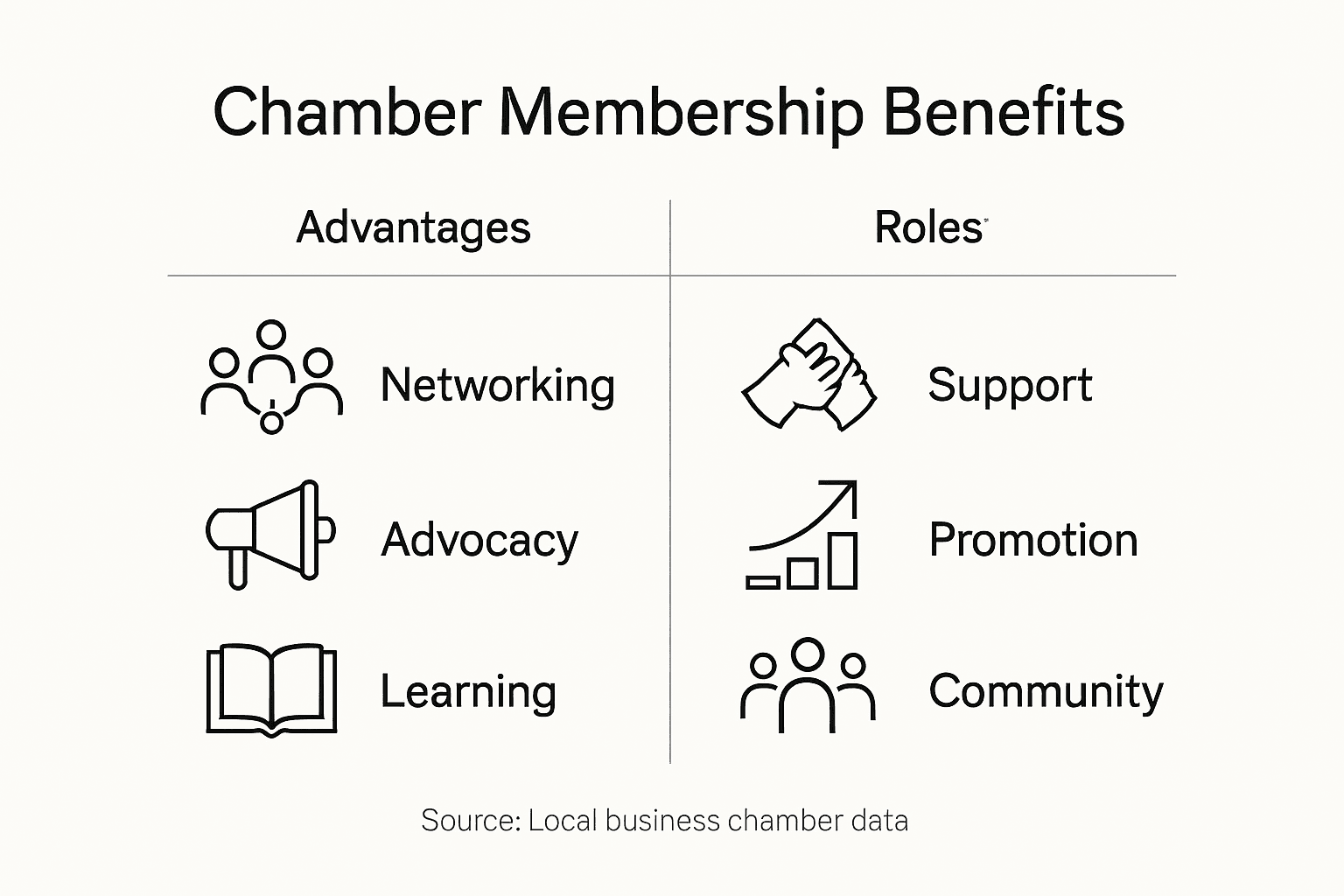
Beyond economic objectives, chambers play a crucial role in social cohesion. They create spaces where business leaders, nonprofit organizations, civic groups, and community members can collaborate, share perspectives, and develop innovative solutions to local challenges. This collaborative approach ensures that community development is inclusive, strategic, and responsive to evolving local needs.
Pro tip: Attend chamber events with a genuine curiosity about others’ experiences and a willingness to contribute, not just to collect business cards.
Membership Costs and Common Obligations
Chamber membership involves more than simply paying an annual fee. Membership structures vary significantly across different regions and organizational models, with costs and obligations reflecting the specific approach of each chamber.
Typical membership cost structures generally include:
- Tiered Membership Levels: Pricing based on business size and annual revenue
- Flat-Rate Options: Standard fees for all businesses within a specific category
- Sliding Scale Fees: Adjusted pricing depending on company scale and resources
- Complimentary Memberships: Sometimes offered to startups or nonprofit organizations
In statutory systems like Germany’s, chamber membership can be legally mandatory, with fees calculated based on company revenues. By contrast, voluntary chambers in the United States typically offer more flexible membership arrangements, allowing businesses to choose their level of engagement.
Common membership obligations extend beyond financial contributions. Members are often expected to adhere to professional codes of conduct, participate in chamber events, contribute to community initiatives, and maintain good standing within the business network. These expectations ensure that chamber membership remains a collaborative and mutually beneficial relationship.
Pro tip: Before committing to membership, request a detailed breakdown of fees and compare the specific services offered at each membership level.
Unlock the Full Potential of Your Business with Local Support in Waterlooville
Are you ready to overcome the challenges of growing your business while staying connected to your community? The local chamber of commerce offers crucial advocacy, networking, and growth opportunities that many businesses need to thrive. However, success also depends on accessible, up-to-date resources tailored to your area.
Waterlooville.co is your essential local guide providing detailed business directories, trusted customer reviews, and vital community information. By exploring our platform, you gain immediate access to a network of local service providers such as heating engineers, hair salons, and restaurants—key partners that help you build meaningful connections and enhance your business visibility.
Explore Waterlooville’s business directory and discover tools to leverage the benefits of your chamber membership. Stay informed about community events and local developments that directly impact economic opportunities and policy changes highlighted by your chamber.

Take the first step toward integrating your business into Waterlooville’s vibrant economic landscape. Visit Waterlooville.co now to connect, grow, and make the most of what a local chamber of commerce and community can offer. The time to act is now because successful business growth is built on strong local relationships and resources.
Frequently Asked Questions
What is the purpose of a local chamber of commerce?
A local chamber of commerce supports the economic growth of a specific area by advocating for business interests, providing networking opportunities, and offering various resources to local entrepreneurs and businesses.
How can my business benefit from joining a chamber of commerce?
Membership provides access to networking opportunities, advocacy for business interests, educational resources, market intelligence, and assistance in accessing funding, all of which can help drive your business growth and resilience.
Are there different types of chambers of commerce, and how do they differ?
Yes, chambers of commerce can vary by geographic scope—local, regional, national, or international—and may also focus on specific industries, offering tailored support for different business needs.
What costs and obligations are typically associated with chamber membership?
Membership costs can include tiered fees based on business size or flat-rate options, and members are usually expected to adhere to a code of conduct, participate in events, and engage in community initiatives.
Recommended
- Blog - Waterlooville News, Tips & Community Stories | Waterlooville.co
- Editorial Articles | Waterlooville Directory | Waterlooville.co
- Areas We Cover | Waterlooville Directory | Waterlooville.co
- What is Brand Clarity? Understanding Its Importance
- What is Getting in the Way of Your Revenue Growth?
- What Is Local SEO and Why It Matters in Sydney – Marzipan