
Local Environmental Issues Explained: Complete Guide
Local environmental issues explained, including pollution types, community impact, key laws, resident responsibilities, and ways to support sustainability.
Local Environmental Issues Explained: Complete Guide

Nearly 99 percent of people worldwide breathe air that fails to meet safe pollution guidelines. This stunning reality brings global concerns right to our doorstep. Environmental problems touch every family, business, and community, shaping the air we breathe, the water we drink, and our overall quality of life. Understanding local issues and the forces behind them gives Waterlooville residents a stronger voice in decisions that impact health, nature, and long-term well-being.
Key Takeaways
| Point | Details |
|---|---|
| Local Environmental Issues | Anthropogenic activities lead to significant environmental challenges, including air and water pollution, land degradation, and their impacts on community health and sustainability. |
| Types of Pollution | Local pollution includes air, water, land, and chemical contaminants, each posing unique risks to ecosystems and public health. |
| Regulatory Framework | The UK has stringent environmental laws aimed at pollution management and sustainability, requiring compliance from businesses and individuals alike. |
| Community Involvement | Both residents and businesses play vital roles in sustainability, through responsible consumption, waste management, and support for clean technologies. |
Table of Contents
- Defining Local Environmental Issues
- Common Types of Local Pollution and Hazards
- Impact on Waterlooville and Surrounding Areas
- Key UK Environmental Laws and Regulations
- Resident and Business Roles in Sustainability
- Practical Solutions and Ongoing Initiatives
Defining Local Environmental Issues
Environmental issues are complex challenges affecting our local community’s ecosystem, health, and quality of life. Anthropogenic activities fundamentally transform natural systems through pollution, resource consumption, and ecological disruption. According to the World Health Organization, nearly 99% of global populations breathe air that exceeds healthy pollution guidelines, highlighting the widespread nature of these environmental challenges.
Local environmental concerns typically manifest through multiple interconnected domains. These include air pollution from vehicle emissions, industrial processes, and household activities, water contamination from agricultural runoff and industrial waste, and land degradation caused by improper waste management. Each of these issues creates cascading impacts on community health, wildlife habitats, and long-term sustainability.
- Air quality directly influences respiratory health- Water pollution threatens local ecosystems and drinking water sources- Industrial activities contribute significant environmental stress- Urban development can disrupt natural habitats
Understanding these environmental challenges requires recognizing human impact as a critical factor. As research from Wikipedia indicates, human activities fundamentally alter ecosystems through population growth, overconsumption, and resource extraction. By identifying and addressing these local environmental issues, communities can develop targeted strategies for preservation, restoration, and sustainable development.
Common Types of Local Pollution and Hazards
Pollution represents a complex and multifaceted challenge for local communities, encompassing various environmental contamination sources that threaten human health and ecological systems. According to the United Nations Environment Programme, pollution manifests in multiple critical forms: air, freshwater, land, marine, chemical, and waste pollution, each presenting unique risks to our local environment and well-being.
In local contexts, the most prevalent pollution types often stem from industrial activities, transportation emissions, agricultural practices, and household waste. Chemical contamination emerges as a particularly dangerous form of pollution. As highlighted by Scientific American, toxic pollution can arise from various sources like heavy metal contamination, industrial park emissions, pesticide runoff, and groundwater contamination that potentially expose millions to significant environmental health risks.
- Industrial waste releases harmful chemicals into ecosystems
- Vehicle emissions contribute to air quality degradation
- Agricultural pesticides contaminate soil and water resources
- Improper waste management creates long-term environmental hazards
Understanding these pollution types requires recognizing their interconnected nature and potential long-term consequences. By identifying specific local pollution sources, communities can develop targeted mitigation strategies, implement stricter environmental regulations, and promote sustainable practices that protect both human health and natural ecosystems.
Here’s a comparison of the main types of local pollution impacting communities:
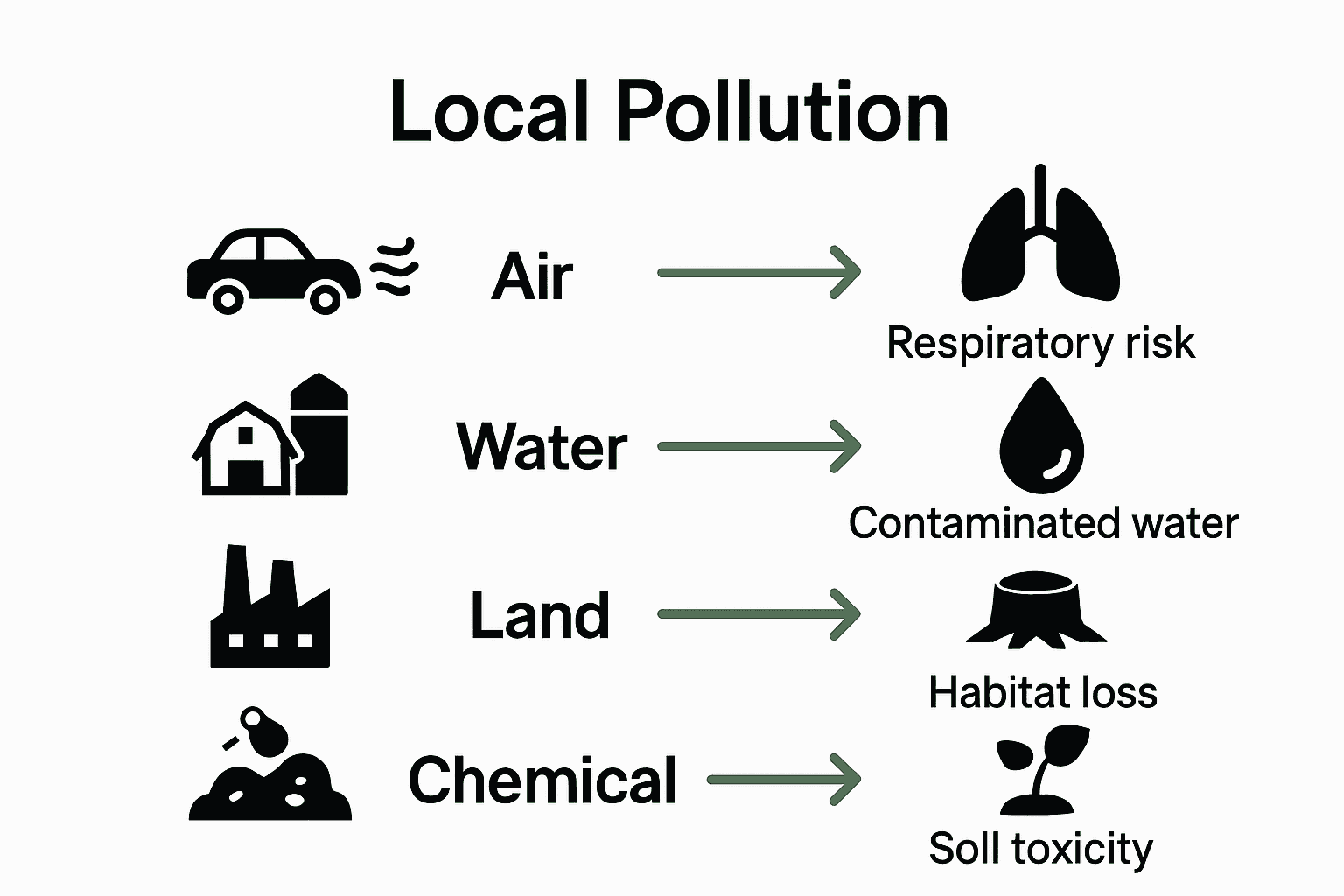
| Pollution Type | Main Sources | Key Local Impacts |
|---|---|---|
| Air | Vehicle emissions Industrial processes |
Respiratory health risks Decreased air quality |
| Water | Agricultural runoff Industrial waste |
Contaminated water Threatened aquatic life |
| Land | Improper waste disposal Urban development |
Land degradation Habitat loss |
| Chemical | Pesticides Heavy metals |
Soil toxicity Groundwater contamination |
Impact on Waterlooville and Surrounding Areas
Environmental challenges pose significant implications for Waterlooville and its neighboring communities, directly affecting local ecosystems, public health, and community well-being. The unique geographical and industrial landscape of this region creates specific environmental vulnerabilities that require targeted understanding and strategic interventions. According to UK government regulations, protecting communities from environmental hazards involves comprehensive frameworks addressing air, land, and water pollution risks.
In Waterlooville and surrounding areas like Cowplain, Denmead, and Purbrook, environmental impacts manifest through multiple interconnected channels. Industrial emissions, agricultural practices, transportation infrastructure, and urban development collectively contribute to localized environmental stress. These factors generate complex challenges that range from air quality degradation to potential soil and water contamination, potentially impacting resident health and local biodiversity.
- Industrial zones near Waterlooville generate significant atmospheric pollutants
- Agricultural runoff threatens local water resource quality
- Transportation corridors contribute to ongoing air quality challenges
- Urban expansion disrupts natural ecological systems
Addressing these environmental concerns requires collaborative efforts between local authorities, community organizations, and residents. By developing targeted mitigation strategies, implementing strict environmental regulations, and promoting sustainable practices, Waterlooville can protect its natural resources and ensure a healthier future for its communities. Check out our latest local environmental news for ongoing updates and insights into these critical community issues.
Key UK Environmental Laws and Regulations
UK environmental legislation provides a comprehensive framework for protecting natural resources, managing pollution, and promoting sustainable practices across various sectors. According to the Environment Act of 1995, regulatory bodies like the Environment Agency were established to oversee critical environmental management functions, including pollution control, land conservation, and resource management throughout England and Wales.
The legal landscape of environmental regulations continues to evolve, with recent initiatives targeting waste management and recycling practices. Simpler Recycling regulations, set to be implemented from March 2025, will require businesses and non-household premises to dramatically improve waste sorting practices. These regulations mandate the separation of food waste and dry recyclables from general waste, representing a significant step towards more sustainable waste management systems.
- Environment Act 1995 established foundational environmental protection mechanisms
- Simpler Recycling regulations introduce strict waste separation requirements
- Increasing focus on business compliance with environmental standards
- Progressive implementation of sustainability legislation
These regulations reflect the UK’s commitment to environmental protection and sustainable development. By implementing progressively stringent laws, the government aims to reduce environmental impact, promote resource efficiency, and create a more sustainable future for local communities. Businesses and residents in Waterlooville and surrounding areas must stay informed about these changing regulations to ensure compliance and contribute to broader environmental conservation efforts. Stay updated with our local environmental news for the latest insights into environmental legislation and community impact.
Resident and Business Roles in Sustainability
Sustainability is a collaborative effort that requires active participation from both residents and businesses in Waterlooville and surrounding areas. Business accountability has become increasingly critical, with regulatory frameworks mandating comprehensive environmental responsibility. According to legal experts, UK businesses must navigate complex regulations that prevent greenwashing, require accurate environmental claims, and ensure proper waste management under existing consumer protection laws.
Businesses face growing obligations through energy and carbon reporting frameworks like Energy Savings Opportunity Scheme (ESOS) and Streamlined Energy and Carbon Reporting (SECR). These regulations compel companies to conduct environmental impact assessments, audit their carbon emissions, and develop transparent sustainability strategies. Future directives like the Corporate Sustainability Reporting Directive will further intensify requirements for environmental disclosure and responsible business practices.
- Businesses must conduct regular environmental impact assessments
- Residents can support local sustainability through conscious consumption
- Energy efficiency becomes a key metric for corporate performance
- Transparent reporting of environmental metrics is increasingly mandatory
Individual residents play an equally crucial role in driving local sustainability. By making informed choices about consumption, supporting environmentally responsible businesses, and participating in community recycling and conservation efforts, individuals can significantly contribute to environmental protection. Our local environmental news provides ongoing insights into how Waterlooville residents and businesses can collaborate towards a more sustainable future.
Practical Solutions and Ongoing Initiatives
Clean technology and sustainable practices represent critical pathways for addressing local environmental challenges in Waterlooville and surrounding areas. According to the World Health Organization, effective pollution reduction strategies involve implementing clean industrial technologies, improving waste management systems, and transitioning to sustainable transport infrastructure. These comprehensive approaches offer significant health and environmental co-benefits for communities.
The UK government has developed multiple incentive schemes to accelerate sustainable practices. Government initiatives like the Enhanced Capital Allowance for energy-efficient equipment and the Smart Export Guarantee for renewable electricity generation provide tangible support for businesses and residents committed to environmental transformation. These programs create financial motivations for adopting greener technologies and reducing carbon footprints across various sectors.
- Implement energy-efficient equipment and technologies
- Explore renewable energy generation opportunities
- Participate in local recycling and waste reduction programs
- Support sustainable transportation infrastructure
Local communities can drive meaningful change through collective action and individual commitment. By embracing these practical solutions, Waterlooville residents can contribute to broader environmental protection efforts while potentially reducing personal and community-level environmental impact. Check out our local environmental news to stay informed about emerging sustainability initiatives and opportunities for community involvement.
Take Action Against Local Environmental Challenges in Waterlooville
Are you concerned about air quality, waste issues, or the need for sustainable solutions in Waterlooville? Local businesses and residents often feel overwhelmed by pollution, changing regulations, and the push for greener choices, as explained in our complete guide on environmental issues. It can be hard to know where to start when it comes to making a real difference in your community.

Start making informed choices today by connecting with trusted local service providers, accessing real-time community news, and exploring guides to sustainable living at Waterlooville.co. Stay ahead of environmental regulations, support eco-friendly businesses, and join a network of residents driving positive change. Visit our local environmental news for the latest updates, or use our business directory to find responsible services committed to Waterlooville’s future. Take the next step now toward a healthier and more sustainable community.
Frequently Asked Questions
What are the main types of local environmental issues?
Local environmental issues typically include air pollution, water contamination, land degradation, and chemical pollution, all of which have significant impacts on community health and ecosystems.
How can residents contribute to sustainability in their local community?
Residents can contribute by making environmentally conscious choices, supporting sustainable businesses, participating in recycling programs, and educating themselves and others about local environmental issues.
What are the health impacts of air pollution in local communities?
Air pollution can lead to respiratory health issues, cardiovascular diseases, and decreased overall quality of life due to poor air quality affecting community health.
What role do businesses play in addressing local environmental concerns?
Businesses are responsible for conducting environmental impact assessments, complying with regulations, and adopting sustainable practices to reduce their carbon footprint and mitigate pollution.
Recommended
- Blog - Waterlooville News, Tips & Community Stories | Waterlooville.co
- Editorial Articles | Waterlooville Directory | Waterlooville.co
- Areas We Cover | Waterlooville Directory | Waterlooville.co
- Waterlooville High Street - Waterlooville Directory | Waterlooville.co
- La Verne Community Initiatives for Sustainability You Need To Know
- Understanding Eco Friendly Signage Solutions - PromoSigns.co.uk