
Local History Research Guide for Waterlooville Success
Discover a step-by-step local history research guide for Waterlooville. Learn how to gather, verify, and present your findings for community use.
Local History Research Guide for Waterlooville Success

Did you know that over 65 percent of people who explore their town’s history feel more connected to their community? Discovering Waterlooville’s past is more than piecing together facts. It helps uncover roots and traditions that shape daily life. With the right tools and a clear approach, anyone can start revealing rich stories hidden in local records, photos, and memories, bringing Waterlooville’s unique character into focus.
Quick Summary
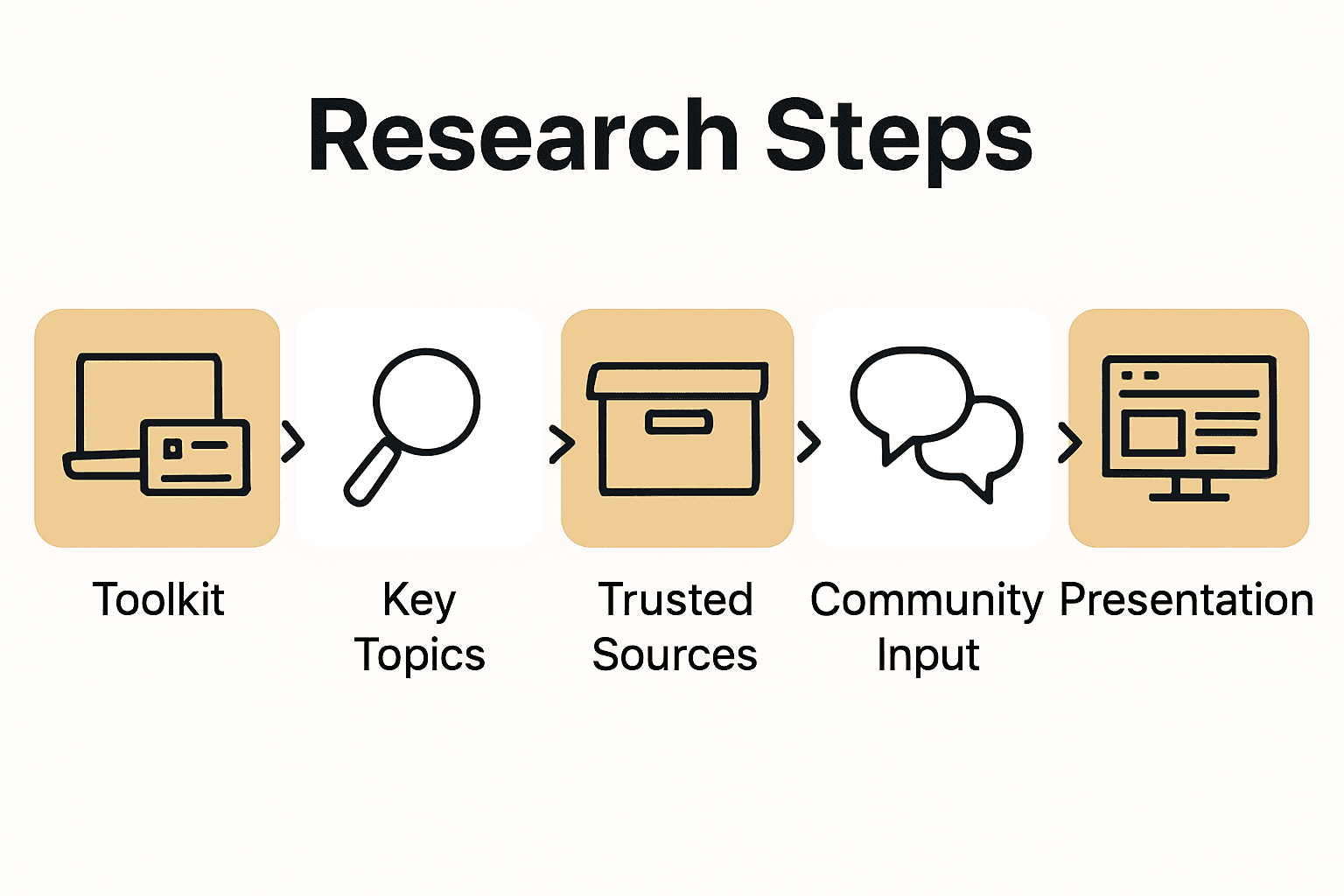
| Key Point | Explanation |
|---|---|
| 1. Assemble a research toolkit | Combine digital and physical resources for effective historical research on Waterlooville. |
| 2. Identify compelling local topics | Explore significant events and cultural practices that shape Waterlooville’s unique history. |
| 3. Utilize trusted sources | Access reliable historical records from local archives and digital databases for your research. |
| 4. Engage the community for insights | Connect with residents and experts to enrich your understanding of local history and validate findings. |
| 5. Present findings publicly | Share your research through engaging formats, making Waterlooville’s history accessible to all. |
 |
|
Table of Contents
- Step 1: Prepare Essential Tools And Resources
- Step 2: Identify Key Local History Topics
- Step 3: Gather Information From Trusted Sources
- Step 4: Verify Facts With Community Input
- Step 5: Present Findings For Public Access
Step 1: Prepare essential tools and resources
When diving into local history research for Waterlooville, assembling the right toolkit can transform your project from overwhelming to manageable. This step will help you gather everything you need to start uncovering fascinating stories about your community.
Start by establishing a research base that combines both digital and physical resources. According to Princeton University Library’s local history research guidelines, you will want to collect a mix of reference materials including scholarly works, government documents, newspapers, photographs, maps, and primary sources specific to Waterlooville and Hampshire.
Your essential research toolkit should include:
Here’s a comparison of essential tools and resources for Waterlooville local history research:
| Tool/Resource | Purpose | Example Use |
|---|---|---|
| Laptop/Tablet & Internet | Online research and documentation | Access digital archives |
| Local Library Card | Entry to physical archives | Borrow historical books |
| Notebook & Camera/Smartphone | Note taking and photo documentation | Capture local monuments |
| Online Databases/Archives | Locate primary and secondary sources | Search AM Explorer |
| Historical Societies/Museums | Expert contacts and unique documents | Request local records |
- A reliable laptop or tablet with good internet connection
- Local library card for accessing physical archives
- Notebook and quality digital camera or smartphone for documentation
- Access to online databases and digital archives
- Contact information for local historical societies and museums
As recommended by Cairn University’s historical research guide, explore online library catalogs and specialized databases like AM Explorer to locate both primary and secondary historical resources. These platforms can provide incredible insights into local community history that might not be immediately apparent.
Pro Tip: Create a dedicated research folder both digitally and physically to keep your materials organized and easily accessible.
Don’t get discouraged if your initial search feels challenging. Local history research is often like putting together a complex puzzle where each source reveals another piece of your community’s story. Your persistence will unlock incredible discoveries about Waterlooville’s rich historical landscape.
With your tools assembled, you are now ready to move forward into the next exciting phase of your local history research journey.
Step 2: Identify key local history topics
Now that you have assembled your research toolkit, the exciting part begins: discovering the fascinating historical narratives that make Waterlooville unique. In this step, you will learn how to uncover compelling local history topics that bring your community’s story to life.
According to the National Endowment for the Humanities local history guide, you want to explore themes that connect your town’s specific experiences with broader historical contexts. This means looking beyond simple dates and events to understand how Waterlooville fits into larger historical narratives.
Start by considering these potential research angles:
- Significant local events spanning different time periods
- Environmental and architectural transformations over decades
- Connections between Waterlooville’s history and national historical movements
- Stories behind local institutions and monuments
- Ongoing community traditions and cultural practices
As recommended by the Library of Congress local history research guides, dive deep into themes that reveal the rich tapestry of community life. Explore local folklore, pictorial collections, historical landmarks, and personal stories that illuminate Waterlooville’s unique character.
Pro Tip: Talk to long-time residents. Their personal memories often reveal historical insights no official document can capture.
Remember that local history is not just about collecting facts. It is about understanding how past experiences shape current community identity. Each story you uncover adds another layer to Waterlooville’s complex historical narrative.
With your initial research topics identified, you are ready to begin the detective work of gathering evidence and piecing together the remarkable stories that define your local community.
Step 3: Gather information from trusted sources
With your research topics identified, it is time to dig into the rich historical resources available for uncovering Waterlooville’s past. This step will guide you through finding reliable and authentic sources that transform your local history project from a casual exploration into a rigorous research endeavor.
According to Princeton University’s research guide, you have multiple authoritative sources at your disposal. Digital platforms like ProQuest Historical Newspapers, America’s Historical Newspapers, and Chronicling America offer extensive archives that can provide deep insights into local events and community developments.
Your trusted source toolkit should include:
- Local municipal archives in Hampshire
- Waterlooville public library historical collections
- Digital repositories like Google Books and HathiTrust
- Local historical society records
- Community newspaper archives
The Library of Congress recommends exploring free digital databases and online communities such as HistoryForge and HistoryPin. These platforms not only provide access to digitized historical materials but also allow researchers to connect and share discoveries about local history.
Pro Tip: Cross reference multiple sources to verify historical information and build a more comprehensive narrative.
Remember that trusted sources are not just about finding information but about understanding the context and credibility of each resource. Pay attention to the origin of your documents, the reputation of the archives, and the consistency of information across different sources.
With your initial sources gathered, you are now prepared to start analyzing and interpreting the historical materials that will bring Waterlooville’s stories to life.
Step 4: Verify facts with community input
Your local history research will truly come alive when you engage directly with the people who have lived and breathed Waterlooville’s story. This step transforms your research from a solitary academic exercise into a collaborative community exploration.
According to the National Endowment for the Humanities guide, crowdsourcing and oral history projects can be powerful ways to validate and enrich your historical findings. By reaching out to long-time residents and local experts, you gain nuanced insights that official documents might miss.
Consider these strategies for gathering community input:
- Attend local historical society meetings
- Schedule interviews with senior community members
- Participate in community history forums or social media groups
- Contact local librarians and historical preservation experts
- Explore genealogy networks specific to Hampshire and Waterlooville
The Library of Congress recommends using services like ‘Ask a Librarian’ to connect with experts who can help confirm and refine the accuracy of your research. Local historians and genealogy specialists often have deep knowledge that can fill gaps in your historical narrative.
Pro Tip: Record oral history interviews with consent and consider donating these valuable recordings to local archives.
Remember that community verification is not just about checking facts. It is about building connections and preserving stories that might otherwise be forgotten. Each conversation adds depth and personal perspective to your historical research.

With community insights gathered, you are now ready to weave together a rich and authentic narrative of Waterlooville’s remarkable history.
Step 5: Present findings for public access
After weeks of meticulous research, you are now ready to share Waterlooville’s fascinating stories with the world. This final step transforms your private research into a compelling public resource that can inspire and educate your entire community.
According to the National Endowment for the Humanities guide, creating digital storytelling platforms allows you to showcase local history in interactive and engaging ways. Your goal is to make historical information accessible and exciting for everyone.
Consider these strategies for presenting your findings:
- Create an online digital map with historical points of interest
- Upload curated photographs with detailed captions
- Develop narrative sections explaining historical context
- Use social media to share bite sized historical insights
- Build a dedicated website or blog about Waterlooville history
The Library of Congress recommends utilizing platforms like HistoryForge and HistoryPin that combine archival data with interactive mapping and community contributions. These tools allow you to create a dynamic historical narrative that invites community participation and ongoing engagement.
Pro Tip: Always include source citations and credit community contributors to maintain research integrity.
Remember that public access is not just about displaying information. It is about creating a living document that connects past experiences with present understanding. Your research becomes a bridge between generations, helping current residents appreciate the rich tapestry of their local community.
By sharing your findings openly, you are not just documenting history. You are preserving Waterlooville’s unique story for future generations to explore and understand.
Discover the Missing Link in Your Waterlooville Local History Research
Tired of hitting dead ends as you trace Waterlooville’s local history? This guide showed that finding trusted sources, connecting with the community, and presenting your findings are real challenges. If you have felt overwhelmed trying to gather details about local landmarks or verify facts with community input, you are not alone. But you do not have to navigate this journey by yourself.

Unlock deeper local stories by visiting Waterlooville.co. Explore our comprehensive updates on local events, browse our business directory to connect with historians and community groups, or use our news and community information sections to find leads and share your discoveries. Dive in now and let your next step in Waterlooville history be your most rewarding yet.
Frequently Asked Questions
What tools do I need for local history research in Waterlooville?
To start your local history research successfully, gather essential tools like a laptop with internet access, a local library card, a notebook, and a camera or smartphone for documentation. Organize these materials in a dedicated folder to streamline your research process.
How can I identify key local history topics in Waterlooville?
Begin by considering significant events, environmental changes, and local institutions related to Waterlooville. Engage with community traditions and stories to enrich your research focus and ensure a comprehensive understanding of local history.
What trusted sources should I use to gather information about Waterlooville’s history?
Utilize resources such as local municipal archives, the Waterlooville public library’s historical collections, and digital repositories like Google Books. Checking multiple sources helps verify the authenticity and accuracy of your historical findings.
How can community input enhance my local history research?
Engaging with long-time residents through interviews and discussions can provide invaluable insights that official documents might not capture. Attend local historical society meetings or participate in community forums to gather diverse perspectives.
How should I present my findings on Waterlooville’s history?
Consider creating an online platform such as a digital map, blog, or social media page to share your research. Make historical information accessible and engaging to the community, while always crediting your sources and contributors.
What is the best way to verify historical facts during my research?
Verify facts by cross-referencing information from multiple trusted sources, such as historical documents and community insights. This approach ensures a more robust narrative and raises the credibility of your local history project.