
Local Procurement: Why It Matters for Community Growth
Local procurement promotes economic growth, supports local businesses, and enhances community engagement. Learn types, legal issues, and best practices.
Local Procurement: Why It Matters for Community Growth

Choosing where to buy can transform the way money moves through Waterlooville and neighboring regions. Local procurement goes beyond simple shopping decisions, shaping economic strength and supporting everyday business growth right in Hampshire. By understanding the principles of geographic proximity, economic impact, and strategic value, residents can see how local purchasing keeps resources circulating close to home. Discover how embracing local procurement helps drive lasting benefits for families, businesses, and the wider community.
Table of Contents
- Defining Local Procurement And Key Concepts
- Types Of Local Procurement And Variations
- How Local Procurement Processes Work
- Legal Frameworks Governing Local Procurement
- Financial, Social, And Economic Impacts
- Common Challenges And Mistakes To Avoid
Key Takeaways
| Point | Details |
|---|---|
| Local Procurement Benefits | Supports community economic development by keeping financial resources within the local ecosystem. |
| Types of Procurement | Includes direct, indirect, and services procurement, each serving different business needs. |
| Strategic Evaluation | Factors such as local economic impact, compliance, and supplier reliability should guide procurement decisions. |
| Mitigation of Challenges | Developing local talent and building networks can address supplier limitations and enhance procurement efficiency. |
Defining Local Procurement and Key Concepts
Local procurement represents a strategic approach where communities and organizations prioritize purchasing goods and services from businesses within their immediate geographic region. At its core, local procurement aims to stimulate economic growth by keeping financial resources circulating within the community’s ecosystem. When businesses and residents choose local suppliers, they create a multiplier effect that strengthens the regional economic infrastructure.
According to public procurement research, procurement involves more than simple transactions. It encompasses complex decision making that impacts public services, economic efficiency, and broader policy objectives. In the context of Waterlooville and surrounding areas, local procurement means consciously selecting suppliers from Hampshire or nearby regions who can provide quality goods and services while supporting community development.
Key characteristics of local procurement include geographic proximity, economic impact, and strategic value. Geographic proximity typically means sourcing within 50-100 miles of the primary location. Economic impact measures how much money remains within the local economy through supplier selection. Strategic value considers not just price, but also the potential long-term benefits of supporting regional businesses. These suppliers often provide personalized service, faster response times, and a deeper understanding of local market dynamics.
Understanding local procurement requires recognizing its multifaceted nature. Local supplier participation varies based on criteria like business ownership, value addition, and geographic boundaries. For Waterlooville residents, this means evaluating local businesses not just on cost, but on their commitment to community growth and ability to deliver high-quality solutions.
Pro tip: When evaluating local suppliers, request detailed information about their local roots, community involvement, and specific value they bring beyond basic product or service offerings.
Types of Local Procurement and Variations
Local procurement encompasses diverse approaches tailored to meet specific community and organizational needs. These variations reflect the nuanced strategies businesses and local governments employ to support economic development while addressing unique operational requirements. Understanding the different types of local procurement helps Waterlooville residents and businesses make more informed purchasing decisions that benefit the regional economy.
Public procurement research identifies three primary procurement categories: direct, indirect, and services procurement. Direct procurement involves purchasing core goods and services essential to an organization’s primary operations. For local businesses in Waterlooville, this might mean purchasing office supplies, equipment, or raw materials from Hampshire-based suppliers. Indirect procurement supports operational infrastructure, including maintenance services, professional consulting, and supplementary resources that enable business functionality.

Services procurement represents a distinct category focusing on labor and specialized deliverables. This type often involves hiring local professionals, contractors, and specialized service providers who contribute expertise tailored to specific project needs. In the Waterlooville context, this could include engaging local heating engineers, digital marketing specialists, or construction professionals who understand regional market dynamics.
Here’s a summary of the three main types of local procurement and their business value:
| Type of Procurement | Typical Examples | Main Business Benefit |
|---|---|---|
| Direct Procurement | Office supplies, raw materials | Supports operational essentials |
| Indirect Procurement | Maintenance services, consultancy | Enhances day-to-day operations |
| Services Procurement | Professional contractors, marketing | Delivers specialized expertise |
Local authority procurement strategies demonstrate how municipalities adapt procurement approaches based on project complexity and strategic objectives. Some procurement variations include open tenders, invited tenders, and negotiated procurement processes. Each method offers unique advantages depending on project scale, budget constraints, and desired supplier engagement. Small local enterprises often benefit from more flexible procurement approaches that prioritize community impact over rigid competitive bidding processes.
Pro tip: When exploring local procurement options, request detailed proposals from multiple suppliers to understand their specific value propositions and alignment with your project requirements.
How Local Procurement Processes Work
Local procurement processes represent a systematic approach to purchasing goods and services that prioritize transparency, efficiency, and community economic development. These structured methods ensure that local businesses have fair opportunities to compete for contracts while maintaining high standards of quality and accountability.
Procurement process insights reveal a comprehensive workflow that typically involves several critical stages. The process begins with need identification, where organizations carefully assess their requirements and potential local suppliers. Market research follows, helping decision makers understand available resources within Waterlooville and Hampshire regions. This initial phase allows businesses to map potential suppliers, evaluate capabilities, and determine alignment with specific project needs.
The procurement journey continues with detailed planning and solicitation strategies. Tendering becomes a crucial mechanism where organizations publicly announce their requirements, inviting local businesses to submit competitive proposals. Local government procurement guidelines emphasize fairness and strategic execution during bid evaluation. Evaluation criteria often extend beyond simple price comparisons, considering factors like local economic impact, supplier reliability, service quality, and community contribution. For Waterlooville businesses, this means preparing comprehensive proposals that showcase not just competitive pricing, but also their unique value proposition and commitment to regional development.
Contract management represents the final crucial stage of local procurement processes. Successful suppliers must demonstrate ongoing compliance, deliver high-quality services, and maintain transparent communication throughout the project lifecycle. This approach ensures accountability and builds long-term relationships between local organizations and suppliers, creating a sustainable ecosystem of economic collaboration.
Pro tip: Develop a comprehensive vendor portfolio that highlights your business’s unique strengths, local connections, and ability to deliver exceptional value beyond mere cost considerations.
Legal Frameworks Governing Local Procurement
Legal frameworks for local procurement form a complex network of regulations designed to ensure transparency, fairness, and strategic economic development. These comprehensive systems establish clear guidelines that protect both public interests and local business opportunities, creating a balanced approach to community-focused purchasing strategies.
Public procurement legal systems encompass multiple layers of regulatory oversight. Constitutional principles provide the foundational structure, establishing core requirements for public spending and procurement processes. National legislation builds upon these principles, creating detailed rules that govern how local governments and organizations can purchase goods and services. These legal frameworks address critical aspects such as competitive bidding, transparency requirements, potential conflicts of interest, and mechanisms for ensuring equitable access to procurement opportunities.
The procurement legal landscape includes nuanced regulations that extend beyond simple transactional rules. International legal procurement guidelines highlight the importance of comprehensive frameworks that consider broader economic and social objectives. For Waterlooville businesses, this means understanding not just the technical requirements of bidding, but also the strategic goals of local procurement. These goals often include supporting small businesses, promoting local economic growth, ensuring environmental sustainability, and maintaining high standards of ethical conduct.
Key legal considerations in local procurement involve complex evaluation criteria that go beyond price. Regulations typically require detailed documentation, clear performance metrics, and robust dispute resolution mechanisms. Local businesses must demonstrate compliance with multiple legal requirements, including tax regulations, labor standards, environmental guidelines, and sector-specific operational protocols. This multilayered approach ensures that procurement processes serve broader community interests while maintaining rigorous standards of accountability and fairness.
Pro tip: Consult with local legal professionals specializing in procurement regulations to develop a comprehensive understanding of your specific compliance requirements and strategic opportunities.
Financial, Social, and Economic Impacts
Local procurement represents a powerful mechanism for driving comprehensive community development, extending far beyond simple financial transactions. By strategically directing spending, communities can create multifaceted impacts that reshape economic landscapes and generate sustainable growth opportunities for local businesses and residents.
Public procurement research reveals that procurement strategies function as dynamic tools for socioeconomic transformation. Economic multipliers emerge when local businesses receive targeted opportunities, generating a cascade of financial benefits. When Waterlooville businesses secure local contracts, they generate employment, stimulate secondary economic activities, and create a virtuous cycle of reinvestment. These economic ripple effects mean that every pound spent locally can generate significantly more economic value than funds spent with external suppliers.
Local procurement policies emphasize holistic impact assessment beyond traditional financial metrics. Social value becomes a critical consideration, with procurement strategies designed to address broader community objectives. This approach might include prioritizing businesses that provide apprenticeship programs, support disadvantaged groups, or demonstrate environmental sustainability practices. For Waterlooville, this translates into procurement decisions that simultaneously address economic growth, social inclusion, and environmental responsibility.
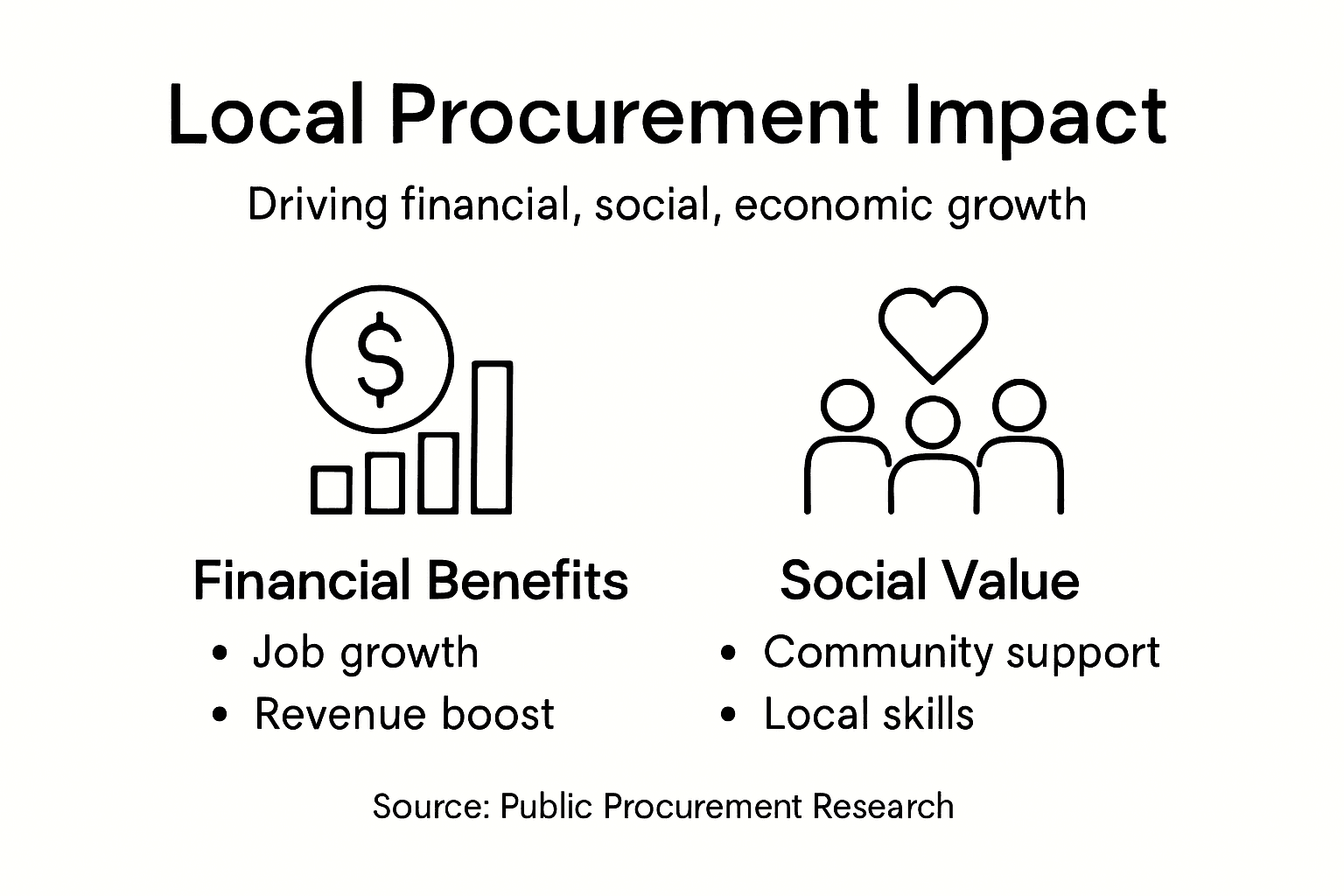
The financial implications of strategic local procurement extend into complex economic ecosystems. By creating preferential mechanisms for local suppliers, communities can nurture emerging businesses, support innovation, and build resilient economic networks. These strategies help mitigate economic leakage, where funds traditionally flow out of the community, instead creating self-sustaining economic environments that generate long-term prosperity. Careful policy design ensures that procurement approaches balance competitive requirements with community development goals.
Pro tip: Develop comprehensive impact measurement frameworks that track not just financial outcomes, but also social and environmental benefits generated through local procurement strategies.
Common Challenges and Mistakes to Avoid
Local procurement, while promising significant community benefits, presents complex challenges that require strategic navigation and proactive management. Understanding these potential pitfalls helps Waterlooville businesses and organizations design more effective, resilient procurement strategies that minimize risks and maximize community impact.
Local procurement challenges reveal critical obstacles that can derail successful procurement initiatives. Limited market capacity emerges as a primary concern, particularly in smaller regions where specialized expertise might be scarce. Waterlooville businesses must overcome supplier limitations by developing comprehensive strategies that simultaneously nurture local talent and maintain high-quality standards. This might involve creating training programs, offering mentorship opportunities, or developing collaborative networks that expand local supplier capabilities.
Public procurement complexities highlight additional critical challenges. Regulatory complexity and compliance risks can overwhelm smaller organizations attempting to participate in local procurement processes. Common mistakes include insufficient documentation, inadequate understanding of bidding requirements, and failure to demonstrate clear value propositions. Successful local suppliers must invest time in understanding intricate legal frameworks, develop robust compliance mechanisms, and communicate their unique value effectively to procurement decision makers.
Risk management represents another crucial aspect of navigating local procurement challenges. Organizations must develop sophisticated evaluation frameworks that assess potential suppliers across multiple dimensions. These assessments should extend beyond traditional financial metrics to include operational reliability, technological capabilities, social responsibility, and long-term sustainability. By implementing comprehensive due diligence processes, Waterlooville businesses can mitigate potential risks associated with supplier selection while supporting the growth of local economic ecosystems.
Below is a comparison of common challenges in local procurement with strategies for mitigation:
| Challenge | Potential Impact | Mitigation Strategy |
|---|---|---|
| Limited market capacity | Fewer qualified suppliers | Invest in training, build networks |
| Regulatory complexity | Increased compliance risks | Use expert legal/procurement help |
| Incomplete documentation | Disqualified bids | Standardize checklist processes |
| Value communication gap | Lost contracts | Highlight unique local strengths |
Pro tip: Create a detailed risk assessment checklist that evaluates potential local suppliers across financial, operational, and ethical dimensions before initiating procurement partnerships.
Empower Waterlooville’s Growth Through Local Procurement
The article highlights the challenge of limited market capacity and the importance of supporting local suppliers to keep economic benefits within our community. If you value strengthening Waterlooville’s economy and want to tap into a trusted network of local businesses including heating engineers, hair salons, and service providers, our platform makes it simple. By connecting with trusted local suppliers on Waterlooville.co, you help create jobs, boost community development, and enjoy personalized service tailored to our region.

Explore our extensive business directory today and discover how your purchasing decisions contribute directly to Waterlooville’s economic resilience. Acting now means you support a sustainable local economy while gaining access to reliable suppliers who understand your specific needs. Visit Waterlooville.co to start building stronger community ties through local procurement.
Frequently Asked Questions
What is local procurement?
Local procurement is a purchasing strategy where communities prioritize buying goods and services from businesses within their immediate geographic area to stimulate local economic growth.
What are the types of local procurement?
The three main types of local procurement are direct procurement, which involves buying core goods and services; indirect procurement, which supports operational infrastructure; and services procurement, which focuses on labor and specialized deliverables.
How does local procurement impact the economy?
Local procurement generates economic multipliers by keeping spending within the community, leading to job creation, increased secondary economic activities, and a more resilient local economy.
What challenges are associated with local procurement?
Challenges include limited market capacity, regulatory complexities, insufficient documentation, and communication gaps. Effectively addressing these issues is essential for successful local procurement initiatives.
Recommended
- Blog - Waterlooville News, Tips & Community Stories | Waterlooville.co
- Areas We Cover | Waterlooville Directory | Waterlooville.co
- Waterlooville Town Centre - Waterlooville Directory | Waterlooville.co
- Waterlooville New Builds - Waterlooville Directory | Waterlooville.co
- Why Choose Local Contractors for Home Projects - J. A. Kelly Contracting Services
- Local SEO for Small Businesses in San Antonio
- Local Advertising Explained: Winning Leads for Contractors