
Public Transport Explained: Options and Everyday Impact
Public transport explained for Waterlooville: modes available, how services operate, accessibility, fare systems, and practical commuter tips.
Public Transport Explained: Options and Everyday Impact
Running late on a busy weekday in Waterlooville often means weighing driving against catching the next bus. For residents, finding reliable and affordable ways to get around shapes daily life and access to local opportunities. By focusing on shared mobility solutions with fixed routes and coordinated schedules, public transport in Waterlooville delivers not just convenience but a vital connection between neighborhoods, services, and nearby towns.
Table of Contents
- What Defines Public Transport Services
- Types of Public Transport in Waterlooville
- How Public Transit Systems Operate
- Accessibility and Fares for Riders
- Comparing Public vs. Private Transport
Key Takeaways
| Point | Details |
|---|---|
| Public Transport Characteristics | effective systems operate on fixed routes, integrate multiple transportation modes, and ensure affordability through subsidies. |
| Sustainability Goals | Public transport aims to reduce private vehicle dependency and environmental impacts, enhancing urban mobility and social equity. |
| Accessibility Features | Modern systems prioritize accessibility for diverse populations, including low-floor buses and priority seating for those with mobility challenges. |
| Comparative Benefits | Public transport offers lower costs, reduced urban congestion, and promotes social equity compared to private vehicles, which can increase inequality and environmental impacts. |
What Defines Public Transport Services
Public transport services are comprehensive mobility systems designed to provide accessible and affordable transportation for entire communities. These networks go far beyond simple movement from point A to point B, representing critical urban infrastructure that connects people, neighborhoods, and economic opportunities.
According to UN-Habitat research, effective public transport systems share several fundamental characteristics:
- Operate on fixed routes and predictable schedules
- Integrate multiple transportation modes (buses, metros, trams)
- Provide subsidized services to ensure affordability
- Support inclusive mobility for all population segments
The core objectives of public transport extend well beyond basic transportation. These systems aim to reduce private vehicle dependency, minimize environmental impacts, and create more sustainable urban environments. By offering shared mobility solutions, cities can address complex transportation challenges while promoting social equity and economic accessibility.
Public transport services are distinguished by their unique operational features. Unlike private transportation, these systems are characterized by:
- Standardized fare structures
- Publicly accessible routes
- Scheduled and regulated services
- Cost-effective travel options
Accessibility remains a critical component of modern public transport design. Contemporary systems increasingly focus on creating inclusive environments that accommodate individuals with diverse mobility needs, including those with physical disabilities, elderly populations, and people with limited economic resources.
Public transport represents more than transportation - it’s a fundamental urban infrastructure that connects communities and supports social mobility.
Pro tip: Always check local transportation authority websites for the most current route information and potential service updates.
Types of Public Transport in Waterlooville
Waterlooville’s public transportation system offers diverse mobility options designed to meet the varied needs of local residents and commuters. The town’s transportation infrastructure focuses on providing efficient, accessible, and sustainable travel solutions that connect different neighborhoods and nearby communities.
South East Hampshire Rapid Transit represents the cornerstone of Waterlooville’s public transport network, delivering comprehensive bus services that link the town with surrounding urban areas. The transit system features several key transportation modes:
- Bus Services: Primary mode of public transportation
- Regional Connector Routes
- High-frequency Transit Lines
- Accessibility-focused Transport Options
Local bus services play a crucial role in Waterlooville’s transportation ecosystem. According to Hampshire County transportation data, the area is served by multiple bus routes, including:
- Route D1: Connecting Waterlooville to Denmead
- Route D2: Linking Waterlooville with Hambledon
- Regional routes connecting to Portsmouth, Fareham, and Havant
Rapid transit infrastructure is strategically designed to improve journey times and enhance overall transportation efficiency. These bus systems combine the flexibility of traditional buses with advanced transit technologies, creating a more responsive and user-friendly transportation experience.
Waterlooville’s public transport network aims to provide sustainable, accessible mobility solutions for all community members.
Additional transportation options complement the primary bus services, including taxi services and occasional community transport initiatives that support residents with limited mobility.

Pro tip: Download local transportation apps to track real-time bus schedules and plan your most efficient routes.
How Public Transit Systems Operate
Public transit systems represent complex networks of transportation designed to move large numbers of people efficiently and systematically. These intricate mobility solutions require sophisticated planning, technological integration, and strategic management to ensure reliable and accessible transportation for entire communities.
Public transit operations involve multiple interconnected components that work together to deliver seamless transportation experiences. The fundamental operational framework includes several critical elements:
- Route planning and optimization
- Schedule management
- Vehicle maintenance
- Passenger information systems
- Fare collection mechanisms
- Real-time tracking technologies
The operational infrastructure of public transit systems relies on sophisticated coordination between various stakeholders. Transit agencies must balance multiple considerations, including:
- Passenger demand and route efficiency
- Cost management and funding constraints
- Infrastructure maintenance
- Service reliability and punctuality
Multimodal integration plays a crucial role in modern transit system design. By creating seamless connections between different transportation modes, cities can develop more comprehensive and user-friendly mobility networks that reduce individual vehicle dependency and minimize urban congestion.
Effective public transit systems transform urban mobility by prioritizing accessibility, sustainability, and community connectivity.
Technological advancements continue to revolutionize how public transit systems operate. Advanced transit technologies now enable real-time route optimization, predictive maintenance, and enhanced passenger experience through digital platforms and smart infrastructure solutions.
Pro tip: Download multiple transit apps to compare routes and get the most up-to-date service information.
Accessibility and Fares for Riders
Public transportation accessibility represents a critical component of inclusive mobility, ensuring that transportation services accommodate diverse rider needs and capabilities. The goal is to create a transportation system that supports everyone, regardless of age, mobility status, or economic background.
Community transport options in Hampshire provide specialized services designed to support riders with unique transportation requirements. These services go beyond traditional public transit, offering tailored solutions for individuals with specific mobility challenges.
Accessibility features for public transit include:
- Low-floor buses with wheelchair ramps
- Priority seating for passengers with limited mobility
- Driver assistance for passengers needing extra support
- Accessible information and communication systems
- Specialized transportation for medical appointments
Fare structures in the region are designed to balance affordability and system sustainability. Key fare options include:
- Concessionary passes for seniors
- Discounted rates for disabled passengers
- Multi-ride and weekly travel passes
- Student and youth transportation discounts
Inclusive mobility goes beyond physical vehicle design. Public transport accessibility in Hampshire incorporates comprehensive strategies to ensure transportation remains available and affordable for all community members.
Effective public transit accessibility transforms transportation from a service into a fundamental community right.
Technology continues to play a crucial role in improving accessibility. Digital platforms now offer real-time route information, journey planning tools, and adaptive technologies that make navigation easier for passengers with diverse needs.
This table summarizes key accessibility features and who benefits most from each:
| Feature | Main Beneficiaries | Benefit Provided |
|---|---|---|
| Low-floor entry buses | Wheelchair users, elderly | Easier boarding and exiting |
| Priority seating | Elderly, pregnant, disabled | Greater comfort and safety |
| Digital route info | All riders | Real-time updates, easier planning |
| Driver assistance | Visually impaired, elderly | Personalized boarding support |
| Concessionary fares | Low-income individuals, students | Reduces travel costs |
Pro tip: Always carry your concessionary travel pass and verify route accessibility before traveling.
Comparing Public vs. Private Transport
Transportation choices fundamentally shape individual mobility and broader community infrastructure. Understanding the nuanced differences between public and private transport helps residents make informed decisions about their daily travel strategies.
Transportation modes reveal distinct advantages and challenges for users. The choice between public and private transport involves complex trade-offs related to convenience, cost, environmental impact, and personal mobility preferences.
Key differences between public and private transport include:
- Cost efficiency
- Environmental sustainability
- Personal convenience
- Accessibility
- Urban infrastructure requirements
Private transport offers unique benefits that appeal to many travelers:
- Door-to-door service
- Flexible scheduling
- Personal comfort and privacy
- Independent route selection
- Immediate availability
Public transportation, by contrast, provides substantial community-wide benefits. Urban mobility research demonstrates that shared transportation systems significantly reduce per-capita carbon emissions and urban congestion.
Private vehicles represent individual convenience, while public transit embodies collective social responsibility.
The environmental and economic implications of transportation choices extend far beyond personal preference. Public transit supports broader social objectives by creating more equitable, sustainable urban mobility ecosystems.
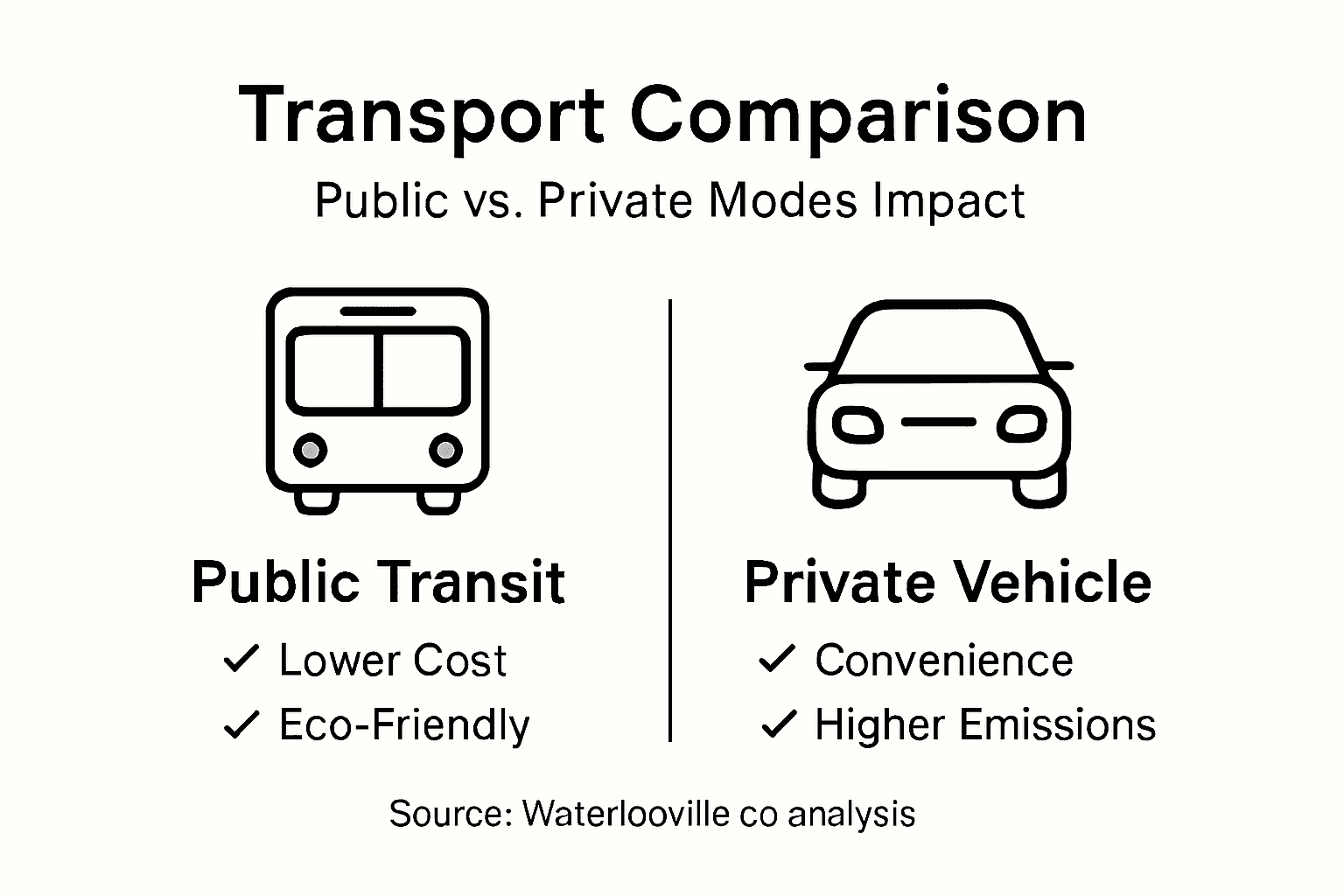
Here is a comparison of public vs. private transportation and their community impacts:
| Aspect | Public Transport | Private Vehicles |
|---|---|---|
| Cost to User | Lower per trip | Higher maintenance and fuel costs |
| Urban Congestion | Significantly reduced | Major contributor to congestion |
| Accessibility | Wide community access | Limited to vehicle owners |
| Environmental Impact | Lower per capita emissions | Higher carbon footprint |
| Infrastructure Demand | Supports dense cities | Requires larger road networks |
| Social Equity | Promotes inclusivity | May increase inequality |
Pro tip: Calculate your monthly transportation costs comparing public transit passes against private vehicle expenses to make an informed choice.
Discover Smarter Ways to Navigate Waterlooville with Local Insights
Understanding public transport options is key to overcoming daily travel challenges such as affordability, accessibility, and convenience. The article highlights how systems like Waterlooville’s bus services and community transport aim to offer inclusive and sustainable mobility solutions but also reveals the need for reliable, up-to-date information on routes, schedules, and local services.
At Waterlooville.co, we connect you to everything you need to enhance your daily travel experience. From detailed local transport updates to trusted service providers like taxi companies and community assistance, our platform empowers you to make informed decisions. Whether you seek real-time info or local business support, we bring the community resources directly to your fingertips.

Take control of your journey now by exploring comprehensive guides and the latest transport news on Waterlooville.co. Discover how easy it is to combine public transit with local services to save time and money. Start planning smarter trips today and experience the full benefits of Waterlooville’s mobility network.
Explore more about sustainable travel and local support right here: visit Waterlooville.co to get started.
Frequently Asked Questions
What are the main characteristics of effective public transport systems?
Effective public transport systems operate on fixed routes and predictable schedules, integrate multiple transportation modes, provide subsidized services for affordability, and support inclusive mobility for all population segments.
How do public transport systems differ from private vehicles?
Public transport systems are generally more cost-effective, environmentally sustainable, and promote social equity, while private vehicles offer door-to-door service, flexible scheduling, and personal comfort but contribute to urban congestion and higher emissions.
How is accessibility incorporated into public transport?
Accessibility in public transport includes features like low-floor buses with ramps, priority seating, driver assistance, and accessible information systems to accommodate individuals with diverse mobility needs.
What are the different modes of public transport available?
Public transport includes various modes, such as bus services, regional connector routes, rapid transit lines, and supplementary options like taxis and community transport initiatives.
Recommended
- Taxi Waterlooville - Waterlooville Directory | Waterlooville.co
- Editorial Articles | Waterlooville Directory | Waterlooville.co
- Waterlooville Town Centre - Waterlooville Directory | Waterlooville.co
- Car Service Waterlooville - Waterlooville Directory | Waterlooville.co
- Sustainable Waste Transport: Complete UK Guide - Venture Waste