
What Is a Local Enterprise? Complete Guide for 2025
Learn what a local enterprise is with this comprehensive guide. Covers definitions, types, how they work, benefits, risks, and legal basics.
What Is a Local Enterprise? Complete Guide for 2025

Over 85 percent of American businesses are classified as local enterprises, reflecting how deeply these organizations shape the nation’s economic landscape. In every city and rural town, these locally rooted ventures power job creation, nurture community ties, and adapt swiftly to regional needs. Understanding what defines a local enterprise, and how these businesses operate, can reveal practical ways communities drive economic growth and foster lasting social connections.
Table of Contents
- Defining A Local Enterprise And Key Concepts
- Types Of Local Enterprises Explained
- Core Characteristics And Community Impact
- Legal, Tax, And Compliance Requirements
- Benefits, Risks, And Common Challenges
Key Takeaways
| Point | Details |
|---|---|
| Local Enterprises Address Community Needs | Local enterprises focus on serving specific geographic areas, creating jobs, and enhancing community development through tailored services. |
| Diverse Business Models | These organizations operate in various sectors, from retail to agriculture, and often include community businesses and social enterprises. |
| Holistic Community Development | Local enterprises prioritize social, economic, and environmental outcomes, fostering sustainable growth and community resilience. |
| Regulatory Compliance is Crucial | Operating within legal frameworks and maintaining financial transparency are essential for local enterprises to sustain their missions and trust within the community. |
Defining a Local Enterprise and Key Concepts
A local enterprise represents a small business or community-driven organization focused on serving and benefiting a specific geographic area. These businesses are uniquely positioned to address local economic needs, create employment opportunities, and contribute directly to community development. Unlike large corporate entities, local enterprises maintain deep connections with their immediate surroundings and stakeholders.
At the core, local enterprises emerge from grassroots efforts to solve community challenges and generate sustainable economic activity. These organizations typically share several fundamental characteristics:
- Operate within a defined local or regional boundary
- Prioritize community economic interests
- Reinvest profits back into the local ecosystem
- Maintain close relationships with regional stakeholders
- Provide specialized services tailored to local needs
Community businesses represent a specific subset of local enterprises that are explicitly designed to address collective challenges. These organizations are characterized by their democratic governance structures and commitment to generating social value alongside economic returns. By focusing on local ownership and community-driven decision making, they create pathways for residents to directly participate in economic development and problem solving.
Understanding local enterprises requires recognizing their multifaceted nature. They are not merely economic units but social institutions that bridge community aspirations with practical economic strategies. From small retail shops and service providers to cooperative networks and social enterprises, these organizations embody the entrepreneurial spirit of local communities while maintaining a strong commitment to shared prosperity.
Types of Local Enterprises Explained
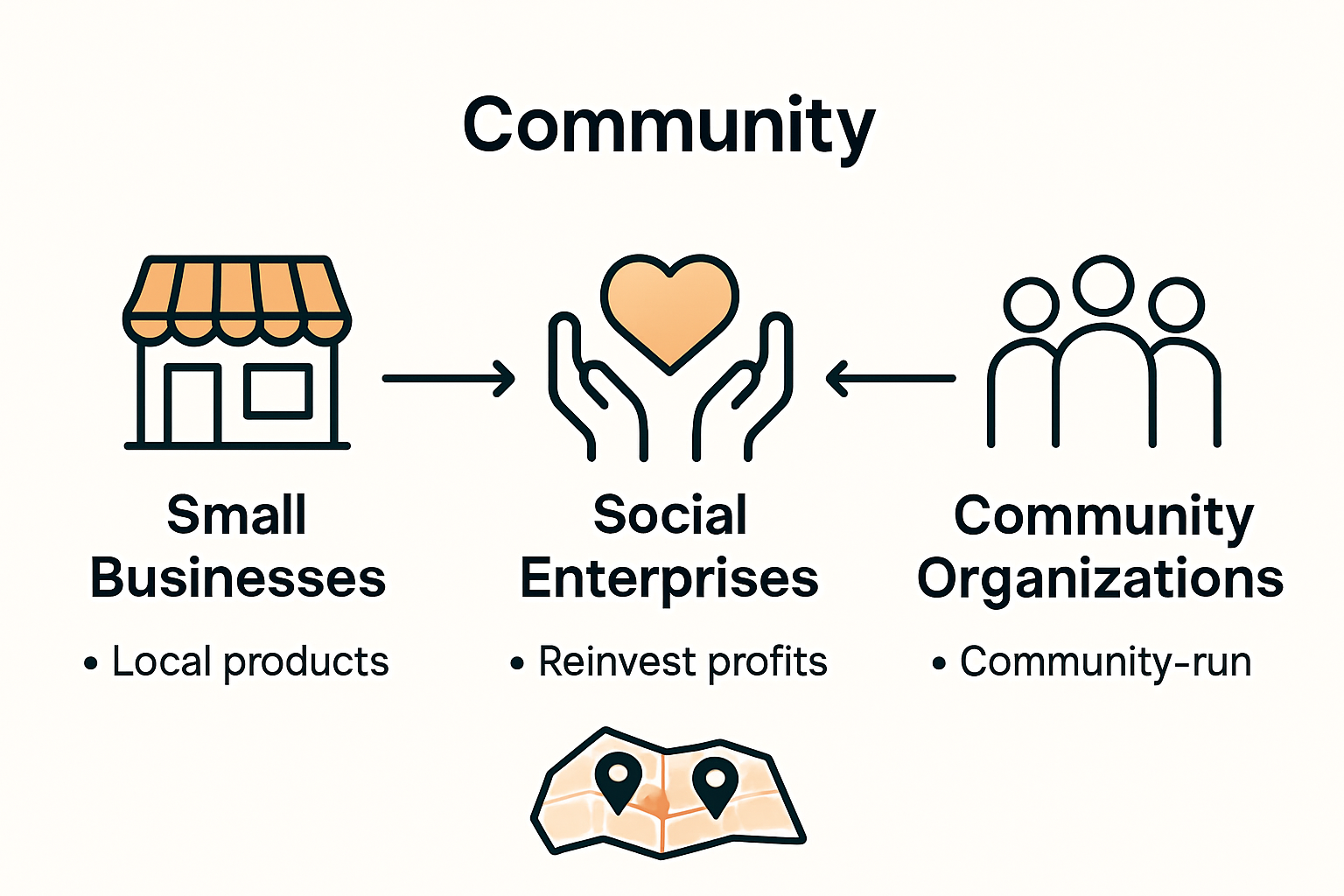
Local enterprises encompass a diverse range of business models, each uniquely tailored to address specific community needs and economic challenges. These organizations represent more than traditional business structures, functioning as vital economic and social engines within local communities.
Community businesses demonstrate remarkable versatility, spanning multiple sectors and operational models. Their typical manifestations include:
- Retail shops serving local consumer needs
- Agricultural enterprises like community farms
- Local hospitality venues such as pubs and cafes
- Service centers including call centers and support facilities
- Cooperative networks with shared economic goals
Social enterprises represent another critical category of local enterprises, distinguished by their dual mission of generating economic value while addressing broader societal challenges. These organizations strategically blend entrepreneurial approaches with social impact, targeting issues like environmental sustainability, cultural preservation, and community development.

Beyond traditional business models, local enterprises can also manifest as nonprofit organizations, worker-owned cooperatives, community development financial institutions, and hybrid social ventures. What unites these diverse models is a fundamental commitment to generating economic opportunity, solving local challenges, and creating meaningful value beyond simple financial returns. By prioritizing community needs and maintaining strong local connections, these enterprises serve as powerful engines of grassroots economic transformation.
Core Characteristics and Community Impact
Local enterprises distinguish themselves through a profound commitment to holistic community development that extends far beyond traditional business metrics. These organizations represent a transformative approach to economic engagement, prioritizing interconnected social, economic, and environmental outcomes that generate lasting positive change within their immediate ecosystems.
Sustainable businesses exemplify this approach by integrating comprehensive decision-making frameworks that consider multiple stakeholder impacts. Their core characteristics typically include:
- Prioritizing long-term community welfare over short-term financial gains
- Developing transparent and accountable governance structures
- Creating meaningful employment opportunities for local residents
- Minimizing environmental footprints through responsible practices
- Reinvesting profits directly into community infrastructure and development
Knowledge entrepreneurship further amplifies the transformative potential of local enterprises by emphasizing intellectual capital and innovative problem-solving. These organizations go beyond traditional economic models, focusing on knowledge creation and strategic dissemination that empowers local communities to address complex challenges through collaborative and adaptive approaches.
The true power of local enterprises lies in their ability to create interconnected economic ecosystems that generate multiple layers of value. By weaving together economic opportunity, social innovation, and community resilience, these organizations serve as critical catalysts for sustainable local development. They demonstrate that economic success and social progress are not competing objectives, but complementary pathways toward more equitable and thriving community environments.
Legal, Tax, and Compliance Requirements
Local enterprises operate within a complex legal landscape that requires careful navigation of regulatory frameworks, tax obligations, and compliance standards. Understanding these requirements is crucial for maintaining operational legitimacy and avoiding potential legal challenges that could undermine the organization’s mission and sustainability.
The entity concept plays a fundamental role in establishing clear financial and legal boundaries for local enterprises. This principle mandates that businesses maintain strict separation between personal and organizational finances, ensuring:
- Transparent financial reporting
- Clear accountability for business transactions
- Protection of personal assets
- Accurate representation of business financial health
- Simplified tax reporting and compliance
State-owned enterprises provide additional insights into the regulatory complexities facing local businesses. While most local enterprises are privately operated, they must still adhere to governmental regulations that govern business operations, including:
- Business registration requirements
- Tax reporting and payment obligations
- Employment and labor regulations
- Environmental and safety compliance standards
- Specific industry-related licensing and permits
Complex legal requirements demand that local enterprises invest significant time and resources in understanding and maintaining compliance. This often involves consulting with legal and financial professionals who can provide guidance on navigating the intricate web of local, state, and federal regulations. Successful local enterprises view compliance not as a burden, but as an opportunity to demonstrate professionalism, build trust with stakeholders, and create a solid foundation for sustainable growth.
Benefits, Risks, and Common Challenges
Local enterprises navigate a complex landscape of opportunities and potential pitfalls, requiring strategic thinking and adaptive approaches to sustain their unique business models. Understanding the nuanced balance between potential benefits and inherent risks is crucial for long-term success and community impact.
Social enterprise research reveals several key benefits and strategic advantages for local enterprises:
- Direct economic empowerment of local communities
- Enhanced social innovation capabilities
- Flexible and responsive organizational structures
- Strong stakeholder engagement mechanisms
- Ability to address localized economic challenges
The benefits, however, are counterbalanced by significant challenges. Academic research on organizational complexity highlights critical risks local enterprises must carefully manage:
- Limited financial resources
- High vulnerability to economic fluctuations
- Complex governance and decision-making processes
- Difficulty scaling operations
- Intense competition from larger corporate entities
Successful local enterprises demonstrate remarkable resilience by developing comprehensive risk mitigation strategies. They cultivate deep community connections, maintain financial flexibility, and remain committed to their core mission of generating meaningful local impact. By embracing both their unique strengths and potential vulnerabilities, these organizations transform challenges into opportunities for sustainable community development.
Empower Your Local Enterprise Journey in Waterlooville
Building a thriving local enterprise means overcoming challenges like limited resources, complex compliance, and staying deeply connected to community needs. If you are passionate about creating meaningful economic and social impact right here in Waterlooville, you need a trusted source to help you navigate this journey with confidence. From discovering key community businesses to accessing vital services, staying informed of local opportunities can transform these challenges into lasting success.

Explore the comprehensive business directories and community guides on Waterlooville.co to connect with essential local service providers such as heating engineers, hair salons, and hospitality venues. Start building strong partnerships and amplify your local enterprise’s impact with reliable reviews, insights, and contact details all in one place. Don’t wait to unlock the full potential of your community-driven business—visit Waterlooville.co now and take the next step toward sustainable growth and deeper community engagement.
Frequently Asked Questions
What is a local enterprise?
A local enterprise is a small business or community-driven organization that primarily serves a specific geographic area, addressing local economic needs and contributing to community development.
What are the main characteristics of local enterprises?
Local enterprises typically operate within defined local boundaries, prioritize community economic interests, reinvest profits into the local ecosystem, and maintain close relationships with regional stakeholders.
How do local enterprises differ from social enterprises?
While both aim to create community value, local enterprises focus primarily on meeting local economic needs, whereas social enterprises blend entrepreneurial approaches with social impact, addressing broader societal challenges.
What are the common challenges faced by local enterprises?
Local enterprises often encounter limited financial resources, vulnerability to economic fluctuations, complex governance processes, difficulty in scaling operations, and intense competition from larger corporations.
Recommended
- Blog - Waterlooville News, Tips & Community Stories | Waterlooville.co
- Editorial Articles | Waterlooville Directory | Waterlooville.co
- Waterlooville.co — Local Directory & News
- Waterlooville Town Centre - Waterlooville Directory | Waterlooville.co
- Tendances Entrepreneuriales À Dubaï : Guide 2025 Complet – Formation d’entreprise à Dubaï