
What Is Neighborhood Policing—Why It Matters Locally
Discover what neighborhood policing means, its core strategies, team roles, impact on safety, and how residents partner with local officers to build safer communities.
What Is Neighborhood Policing—Why It Matters Locally
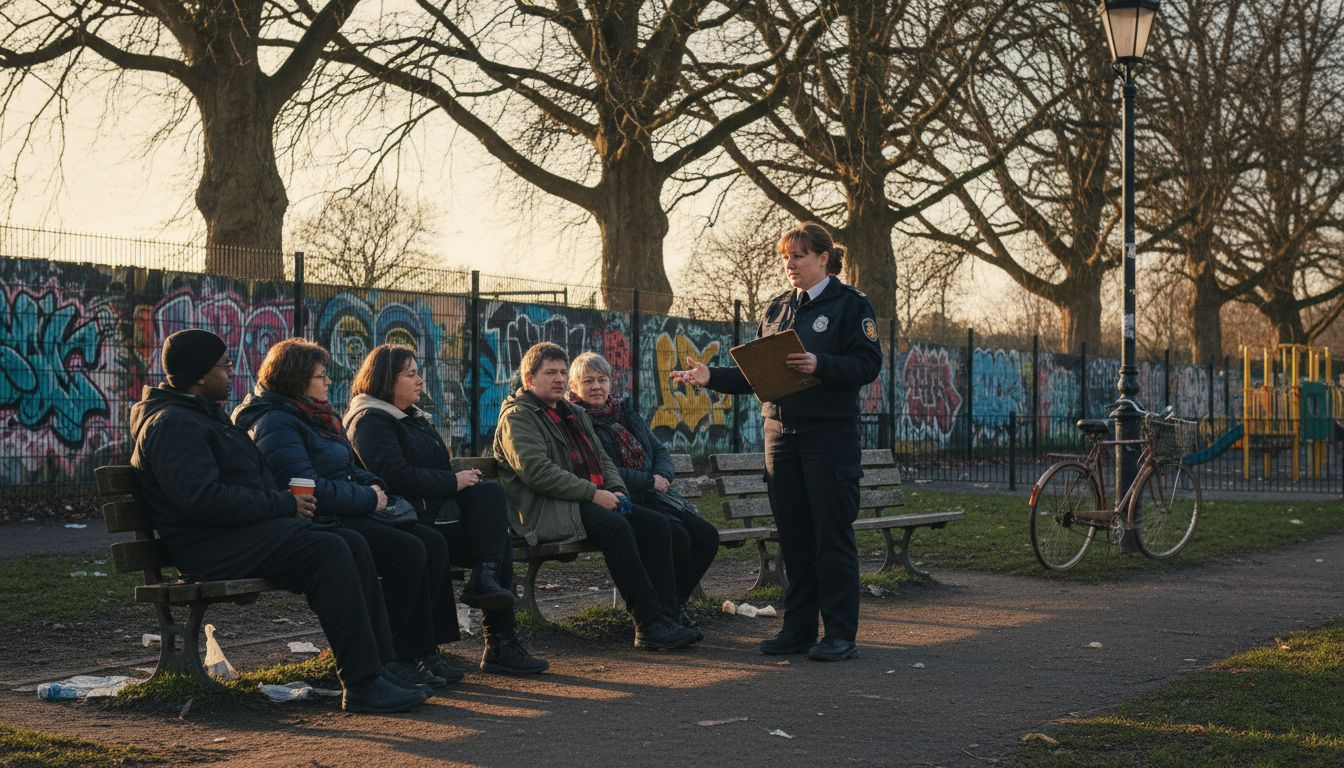
Every Waterlooville resident wants to feel safe walking through Cowplain or letting kids play near Denmead’s parks. Community safety depends on more than fast response times. The difference comes from neighborhood policing, where officers build real relationships and solve local problems alongside you. This approach transforms policing from distant enforcement to everyday partnership, changing how crime is tackled and how communities trust the police. Discover what neighborhood policing truly means for your street and your peace of mind.
Table of Contents
- Defining Neighborhood Policing And Key Principles
- Types Of Neighborhood Policing Teams
- Core Strategies And Community Engagement Methods
- Roles Of Officers And Collaboration Partners
- Benefits For Safety, Trust, And Local Quality Of Life
- Challenges, Limitations, And How To Get Involved
Key Takeaways
| Point | Details |
|---|---|
| Community Engagement | Neighborhood policing emphasizes building relationships within communities to proactively address issues and foster trust. |
| Team Flexibility | Different types of neighborhood policing teams focus on community problems or balance traditional policing duties based on local needs. |
| Collaborative Solutions | Successful neighborhood policing relies on partnerships with various community organizations, enhancing resource allocation and effectiveness. |
| Active Resident Involvement | Residents are encouraged to participate in local meetings and provide feedback, which shapes policing priorities and fosters a safer environment. |
Defining Neighborhood Policing and Key Principles
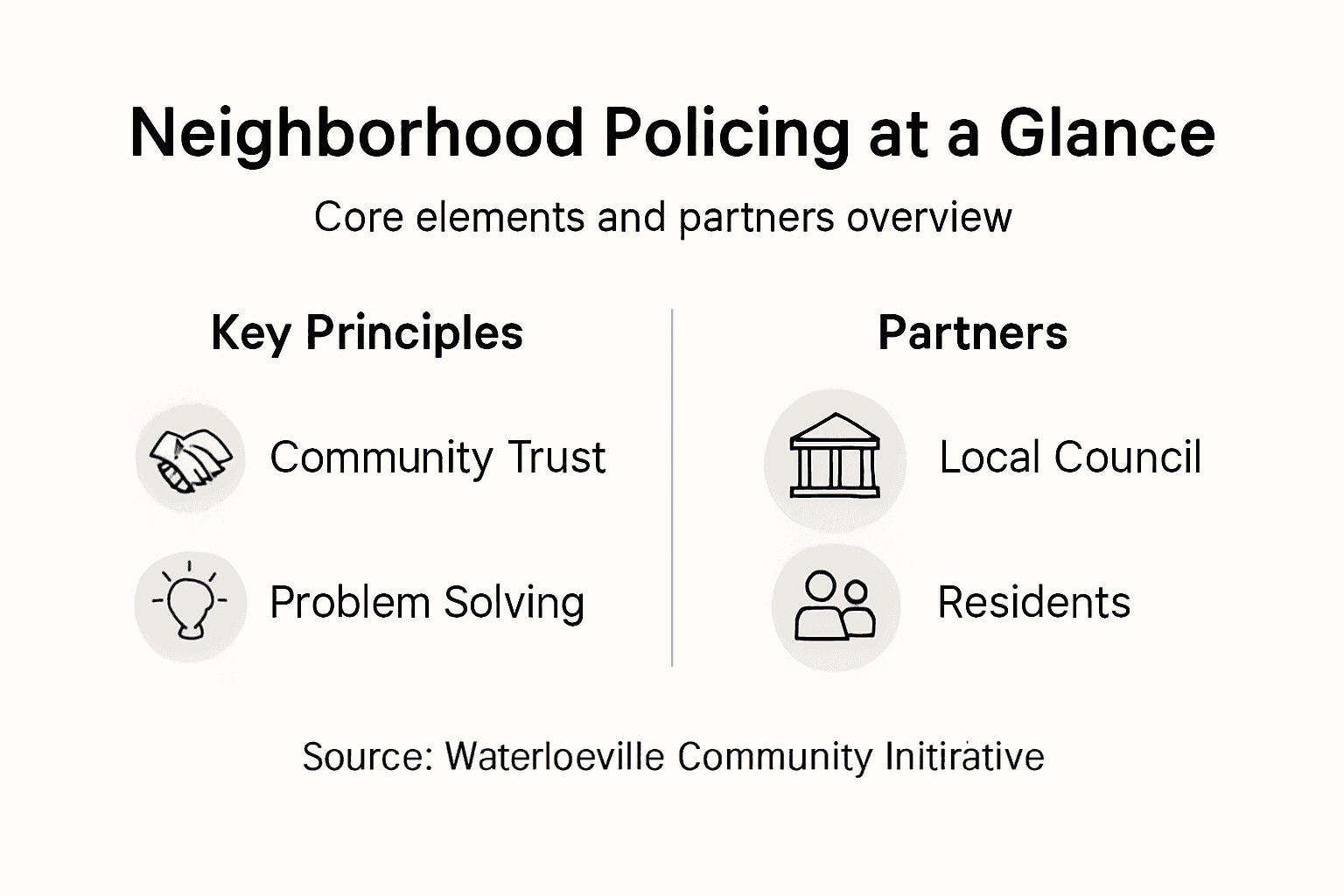
Neighborhood policing is fundamentally different from traditional policing models. Rather than simply responding to crimes after they happen, this approach places officers directly within communities to build relationships, identify problems before they escalate, and work collaboratively with residents to create safer neighborhoods. The model treats police as partners embedded in the community rather than external enforcers. This shift changes everything about how policing operates, from daily priorities to long-term strategy.
At its core, neighborhood policing emphasizes engagement with communities, problem-solving, and collaborative partnerships with residents, local businesses, and voluntary organizations. The key principles include making police officers accessible and accountable to the people they serve. When residents know their local officers by name and can approach them with concerns, trust develops naturally. This accessibility works both ways. Officers gain genuine insights into what matters most to their neighborhoods, moving beyond crime statistics to understand the lived experience of residents. Proactive policing backed by analytical capability ensures resources focus on genuine community needs rather than reactive emergency responses.
Another critical principle involves developing officers who genuinely support this community-focused culture. This means recruiting people who value relationship-building and problem-solving, then training and supporting them in these skills. It’s not enough to assign officers to a neighborhood and expect community policing to happen automatically. The organization itself must embrace this philosophy from leadership down to frontline staff. The College of Policing framework outlines how promotion of a positive policing culture ensures officers feel empowered to engage with communities rather than simply enforcing laws. This cultural shift attracts officers who want to build relationships and solve real problems affecting residents.
In Waterlooville, neighborhood policing means your local officers understand the specific challenges facing Cowplain, Denmead, and Purbrook. They recognize that anti-social behavior near the shopping areas affects local businesses and residents differently than the same behavior in residential streets. They understand seasonal patterns, recognize repeat locations where problems cluster, and work with business owners, schools, and community groups to prevent issues rather than simply attending incidents.
Pro tip: When you see your neighborhood officer, take a moment to share genuine concerns about your area. These conversations directly shape policing priorities and demonstrate to officers that community engagement works.
Types of Neighborhood Policing Teams
Neighborhood policing teams aren’t one-size-fits-all operations. They adapt based on community needs, force resources, and local priorities. Understanding the different team types helps you recognize who’s working in your area and what they actually do. Some teams focus exclusively on solving community problems, while others balance problem-solving with traditional police duties. This distinction matters because it shapes how officers spend their time and what kinds of issues they tackle.
Problem-Solving Teams concentrate entirely on community-identified issues rather than responding to crime calls. These teams work on projects like reducing anti-social behavior in parks, addressing drug activity in specific locations, or tackling repeat problems affecting local businesses. In Waterlooville, a problem-solving team might focus on parking issues near the town center or youth gathering points that concern residents. They attend community meetings, gather intelligence about what’s actually bothering people, and develop targeted solutions. This specialization means they can dig deeply into root causes instead of treating symptoms.
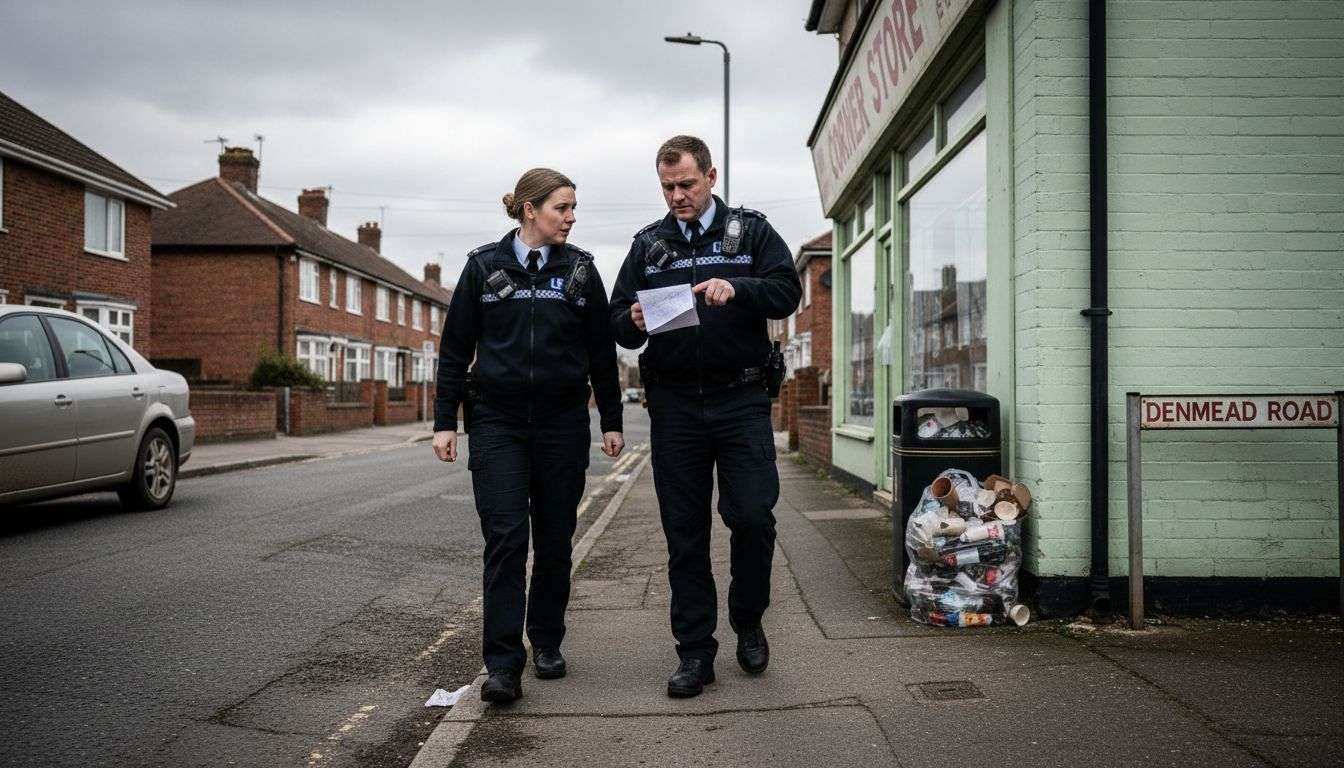
Strategic Teams blend community problem-solving with traditional policing duties. Officers respond to emergency calls and investigate crimes while also engaging with communities on broader safety issues. These teams are common in areas where resources require flexibility. A strategic team in Cowplain might respond to a break-in on Monday, then spend Wednesday discussing crime prevention strategies with residents and Thursday working on a longer-term anti-social behavior issue. Neighborhood police teams typically comprise constables, sergeants, and inspectors who oversee operations based on force size and community needs.
Here’s a quick comparison of Problem-Solving and Strategic Neighborhood Policing Teams:
| Team Type | Main Focus | Typical Activities | Community Impact |
|---|---|---|---|
| Problem-Solving Team | Addressing local, ongoing concerns | Project-based solutions, engagement | Reduces root causes of issues |
| Strategic Team | Balancing response and engagement | Crime response, preventative work | Maintains safety and flexibility |
Team Composition and Roles vary significantly. Police Constables carry full investigation powers and engagement responsibilities. They build relationships while conducting investigations. Police Community Support Officers (PCSOs) are visibility and engagement specialists who excel at intelligence-gathering and community interaction. You’ll often see PCSOs at events, on patrol in neighborhoods, and gathering feedback about local concerns. Volunteers supplement paid staff, providing additional community presence. Sergeants or Inspectors oversee teams and ensure resources align with community priorities. In smaller communities like Denmead or Purbrook, one sergeant might oversee a team of constables and PCSOs. Larger areas might have inspectors managing multiple teams with different specializations.
Pro tip: Ask your local police station which team type covers your neighborhood and what their focus is this quarter—this tells you what problems they’re actively addressing and how to report issues that match their priorities.
Core Strategies and Community Engagement Methods
Effective neighborhood policing relies on specific strategies that build genuine relationships rather than simply broadcasting safety messages. The foundation is relational continuity, which means sustained positive relationships between the same officers and community members over time. When you see the same police officer patrolling your street regularly, they learn about your neighborhood’s actual problems, recognize patterns you might miss, and understand what matters most to residents. This consistency creates trust. People are more likely to share information, report concerns, and collaborate on solutions when they know and recognize the officer they’re talking to.
Relational continuity involves transparency and tailored communication to foster trust and identify local crime causes proactively. In practice, this means officers explain why they’re focusing on certain issues, admit when they don’t have easy answers, and adjust strategies based on what residents actually tell them. It’s not a police force telling communities what their problems are. It’s communities and police working together to define what needs fixing and why.
Practical Engagement Methods bring these principles to life. Street briefings, door-knocking, and environmental audits are proactive outreach activities that show residents police are actively interested in their input. Street briefings might happen outside your local supermarket or community center, where officers share information about recent issues and ask residents what concerns them. Door-knocking, while sometimes seen as intrusive, actually shows commitment. Officers knock on doors to gather intelligence about problems residents experience that might not get reported through official channels. Environmental audits involve walking neighborhoods with residents to identify physical conditions that attract crime, like poor lighting, abandoned properties, or broken windows. These aren’t police deciding what’s broken. They’re walking with you and asking what you see as problems.
Community-Led Problem-Solving flips the script on traditional policing. Instead of police identifying problems and announcing solutions, communities identify what bothers them most, and police help develop responses. In Waterlooville, residents might identify that parking violations near schools create safety concerns. The neighborhood policing team then works with residents, school staff, and local councils to address it. Visible, intelligence-led patrols support this approach by ensuring officers focus on areas and times when problems actually occur. Regular feedback mechanisms let residents know what action was taken on their concerns, closing the loop and showing that engagement produces results.
Pro tip: Attend at least one community meeting with your neighborhood policing team this year to understand what problems they’re prioritizing and share concerns that matter to you personally.
Roles of Officers and Collaboration Partners
Neighborhood policing only works when officers understand their role has expanded beyond traditional law enforcement. Police officers now serve as facilitators of trust and problem-solving agents rather than only crime fighters. This means they spend time listening to residents, understanding root causes of problems, and coordinating solutions that might not involve arrests at all. An officer helping organize youth activities to reduce anti-social behavior is doing neighborhood policing work just as much as one investigating a theft. The role shift requires different skills, different mindsets, and different measures of success. Success isn’t always measured by arrest numbers anymore. It’s measured by whether residents feel safer, trust police more, and whether problems actually decline.
But police can’t solve community problems alone. Officers collaborate with social services, public health, and community organizations to expand capacity for crime prevention and improve community safety. In Waterlooville, this might look like officers partnering with youth services to address youth gathering in town centers, working with environmental health teams to tackle premises causing neighborhood complaints, or collaborating with schools to prevent school-related crime. Each partner brings expertise police don’t have. Social workers understand family dynamics and available support services. Public health officials know about substance abuse treatment resources. Community organizations have relationships with populations police might struggle to reach. When these groups coordinate, they’re stronger together.
Effective partnerships require clear structures. Strategic partnerships across voluntary, private, and statutory bodies depend on aligned priorities, clear roles, data sharing, and resource coordination. This isn’t informal cooperation. It’s intentional alignment where police leaders sit with partners to define shared goals. A partnership addressing anti-social behavior in a specific location might include police, local council environmental enforcement, youth services, business improvement district representatives, and residents. Each organization brings different enforcement powers and community connections. Police might address criminal behavior. Environmental enforcement might address parking violations and property maintenance. Youth services might offer alternative activities. Residents provide intelligence about what’s actually happening. Data sharing ensures everyone understands the problem the same way. Resource coordination means police aren’t duplicating efforts other agencies handle better.
Community members are partners too. Residents aren’t just recipients of police services. They’re active participants who help identify problems, shape priorities, and hold police accountable. When neighborhood policing works well in your area, you’ll notice police asking for your input regularly, explaining how they’re addressing concerns you’ve raised, and genuinely changing priorities based on what matters most to residents.
The following table summarizes how different community partners contribute to neighborhood policing:
| Partner Type | Key Contribution | Example Role |
|---|---|---|
| Social Services | Address family and youth issues | Offer support for at-risk youth |
| Public Health | Improve wellbeing, substance help | Connect people to treatment |
| Community Groups | Expand outreach, local insight | Organize neighborhood activities |
| Local Government | Enforce environmental standards | Address property and lighting needs |
| Residents | Report concerns, set priorities | Participate in meetings and audits |
Pro tip: Identify one collaboration partner in your neighborhood like your local council representative or community organization and learn what they’re coordinating with police on right now—this shows you where real partnerships are happening.
Benefits for Safety, Trust, and Local Quality of Life
The real value of neighborhood policing shows up in how residents actually feel about their communities and whether they’re willing to work with police. Neighborhood policing fosters positive interactions that build trust and confidence between officers and community members. This trust matters because it’s the foundation for everything else. When you trust police, you’re more likely to report crimes, share information about problems in your neighborhood, and support police efforts to address issues. Without trust, people stay silent even when they see problems. Crime goes unreported. Neighborhoods spiral. Trust breaks the silence.
Trust also changes how safe you actually feel. Long-term officer commitment enhances community ties, which increases public cooperation and reduces fear of crime. Notice that distinction. Reducing fear of crime isn’t the same as reducing crime itself. You might live in a neighborhood where crime hasn’t actually changed statistically, but you feel significantly safer because you know your local officer, see police regularly in your area, and believe police are genuinely interested in your safety. That feeling of safety improves your quality of life. You let your kids play outside longer. You’re more comfortable walking to the store at night. You’re not constantly worried about what might happen. This matters more than people sometimes realize.
Improved trust also encourages cooperation. Community-oriented policing improves citizen satisfaction and trust in police while addressing social and environmental conditions that contribute to better overall community well-being. When residents trust police, they share information more freely. This information flow is critical for effective policing because police can’t be everywhere at once. They depend on community members to notice patterns, report problems, and provide context. A resident mentioning that teenagers have started gathering in a specific park at certain times gives police the intelligence they need to focus resources effectively. Environmental improvements also matter. When neighborhood policing teams work with residents and partners to address physical conditions like poor lighting, broken windows, or abandoned properties, the neighborhood actually changes. Residents see improvements and feel their concerns matter.
These benefits compound over time. Waterlooville neighborhoods with effective neighborhood policing report higher satisfaction with local policing, greater willingness to report crimes, stronger community connections, and genuine improvements in the physical environment. Residents become invested in their neighborhoods rather than just living there. Local businesses feel supported. Schools work more closely with police on safety issues. Community organizations partner with police on youth activities. The whole ecosystem strengthens.
Pro tip: Track one specific neighborhood concern you have and notice whether it improves over three to six months as your local policing team addresses it—this concrete evidence builds your confidence in whether neighborhood policing is actually working where you live.
Challenges, Limitations, and How to Get Involved
Neighborhood policing sounds ideal in theory, but real-world implementation faces genuine obstacles. Reduced funding constrains what neighborhood policing teams can actually accomplish. When police budgets tighten, departments often pull officers from community engagement back to responding to emergency calls. Organizational resistance within police forces creates friction. Some officers and leaders view community policing as soft policing or less legitimate than traditional crime-fighting. Balancing national directives with local needs creates tension. Central government priorities don’t always align with what your specific neighborhood needs most. These challenges don’t invalidate neighborhood policing. They just mean success requires active participation from residents, not passive hope that police will make it work.
Limitations also matter. Neighborhood policing implementation varies significantly across areas and community engagement remains inconsistent. What works brilliantly in one neighborhood might struggle in another. A strong problem-solving team in Waterlooville town center might operate very differently from one in Denmead. Community engagement also fluctuates. Some neighborhoods have high resident participation in meetings and problem-solving efforts. Others struggle to get people consistently involved. This variability means your neighborhood’s neighborhood policing success depends partly on factors beyond just police effort.
Getting involved is how you shape success. Community involvement is fundamental to neighborhood policing success through feedback, meeting participation, and collaboration. Here’s what you can actually do:
- Attend local policing meetings where your neighborhood policing team updates residents and gathers input. These meetings happen regularly and are usually open to anyone.
- Provide feedback about policing priorities through surveys, consultations, or direct conversations with officers. Tell them what concerns you.
- Volunteer with community initiatives that partner with police, like neighborhood watch schemes or community safety events.
- Report problems consistently so police understand patterns rather than isolated incidents.
- Collaborate with officers on specific solutions. If youth gathering is an issue, help identify why and suggest alternatives.
Your involvement directly influences whether neighborhood policing thrives or stagnates in your area. Police can’t build trust and solve problems without residents actively participating. Waterlooville residents who attend meetings, share concerns, and work with their neighborhood policing teams are literally shaping how policing works where they live.
Pro tip: Find out when your local neighborhood policing team’s next community meeting is scheduled and mark your calendar to attend at least once—consistent attendance from residents directly influences police priorities and resource allocation.
Strengthen Your Community Connections with Waterlooville.co
Neighborhood policing thrives on trust, communication, and local collaboration. This approach depends on residents feeling empowered to share concerns and work alongside officers to improve safety and quality of life in neighborhoods like Cowplain, Denmead, and Purbrook. If you want to stay informed about local issues, community events, and services that support neighborhood well-being, Waterlooville.co offers a centralized platform designed just for you.

Explore trusted local businesses, connect with community initiatives, and get real-time news that impacts your safety and daily life. Don’t wait for change to happen. Visit Waterlooville.co today to discover how you can actively participate and support neighborhood policing efforts through community engagement and local resources. Your voice matters in making Waterlooville a safer and stronger place to live.
Frequently Asked Questions
What is neighborhood policing?
Neighborhood policing is a proactive approach where police officers work closely with their communities to build relationships, identify issues before they escalate, and collaborate with residents for safer neighborhoods.
How does neighborhood policing benefit local communities?
It fosters trust between officers and community members, enhances feelings of safety, and encourages residents to report crime and cooperate with law enforcement, leading to improved overall community well-being.
What roles do police officers play in neighborhood policing?
Officers serve as facilitators of trust and problem-solving agents, focusing on building relationships with residents and collaborating with various community organizations to address local issues beyond traditional law enforcement tasks.
How can residents get involved in neighborhood policing?
Residents can attend local policing meetings, provide feedback on policing priorities, volunteer for community initiatives, report problems consistently, and collaborate with officers on community solutions.
Recommended
- Areas We Cover | Waterlooville Directory | Waterlooville.co
- Waterlooville News - Waterlooville Directory | Waterlooville.co
- Blog - Waterlooville News, Tips & Community Stories | Waterlooville.co
- Dog Walker Waterlooville - Professional Dog Walking Services | Waterlooville Directory | Waterlooville.co
- Neighborhood Watch – OVAL by IRVINEi | Stay Aware