
What Is Neighbourhood Renewal and Why It Matters
Discover what neighbourhood renewal means, types of renewal strategies, how the process works, key benefits, and potential challenges for communities.
What Is Neighbourhood Renewal and Why It Matters
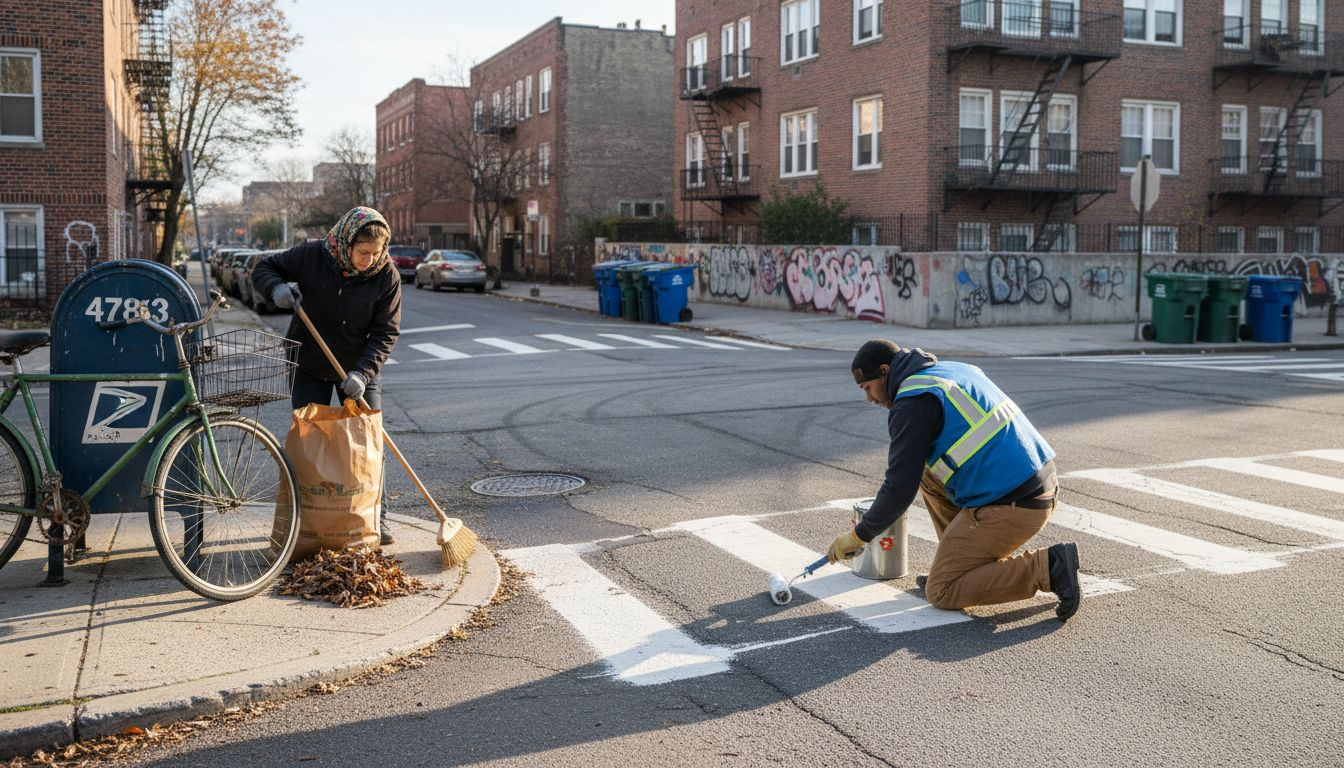
Almost every American city has faced the challenge of neighborhood renewal, but the lessons learned offer valuable insight for residents of Waterlooville and nearby areas. With growing interest in revitalizing local communities, understanding how comprehensive renewal strategies can shape daily life is crucial. This overview explains key concepts behind successful initiatives, highlights benefits for your neighborhood, and reveals what makes lasting, positive change possible right where you live.
Table of Contents
- Defining Neighborhood Renewal And Core Concepts
- Types Of Neighborhood Renewal Strategies
- How Neighborhood Renewal Programs Work
- Key Benefits And Community Impact
- Common Challenges And Mistakes To Avoid
Key Takeaways
| Point | Details |
|---|---|
| Comprehensive Renewal | Neighborhood renewal involves integrated approaches that address physical, social, and economic needs to create resilient communities. |
| Community Engagement | Successful initiatives emphasize local participation to ensure that development aligns with residents’ priorities and preserves cultural identity. |
| Tailored Strategies | Different neighborhoods require unique renewal strategies that consider their specific challenges and characteristics. |
| Avoiding Common Mistakes | Maintaining a balance between modernization and community preservation is crucial to prevent displacement and gentrification. |
Defining Neighborhood Renewal and Core Concepts
Neighborhood renewal represents a strategic approach to transforming urban and community spaces through comprehensive revitalization efforts. At its core, it goes beyond simple infrastructure upgrades to create holistic, sustainable environments that address multiple community needs simultaneously.
According to UN Habitat, neighborhood renewal is fundamentally about improving physical, social, and economic conditions across cities and towns. This process involves integrated planning across critical sectors like transportation, housing, public spaces, and utilities. The goal is creating neighborhoods that are not just modernized, but truly resilient and inclusive.
The renewal process typically encompasses several key dimensions:
- Physical infrastructure improvements
- Social cohesion and community engagement
- Economic development strategies
- Environmental sustainability initiatives
While urban renewal has historically focused on infrastructure, modern approaches recognize the importance of preserving community identity and preventing displacement. Successful neighborhood renewal requires careful balance between modernization and maintaining the unique character of existing communities.
Pro tip: When exploring neighborhood renewal in your area, attend local community meetings and participate in planning discussions to ensure your perspective contributes to sustainable development strategies.
Types of Neighborhood Renewal Strategies
Neighborhood renewal strategies represent nuanced approaches to transforming urban environments, each targeting specific community needs and challenges. These strategies are not one-size-fits-all solutions but carefully designed interventions that address the unique characteristics of different neighborhoods.
Metropolis research identifies five primary approaches to neighborhood renewal:
- Community-Led Improvements: Emphasizing social inclusion and local leadership
- Comprehensive Area Programs: Addressing housing, safety, and infrastructure holistically
- Economic Revitalization: Stimulating local business and employment opportunities
- Environmental Enhancements: Developing open spaces and sustainable transportation
- Multi-Stakeholder Partnerships: Engaging governments, NGOs, private sectors, and residents
According to Urban Institute research, effective neighborhood renewal combines direct investment strategies with mobility facilitation. This means not just improving existing infrastructure, but also creating pathways for residents to access better economic opportunities beyond their immediate neighborhood.
Successful renewal strategies require a delicate balance between preserving community identity and introducing transformative improvements. Each approach must be tailored to the specific social, economic, and cultural context of the neighborhood, ensuring that development feels organic and responsive to local needs.
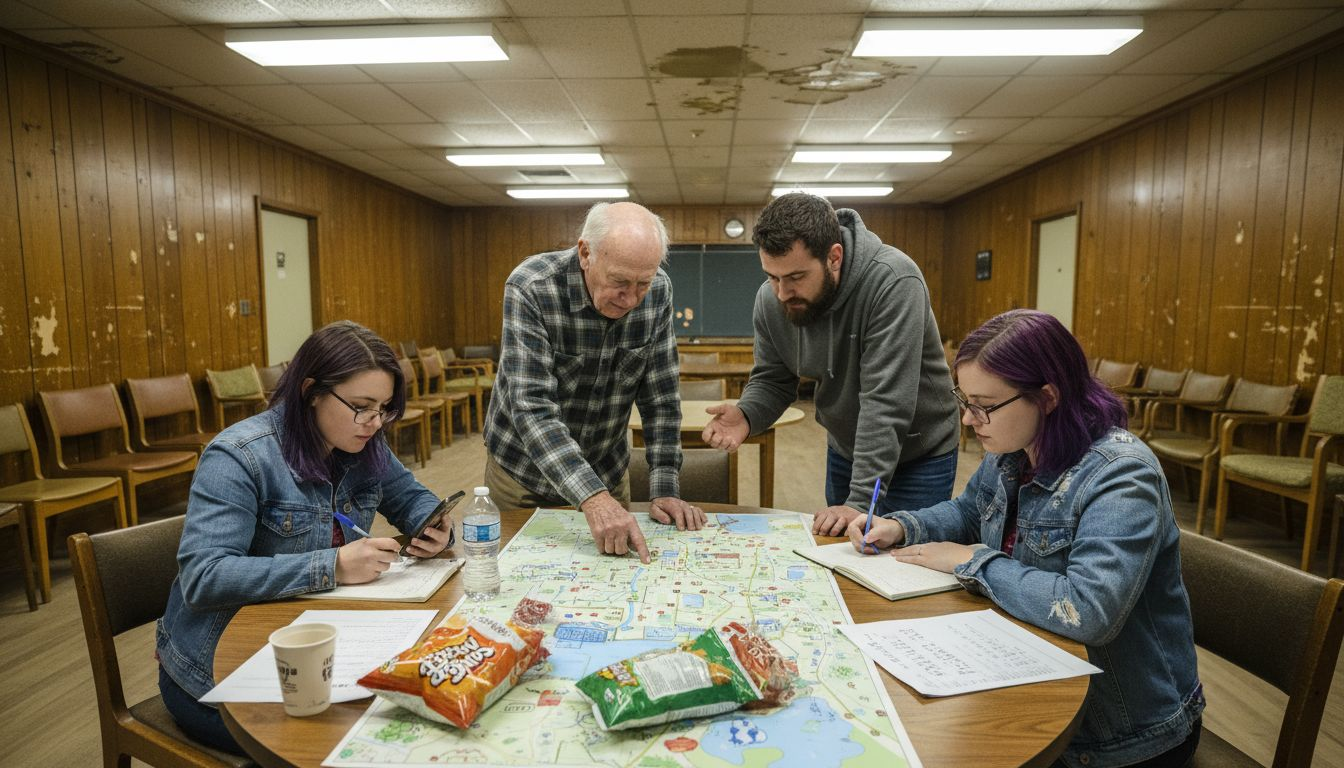
Here’s a summary of how different neighborhood renewal strategies address key urban challenges:
| Renewal Approach | Social Impact | Economic Benefits | Long-Term Sustainability |
|---|---|---|---|
| Community-Led Improvements | Empowers local leadership | Builds trust, shared resources | Fosters ongoing engagement |
| Comprehensive Area Programs | Improves safety, cohesion | Enhances property values | Supports holistic development |
| Economic Revitalization | Reduces unemployment | Attracts new investments | Diversifies local economy |
| Environmental Enhancements | Promotes healthy living | Lowers energy costs | Protects natural resources |
| Multi-Stakeholder Partnerships | Strengthens collaboration | Shares financial risk | Adapts to changing needs |
Pro tip: Connect with local community leaders and participate in neighborhood planning meetings to understand which renewal strategies might work best for your specific area.
How Neighborhood Renewal Programs Work
Neighborhood renewal programs are complex, strategic initiatives designed to transform communities through comprehensive and collaborative approaches. These programs go beyond simple infrastructure improvements, focusing on creating sustainable, resilient environments that address multiple social and economic challenges simultaneously.
Habitat’s community-based approach emphasizes building inclusive coalitions that empower local residents to define their own priorities. The process typically involves several critical stages:
- Identifying urgent community needs
- Developing resident leadership
- Supporting equitable policy frameworks
- Preserving and repairing housing infrastructure
- Redistributing resources toward community-defined goals
According to A Good Community research, successful renewal programs follow a strategic sequence of improvement projects. This approach prioritizes creating immediate, visible changes to build community support while simultaneously planning comprehensive, long-term transformations. The strategy involves carefully selecting interventions that maximize impact within existing resource constraints.
Effective neighborhood renewal requires a delicate balance between addressing immediate challenges and implementing sustainable, forward-thinking solutions. Programs must remain flexible, responsive to community feedback, and committed to preserving the unique cultural identity of the neighborhood while introducing positive transformative changes.
Pro tip: Document and photograph your neighborhood’s current state to track progress and create a visual narrative of community transformation.
Key Benefits and Community Impact
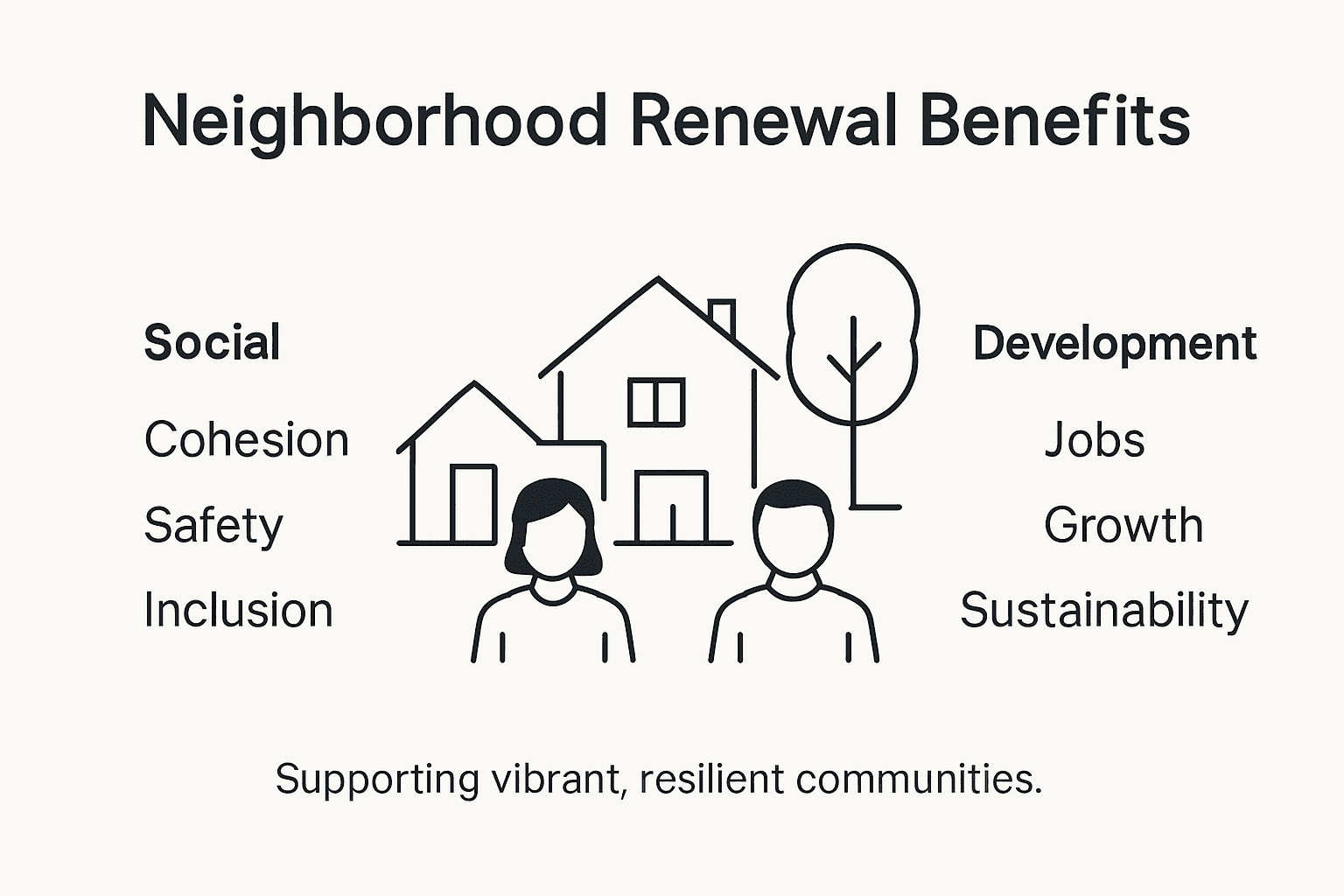
Neighborhood renewal programs deliver transformative benefits that extend far beyond physical infrastructure improvements, creating comprehensive positive changes that touch every aspect of community life. These initiatives represent strategic investments in social capital, economic opportunity, and collective well-being.
Project for Public Spaces research highlights how neighborhood renewal can transform public spaces into vibrant community hubs. The key benefits include:
- Encouraging social interaction
- Boosting local pride
- Stimulating economic activity
- Enhancing community resilience
- Promoting social equity
- Improving residents’ overall quality of life
According to United Nations Sustainable Development goals, neighborhood renewal supports critical global objectives by addressing multiple interconnected challenges. These programs contribute to reducing inequalities, promoting inclusive growth, and creating safe, sustainable urban environments. By improving access to essential services, employment opportunities, educational resources, and green spaces, renewal initiatives directly impact residents’ physical and mental health outcomes.
Moreover, successful neighborhood renewal goes beyond immediate physical improvements, creating long-term systemic changes that empower communities. The most effective programs build local leadership capacity, foster community ownership, and create adaptive frameworks that allow neighborhoods to evolve and respond to changing social and economic conditions.
Pro tip: Engage multiple generations in neighborhood renewal discussions to ensure comprehensive perspectives and sustainable, inclusive planning.
Common Challenges and Mistakes to Avoid
Neighborhood renewal initiatives face complex challenges that can derail even the most well-intentioned projects. Understanding these potential pitfalls is crucial for creating sustainable, community-centered transformation that truly meets local needs.
Research from the Young Foundation identifies several critical challenges in neighborhood renewal:
- Ensuring meaningful resident participation
- Preventing displacement of vulnerable populations
- Coordinating multiple stakeholders effectively
- Securing sustainable long-term funding
- Addressing deep-rooted systemic inequalities
According to University of Chicago Urbanism research, one of the most significant risks is gentrification. The most common mistakes occur when renewal programs prioritize economic development over community preservation. Successful initiatives must balance physical improvements with social programs, maintaining a delicate equilibrium that respects existing community structures while introducing positive changes.
Effective neighborhood renewal requires transparency, continuous communication, and a genuine commitment to equitable development. Programs that fail typically make the same fundamental errors: ignoring local context, implementing top-down strategies, and overlooking the nuanced social dynamics that make each community unique.
Compare common challenges of neighborhood renewal with strategies to overcome them:
| Challenge | Potential Risks | Recommended Solution |
|---|---|---|
| Resident displacement | Loss of housing, gentrification | Develop affordable housing plans |
| Stakeholder coordination | Delay in progress | Form inclusive steering groups |
| Long-term funding | Incomplete projects | Secure diverse funding sources |
| Maintaining community identity | Cultural erasure | Involve long-term residents |
| Systemic inequalities | Persistent social gaps | Target support for vulnerable groups |
Pro tip: Create a diverse advisory committee with long-term residents representing different ages, backgrounds, and perspectives to ensure comprehensive community input.
Discover How Waterlooville Is Embracing Neighborhood Renewal for a Stronger Community
Neighborhood renewal focuses on creating resilient and inclusive environments that balance modernization with preserving community identity. If you are passionate about supporting local businesses and fostering community engagement in areas like Waterlooville, Cowplain, or Purbrook you understand how important it is to have up-to-date neighborhood information and access to essential services. Our website highlights trusted service providers like hair salons and heating engineers while keeping you informed about local events and infrastructure developments that shape our town’s future.

Explore the heartbeat of Waterlooville through our comprehensive local business directory and community guides. Act now to connect with neighbors, back essential services, and contribute to neighborhood initiatives before opportunities pass by. Visit Waterlooville.co today and be part of shaping a vibrant, thriving community where everyone belongs.
Frequently Asked Questions
What is neighborhood renewal?
Neighborhood renewal is a strategic approach to transforming urban and community spaces through comprehensive revitalization efforts. It aims to improve physical, social, and economic conditions, creating environments that are resilient and inclusive.
What are the key dimensions of neighborhood renewal?
The key dimensions of neighborhood renewal include physical infrastructure improvements, social cohesion and community engagement, economic development strategies, and environmental sustainability initiatives.
Why is community involvement important in neighborhood renewal?
Community involvement is crucial because it ensures that the priorities and needs of local residents are considered in the planning process. Engaging residents helps build trust, fosters ownership of the initiatives, and results in more effective outcomes that respect the unique character of the community.
What are some common challenges faced during neighborhood renewal projects?
Common challenges include ensuring meaningful resident participation, preventing the displacement of vulnerable populations, coordinating multiple stakeholders, securing sustainable funding, and addressing systemic inequalities. It’s essential for renewal programs to address these challenges to achieve successful transformations.
Recommended
- Waterlooville New Builds - Waterlooville Directory | Waterlooville.co
- Leigh Park - Waterlooville Directory | Waterlooville.co
- Waterlooville Town Centre - Waterlooville Directory | Waterlooville.co
- Waterlooville High Street - Waterlooville Directory | Waterlooville.co
- Kitchen Renewal Options Explained: Transforming Homes - WordPress