
The Essential Guide to Why Attend Town Meetings
Why attend town meetings? This guide explains community engagement benefits, meeting processes, ways to participate, and practical impacts for residents.
The Essential Guide to Why Attend Town Meetings

Over 200 towns in New England still rely on town meetings as their primary form of local government, giving residents a direct say in how their communities are run. These gatherings are more than just routine events—they put decision making power in the hands of everyday people, not politicians or distant officials. Understanding town meetings reveals how real democracy works on a local level and shows how your voice can truly shape the place where you live.
Table of Contents
- Defining Town Meetings and Their Purpose
- Types of Town Meetings and Formats
- Key Benefits of Community Participation
- How Town Meeting Decisions Impact You
- How to Participate and What to Expect
Key Takeaways
| Point | Details |
|---|---|
| Direct Democracy | Town meetings empower residents to directly influence local governance decisions through open discussion and voting. |
| Types of Meetings | There are two main formats: open town meetings for all eligible voters and representative meetings with elected delegates. |
| Community Impact | Decisions made at town meetings significantly affect local budgets, services, and regulations impacting everyday life. |
| Active Participation | Engaging in town meetings requires preparation, including confirming eligibility and reviewing agendas to contribute effectively. |
Defining Town Meetings and Their Purpose
A town meeting is a foundational democratic gathering where local residents directly participate in community governance. According to Britannica, these assemblies are particularly prominent in New England and represent a powerful mechanism for grassroots decision making, allowing qualified voters to debate and vote on critical local matters like ordinances, taxes, and municipal expenditures.
At its core, a town meeting serves as a direct form of local democratic engagement. Merriam-Webster defines it as a legislative assembly where inhabitants and taxpayers collectively exercise their right to discuss and make decisions affecting their community. These meetings provide an open forum where every resident can voice their perspectives, propose ideas, and contribute to shaping local policy.
The purpose of town meetings extends far beyond simple administrative procedures. They represent a unique opportunity for community members to:
- Directly influence local government decisions
- Review and approve municipal budgets
- Discuss community infrastructure projects
- Propose and vote on local ordinances
- Address neighborhood concerns
- Foster transparent and participatory governance
Through these meetings, residents transform abstract governmental processes into tangible, collaborative experiences. By showing up, speaking out, and voting, community members become active architects of their local governance, ensuring that municipal decisions reflect the genuine needs and desires of those who call the town home.
Types of Town Meetings and Formats
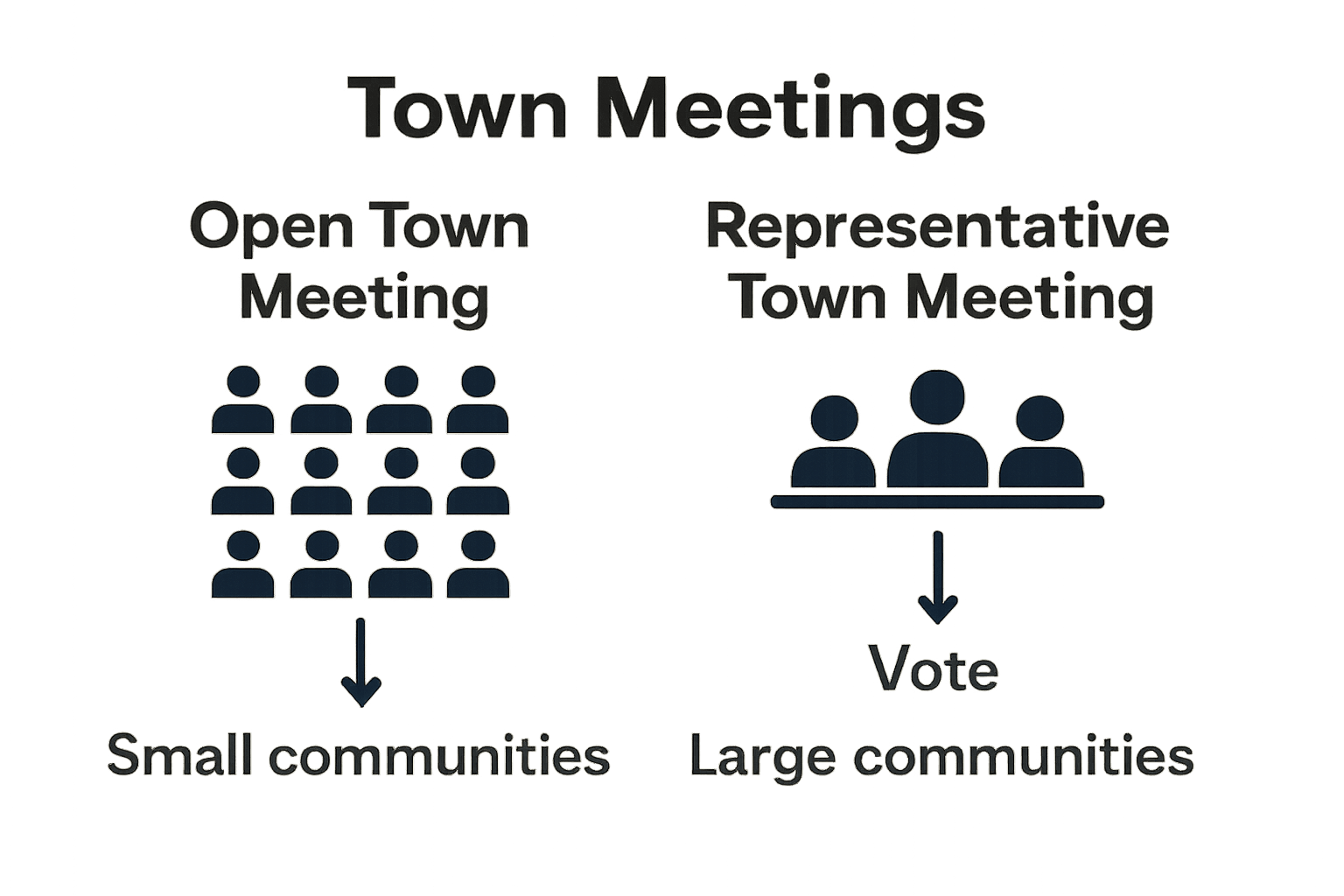
Town meetings are not a one-size-fits-all democratic process. According to SEC State MA, these gatherings can be broadly categorized into two primary formats: open town meetings and representative town meetings, each with distinct characteristics and approaches to local governance.
Open town meetings represent the most direct form of democratic participation. In these gatherings, every eligible voter in the community has the right to attend, speak, and vote on local issues. It’s a pure grassroots model where residents can immediately and personally influence community decisions. This format embodies the traditional New England approach to local governance, where community members gather in a single location to deliberate and make collective choices.
By contrast, representative town meetings operate more like a miniature legislature. As Wikipedia explains, these meetings involve elected representatives who are chosen to make decisions on behalf of the entire community. This format is particularly useful in larger towns or cities where gathering every single resident would be logistically challenging.
The key differences between these meeting types include:
-
Participation Level
- Open: All eligible voters can attend and vote
- Representative: Elected delegates vote on community’s behalf
-
Decision-Making Process
- Open: Direct democratic voting
- Representative: Delegated democratic voting
-
Suitable Community Size
- Open: Works best in smaller communities
- Representative: More effective for larger populations
While the specific procedures can vary significantly between different towns and states, both formats share a fundamental commitment to transparent, participatory local governance. The choice between open and representative town meetings ultimately depends on the community’s size, complexity, and historical governance traditions.
Key Benefits of Community Participation
Community participation through town meetings offers profound advantages that extend far beyond simple governance. According to Associated Press, these gatherings fundamentally foster direct involvement in local democracy, creating spaces where residents can openly discuss and vote on critical community matters while simultaneously strengthening neighborhood relationships and civic connections.
Beyond democratic engagement, these meetings represent powerful platforms for collaborative problem-solving. Wikipedia highlights that participatory processes like town meetings empower citizens to identify, discuss, and prioritize public spending projects. This approach leads to more equitable resource allocation, increased government transparency, and a deeper sense of collective responsibility among community members.
The multifaceted benefits of community participation include:
-
Enhanced Local Decision-Making
- Direct input on community policies
- Transparent resource allocation
- Immediate feedback mechanisms
-
Social and Relational Benefits
- Building stronger neighborhood connections
- Creating platforms for constructive dialogue
- Reducing social isolation
-
Personal Development
- Improving communication skills
- Understanding complex civic processes
- Developing leadership capabilities
Ultimately, town meetings transform abstract governmental concepts into tangible, collaborative experiences. By showing up, speaking out, and actively participating, residents become more than passive constituents—they become genuine architects of their local community’s future, ensuring that municipal decisions authentically reflect the collective wisdom and needs of those who call the town home.
How Town Meeting Decisions Impact You
Town meetings are not abstract political events—they are direct mechanisms that shape your daily life and community experience. According to SEC State MA, these gatherings make critical decisions that determine local budgets, set salaries for elected officials, and establish town by-laws, which have immediate and tangible consequences for every resident.
Wikipedia emphasizes that town meeting decisions fundamentally influence various aspects of local governance, touching nearly every dimension of community life. From infrastructure investments to public service funding, the choices made during these meetings directly impact the quality of services, safety, and overall living standards for community members.
The specific ways town meeting decisions affect you include:
-
Financial Implications
- Determining local tax rates
- Allocating municipal budget resources
- Approving or rejecting public spending projects
-
Community Infrastructure
- Deciding on road maintenance and repairs
- Planning public transportation improvements
- Approving parks and recreational facility investments
-
Local Services and Regulations
- Setting emergency service budgets
- Creating local ordinances
- Establishing zoning regulations
- Determining school funding levels
Every decision made in a town meeting represents a direct investment in your community’s future. Whether it’s approving funds for a new playground, setting property tax rates, or determining local business regulations, these collective choices have real-world consequences that touch every aspect of your daily life. By participating, you’re not just attending a meeting—you’re actively shaping the environment where you live, work, and build your future.
How to Participate and What to Expect
Participating in a town meeting requires preparation and understanding of the local democratic process. According to SEC State MA, eligible residents should first confirm their voting status and carefully review the meeting agenda beforehand to effectively contribute to discussions and decision-making processes.
Wikipedia emphasizes the importance of understanding meeting procedures and rules before attending. Each town has unique protocols, but most follow a standard format that allows residents to discuss, debate, and ultimately vote on important local matters. Being prepared means more than just showing up—it means being ready to engage constructively and meaningfully in community governance.

Here’s a step-by-step guide to preparing for and participating in a town meeting:
-
Confirm Your Eligibility
- Verify local voter registration requirements
- Check residency status
- Understand voting qualifications
-
Prepare in Advance
- Review the meeting agenda
- Research specific issues being discussed
- Formulate potential questions or comments
-
During the Meeting
- Arrive early
- Bring necessary identification
- Listen carefully to presentations
- Raise hand to be recognized before speaking
- Be respectful of other participants’ viewpoints
Expect a structured environment where parliamentary procedures guide the discussion. Most meetings will have a moderator who manages the flow of conversation, ensures everyone gets a fair chance to speak, and helps the group work towards consensus. While the process might seem formal, it’s fundamentally about community members coming together to shape their shared future—a powerful demonstration of grassroots democracy in action.
Take Charge of Your Community Through Active Participation
Attending town meetings is your chance to directly influence important local decisions that shape your daily life and neighborhood. However, understanding complex local issues and discovering trusted services to support your community projects can be overwhelming. This challenge calls for reliable information on local businesses and essential resources that keep your town thriving. Waterlooville.co offers all this and more by connecting you with trusted local services like heating engineers, hair salons, and community healthcare providers — making your involvement in town meetings more informed and effective.

Empower yourself today by exploring the Waterlooville community guide. Discover detailed business directories, learn about local events, and gain insights that help you engage confidently in town meetings. Don’t wait to be a passive observer—get all the local support you need at Waterlooville.co and become a vital part of your town’s future.
Frequently Asked Questions
Why should I attend a town meeting?
Attending a town meeting allows you to directly influence local government decisions, express your concerns, and contribute to the development of your community. It’s a powerful way to engage in grassroots democracy.
What are the different types of town meetings?
There are primarily two types of town meetings: open town meetings, where all eligible voters can attend and vote, and representative town meetings, where elected representatives make decisions on behalf of the community.
How do town meeting decisions impact my community?
Decisions made at town meetings affect various aspects of community life, including local budgets, infrastructure projects, service funding, and regulations that impact residents daily.
What should I prepare before attending a town meeting?
Before attending, confirm your eligibility as a voter, review the meeting agenda, conduct research on the issues to be discussed, and formulate any questions or comments you might have.