
Why Organize Business Events: Boosting Local Growth
Learn why organizing business events matters for Waterlooville businesses. Explore engagement types, marketing impact, challenges, and lasting benefits.
Why Organize Business Events: Boosting Local Growth

Most local businesses overlook just how powerful well-organized events can be for driving sales and connecting with the Waterlooville community. Research shows that American companies see up to 20 percent growth in customer engagement after strategic event planning. If you are aiming to build stronger relationships and stand out in Waterlooville, learning the truth about business events and debunking common myths will help you harness proven methods for lasting success.
Table of Contents
- Defining Business Events And Common Myths
- Event Types That Drive Local Engagement
- How Events Build Brand And Community
- Direct Marketing, Sales, And Networking Impact
- Financial, Legal, And Logistics Challenges
- Long-Term Benefits For Waterlooville Businesses
Key Takeaways
| Point | Details |
|---|---|
| Importance of Business Events | Business events are strategic tools for achieving commercial objectives and are essential for relationship building and knowledge exchange. |
| Types of Events and Their Goals | Different event types serve unique purposes, like workshops for skill development and trade shows for lead generation. |
| Challenges in Event Management | Navigating financial, legal, and logistical challenges is crucial for successful event execution and minimizing risks. |
| Long-Term Economic Benefits | Business events contribute to local economic development by fostering connections, enhancing visibility, and attracting talent and investment. |
Defining Business Events and Common Myths
Business events are strategic professional gatherings designed to achieve specific commercial objectives. Understanding the fundamentals of business events reveals they are much more complex than simple meetings or casual networking opportunities. These structured interactions range from small team discussions to large industry conferences, each carefully orchestrated to drive meaningful professional connections and organizational growth.
Contrary to popular misconceptions, business events are not just social occasions or unnecessary expenses. They represent calculated investments in relationship building, knowledge exchange, and market positioning. Some professionals mistakenly believe these events lack tangible value, but research consistently demonstrates their critical role in business development. Successful companies leverage business events to showcase expertise, generate leads, conduct market research, and establish thought leadership within their respective industries.
The landscape of business events encompasses several distinct types, each serving unique purposes:
- Conferences: Large-scale knowledge sharing platforms
- Workshops: Hands-on learning and skill development sessions
- Trade Shows: Industry exhibitions for product demonstrations
- Seminars: Focused educational presentations
- Networking Mixers: Relationship building opportunities
Pro tip: When planning a business event, always define clear objectives and metrics for measuring success to ensure your investment delivers meaningful professional outcomes.
The following table summarizes how different types of business events contribute to organizational goals:
| Event Type | Primary Objective | Key Benefit |
|---|---|---|
| Conference | Knowledge sharing | Industry insights & exposure |
| Workshop | Skill development | Employee capability growth |
| Trade Show | Product showcasing | Lead generation |
| Seminar | Expert education | Authority building |
| Networking Mixer | Relationship building | Expand contacts & partnerships |
Event Types That Drive Local Engagement
Local businesses in Waterlooville can leverage multiple event types to strengthen community connections and drive meaningful engagement. Comprehensive strategies for university and community collaboration demonstrate that well-planned events serve as powerful tools for social and economic development. From small workshops to large cultural festivals, these gatherings create opportunities for interaction, knowledge sharing, and mutual growth.
Several key event categories are particularly effective for local business engagement:
- Professional Networking Events: Small group meetups connecting local entrepreneurs
- Community Skill Workshops: Training sessions addressing specific local business needs
- Industry Showcases: Platforms for local businesses to demonstrate capabilities
- Educational Seminars: Knowledge sharing opportunities with expert speakers
- Cultural Festivals: Celebrations that highlight local business diversity
Successful local events are not just about attendance but about creating meaningful connections. They provide platforms for businesses to understand community needs, showcase their expertise, and build long-term relationships. By strategically designing events that offer genuine value, local organizations can transform simple gatherings into powerful mechanisms for economic and social development.
Pro tip: Design your local business events with clear objectives, focusing on interactive elements that encourage genuine participant engagement and meaningful networking.
How Events Build Brand and Community
Brand building through events goes far beyond simple marketing tactics. Community-focused event strategies demonstrate powerful methods for creating emotional connections that transform casual interactions into lasting relationships. Local businesses in Waterlooville can leverage these gatherings to establish deeper connections with their target audience, moving beyond transactional interactions to build genuine community engagement.
Events serve multiple strategic purposes in brand development:
- Trust Building: Face-to-face interactions create authentic connections
- Emotional Engagement: Experiences that resonate on a personal level
- Visibility Enhancement: Direct opportunities to showcase brand personality
- Community Storytelling: Platforms to communicate brand values
- Customer Loyalty: Creating memorable shared experiences
Comprehensive event marketing approaches reveal that successful brand events are carefully designed experiences that transcend traditional advertising. They provide immersive environments where businesses can demonstrate their unique value proposition, share their mission, and connect with community members on a deeper, more meaningful level. By creating events that offer genuine value, local organizations transform simple gatherings into powerful brand-building opportunities.

Pro tip: Design your community events with a clear narrative that reflects your brand’s core values, ensuring every interaction reinforces your unique business identity and builds lasting community connections.
Direct Marketing, Sales, and Networking Impact
Global business events generate substantial economic impact, contributing over $2.8 trillion in business sales and creating critical opportunities for direct marketing and networking. These gatherings represent far more than simple social interactions - they are strategic platforms where local businesses in Waterlooville can transform casual encounters into meaningful commercial connections. Face-to-face interactions provide unique advantages that digital communication cannot replicate, allowing for immediate relationship building and authentic engagement.
Effective event strategies for direct marketing and sales include:
- Trade Show Participation: Showcase products and services directly
- Sponsorship Opportunities: Increase brand visibility and credibility
- Targeted Networking Sessions: Connect with potential clients and partners
- Product Demonstration Zones: Enable hands-on customer interaction
- Interactive Sales Presentations: Deliver personalized marketing experiences
Direct marketing approaches through events offer businesses powerful tools for customer acquisition and retention. By creating immersive environments that allow immediate interaction, local companies can quickly communicate their value proposition, address customer questions, and potentially close sales on the spot. These events transform traditional marketing from a passive communication model to an active, engaging experience that builds trust and demonstrates expertise.
Pro tip: Prepare comprehensive event follow-up systems that capture leads, track interactions, and create personalized post-event communication strategies to maximize your networking and sales potential.
Financial, Legal, and Logistics Challenges
Large-scale business event planning involves intricate financial, legal, and logistical complexities that require strategic and meticulous preparation. Local businesses in Waterlooville must navigate a complex landscape of budgetary constraints, regulatory requirements, and operational challenges. Understanding these potential obstacles is crucial for creating successful and compliant events that minimize financial risks and maximize organizational effectiveness.
Key challenges in event management span multiple critical domains:
- Financial Planning: Budgeting and managing unexpected expenses
- Legal Compliance: Navigating safety and contract regulations
- Venue Logistics: Selecting and coordinating appropriate spaces
- Technology Integration: Managing audiovisual and communication systems
- Risk Management: Developing contingency strategies
Event planners consistently report significant challenges in budget management and operational coordination, highlighting the need for comprehensive strategic planning. Successful event execution requires anticipating potential issues, developing flexible budget allocations, maintaining clear communication with stakeholders, and implementing robust contingency plans. By proactively addressing these challenges, businesses can transform potential obstacles into opportunities for creating memorable and impactful events.
Pro tip: Develop a comprehensive event planning checklist that includes detailed financial projections, legal review protocols, and logistical contingency plans to mitigate potential risks and streamline your event management process.
Here’s a comparison of common logistical challenges and solutions in business event management:
| Challenge | Typical Impact | Effective Solution |
|---|---|---|
| Budget overruns | Financial strain | Detailed pre-event planning |
| Legal compliance | Event risk or penalties | Early legal consultation |
| Venue limitations | Attendee dissatisfaction | Thorough site inspections |
| Technology failures | Disrupted presentations | Backup equipment & support |
| Unforeseen issues | Last-minute disruptions | Contingency planning |
Long-Term Benefits for Waterlooville Businesses
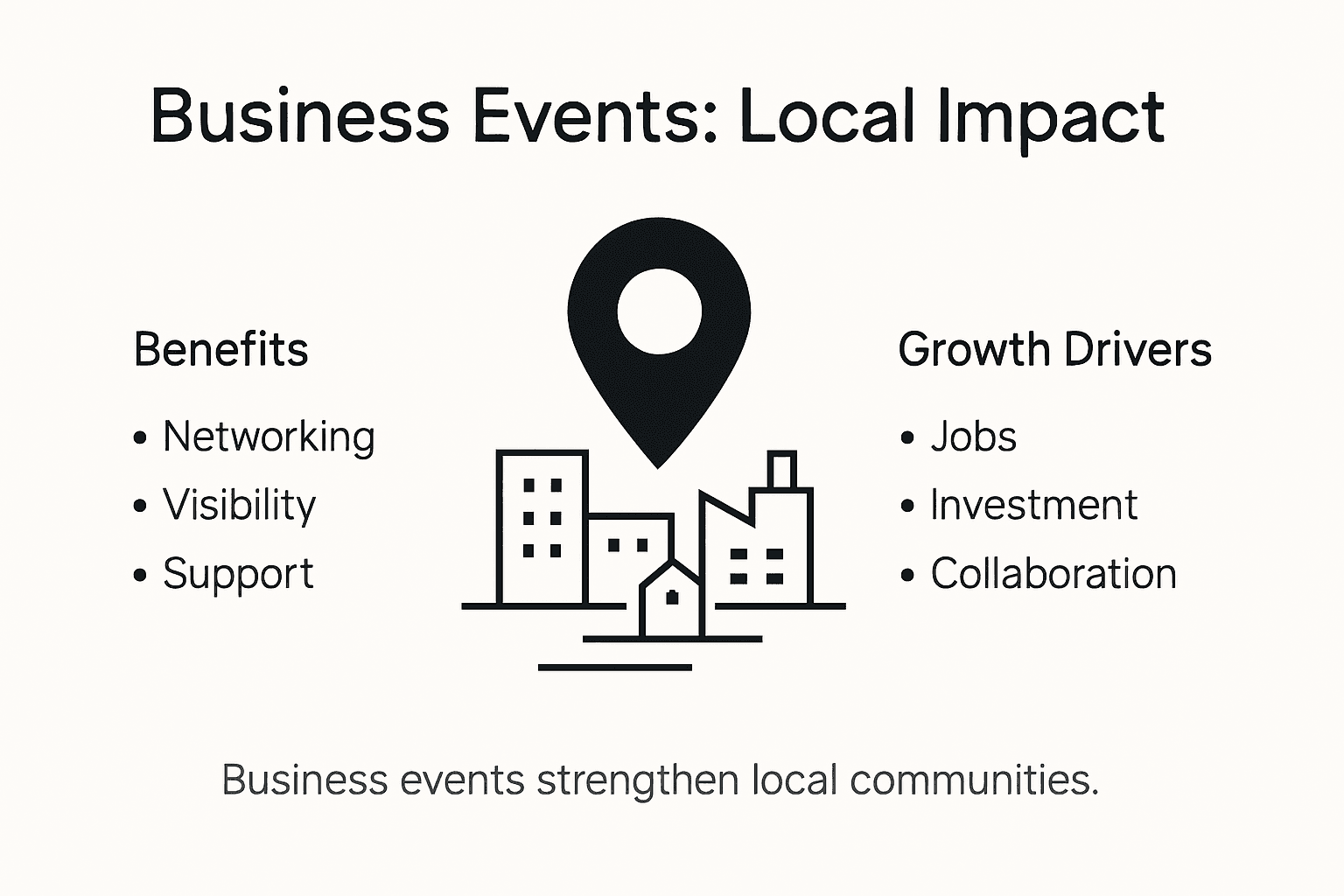
Business events create transformative opportunities for local economic development, extending far beyond immediate interactions. These strategic gatherings serve as catalysts for sustained growth, enabling Waterlooville businesses to unlock new potential through collaborative experiences. By fostering meaningful connections, these events generate lasting impacts that ripple through the local economic ecosystem, supporting innovation and community advancement.
Long-term strategic benefits for local businesses include:
- Knowledge Exchange: Continuous learning and skill development
- Network Expansion: Building robust professional relationships
- Market Visibility: Increased brand recognition and credibility
- Talent Attraction: Drawing skilled professionals to the area
- Investment Opportunities: Creating pathways for business growth
Waterlooville’s regeneration strategy emphasizes leveraging business events as key mechanisms for economic revitalization. These events serve more than immediate networking purposes - they are strategic tools for urban development, community engagement, and sustainable economic progress. By consistently hosting high-quality professional gatherings, local businesses can position Waterlooville as a dynamic, forward-thinking commercial hub that attracts talent, investment, and innovative enterprises.
Pro tip: Develop a comprehensive event participation strategy that aligns with your long-term business goals, tracking measurable outcomes to demonstrate the tangible value of your professional networking investments.
Unlock Business Growth in Waterlooville Through Strategic Events
Organizing business events is a powerful way to overcome challenges like building meaningful connections, increasing local visibility, and driving community engagement. Whether you are a small entrepreneur or part of a larger organization, crafting clear objectives and measuring success are crucial for turning events into opportunities for growth and lasting partnerships. Key pain points such as navigating financial and logistical hurdles or enhancing brand trust are common but fully addressable with the right local support and platforms.
Waterlooville.co connects you with essential resources and local businesses to help you plan and promote impactful events that resonate with your community. From finding trusted service providers to exploring venues or tapping into the local network for collaboration, our comprehensive guide empowers you to transform events into catalysts for economic and social success.
Ready to make your next business event a standout success in Waterlooville?

Discover how Waterlooville.co can support your journey every step of the way. Explore our trusted business directories and community insights now and seize the opportunity to build stronger professional relationships in the heart of Hampshire. Visit Waterlooville.co today and start turning your event goals into remarkable local growth.
Frequently Asked Questions
What are the primary objectives of organizing business events?
Business events aim to achieve various objectives such as knowledge sharing, networking, skill development, and brand visibility, all contributing to organizational growth and community engagement.
How can local businesses leverage events for community engagement?
Local businesses can organize workshops, networking events, and cultural festivals to connect with the community, showcase their offerings, and build lasting relationships with residents and other businesses.
What are some common challenges faced in business event planning?
Key challenges include budgeting, legal compliance, venue selection, technology integration, and managing unforeseen issues, all of which require strategic planning to overcome and ensure a successful event.
How do business events contribute to long-term growth for businesses?
Business events foster long-term growth by promoting continuous knowledge exchange, expanding professional networks, enhancing market visibility, attracting talent, and creating investment opportunities.