
Why Support Local Youth: Impact on Community Life
Discover why supporting local youth matters, the benefits for Waterlooville families, how it strengthens community bonds, and ways to get involved.
Why Support Local Youth: Impact on Community Life

Every parent faces questions about how to help their teenager feel connected in Waterlooville, especially when typical activities fall short or spark debates at home. Knowing what truly supports youth goes beyond keeping them busy—it means tapping into local youth support that treats young people as active contributors in their own community. With strong research showing that meaningful participation empowers teens and strengthens family bonds, you’ll discover practical, inclusive ways to guide your child toward thriving personally and socially.
Table of Contents
- Defining Local Youth Support And Common Myths
- Major Benefits For Families And Teens
- Strengthening Community Ties Through Engagement
- Education, Skills, And Future Opportunities
- Risks Of Inaction And Missed Community Potential
Key Takeaways
| Point | Details |
|---|---|
| Youth Engagement is Essential | Local youth support programs are crucial for fostering skills, confidence, and community involvement among teenagers. |
| Myths About Teen Contributions | Misconceptions that teens are too immature for significant roles can hinder their participation and growth. |
| Broader Benefits for All Teens | Youth programs benefit all teenagers, providing them with opportunities for friendship, skill development, and belonging. |
| Community and Economic Impacts | Investing in youth engagement positively influences community cohesion and reduces future economic burdens. |
Defining Local Youth Support and Common Myths
Local youth support refers to community-based programs, services, and initiatives designed to help young people develop skills, build confidence, and engage meaningfully in their communities. Unlike formal schooling, these activities happen outside the classroom and focus on personal growth, social connection, and practical learning. In Waterlooville, this might look like after-school programs at local community centers, volunteer opportunities with neighborhood organizations, or youth councils where teenagers help shape decisions affecting their town. The key distinction is that local youth support treats young people as active participants rather than passive recipients of services connecting them to their immediate surroundings and the people who live there.
When you think about supporting local youth, you might have picked up some misconceptions along the way. One of the biggest myths is that teenagers are too immature or irresponsible to contribute meaningfully to their communities. This couldn’t be further from the truth. Meaningful youth participation in community governance shows that young people bring fresh perspectives, energy, and genuine investment in making their neighborhoods better. They’re not just sitting on the sidelines—they’re actively shaping decisions about issues that directly affect them. Another common belief is that teenagers primarily need protection and supervision rather than real opportunities to lead and take on responsibility. The reality is that when youth lack engaging, purposeful activities, it actually harms their development and weakens community bonds overall. Young people thrive when given genuine chances to contribute, make decisions, and see the results of their efforts.
Another persistent myth suggests that local youth support is only for kids facing serious problems or disadvantages. Truth is, these programs benefit all teenagers regardless of their circumstances. Whether your teenager attends grammar school or struggles academically, whether they’re naturally outgoing or more reserved, local youth engagement offers something valuable. These activities build practical skills like communication and problem-solving, create genuine friendships with peers who share interests, and give young people a genuine sense of belonging to something larger than themselves. Many parents worry that getting involved takes too much time or costs too much money, but community-based youth support in areas like Waterlooville is often affordable or free, fitting naturally into existing schedules.
Here’s a comparison of common myths versus the realities of local youth support:
| Common Myth | Actual Reality | Positive Outcomes |
|---|---|---|
| Teens are too immature to help communities | Teens offer unique perspectives and real investment | Fresh ideas, improved local problem-solving |
| Youth need only supervision, not leadership roles | Leadership fosters skill-building and responsibility | Greater confidence, stronger community ties |
| Only at-risk teens benefit from support | All youth gain from engagement | Broader friendships, enhanced skills for everyone |
| Youth programs are too costly or time-consuming | Many are low-cost or free and fit into busy lives | Increased participation, accessible for all families |
Pro tip: Start by asking your teenager what activities genuinely interest them—sports, creative pursuits, volunteering, or activism—then search Waterlooville.co’s local business directory and community resources to find organizations offering those specific programs in your area.
Major Benefits for Families and Teens
When your teenager gets involved in local youth activities, the benefits ripple outward in ways that affect your entire family. Start with academics—studies show that family engagement positively impacts youth outcomes including academic performance, social-emotional development, and reduced behavioral risks. But it goes deeper than grades. Teenagers who participate in community programs develop stronger communication skills, learn to work with people different from themselves, and gain confidence that carries into every aspect of their lives. For parents in Waterlooville, this means watching your teenager grow into someone more resilient, more self-assured, and better equipped to handle life’s challenges. The relationship between you and your teen often improves too, because you are now supporting something they genuinely care about rather than forcing participation in activities they resent.
The mental health benefits deserve their own spotlight. Young people who engage in purposeful community activities report lower stress levels, stronger friendships, and a genuine sense of belonging. This matters especially for teenagers who might feel isolated or struggle with anxiety. When they find their people—whether that’s a volunteer group, a youth council, or a sports team—they develop real connections that combat loneliness and build genuine support networks. Beyond individual benefits, student and community engagement creates better mental health outcomes and strengthens the entire family unit through improved communication and shared values. Parents often discover that their teenagers become more open about what’s happening in their lives, more willing to seek help when needed, and more thoughtful about their future.
For your family specifically, local youth support builds something that can’t be manufactured—a sense of investment in the community you actually live in. Your teenager starts to care about Waterlooville not as just the place they sleep, but as a community they are actively helping to shape. This perspective shift influences everything from how they treat neighbors to their long-term commitment to making positive change. Families also benefit from the practical outcomes: teenagers gain marketable skills like teamwork and leadership, develop hobbies and interests outside screens, and sometimes discover genuine career directions. Parents report feeling less worried about their teenagers’ free time being wasted and more confident about their overall development trajectory.
The following table summarizes the key benefits of local youth engagement for families, communities, and teens:
| Benefit Area | Families | Communities | Teenagers |
|---|---|---|---|
| Relationship Building | Stronger parent-teen bonds | Intergenerational connections | Close peer friendships |
| Skill Development | More confident children | Local talent pipelines | Leadership, teamwork, resilience |
| Mental Health | Reduced family stress | Lower community isolation | Decreased anxiety, greater belonging |
| Future Opportunities | Insight into child’s interests | Stronger local economies | Exposure to careers, life skills |
Pro tip: Attend one community event with your teenager to show genuine support, then step back and let them take the lead in subsequent activities—this balance communicates that you value their choices while staying involved without hovering.
Strengthening Community Ties Through Engagement
When teenagers actively participate in local youth programs, something shifts in how they view their community. They stop seeing Waterlooville as just a place where things happen to them and start seeing it as a place where they can make things happen. This transformation creates stronger bonds between young people and their neighbors, between families and local organizations, and across different age groups who might not otherwise interact. Community-engaged educational programs foster democratic values and social inclusion while enriching both young people and the adults around them. When your teenager volunteers at a local food bank, joins a community cleanup, or participates in a youth council, they are literally weaving themselves into the fabric of the neighborhood. They meet business owners, local leaders, and other families. They understand which services exist and how to access them. They develop genuine relationships based on shared purpose rather than proximity alone.

This kind of engagement creates what researchers call “social cohesion”—the glue that holds communities together. Strong communities have lower crime rates, better support networks during crises, and residents who actually know their neighbors. Think about the difference between a neighborhood where people keep to themselves and one where there is genuine connection and mutual support. Local youth involvement accelerates that transformation. When teenagers are visible and active in community spaces, other residents notice. Young people volunteering at events, speaking up in community meetings, or helping with neighborhood projects remind adults that the town has a future and that young people care about it. Volunteering programs and collaborative community events build strong community ties while fostering intergenerational partnerships that benefit everyone involved. A teenager who shows up consistently to help with local projects becomes someone the community knows and trusts, not a stereotype.
For parents specifically, this engagement means your family becomes part of something larger. You attend events where other families from Waterlooville gather. Your teenager introduces you to people they have met through activities. You start to care about local issues because your teenager cares about them. Over time, you develop your own connections and investments in the community. The side benefit is that your teenager feels safer in a neighborhood where they are known and valued. They have adults beyond parents who notice them, encourage them, and hold them accountable. This creates a genuine village environment—the kind where teenagers make better choices because they know actual people who would be disappointed by poor ones.
Pro tip: Start with one local organization or event your teenager shows interest in, then gradually expand as they make connections and develop loyalty to specific causes or groups in Waterlooville.
Education, Skills, and Future Opportunities
Local youth programs do something that traditional classroom instruction alone cannot accomplish: they teach real-world skills in real-world contexts. When your teenager participates in community activities, they develop transferable skills that employers actively seek. Communication improves when they work alongside peers from different backgrounds. Leadership emerges naturally when they take on responsibilities in volunteer settings. Problem-solving becomes tangible when they help tackle actual community challenges rather than solving textbook problems. These experiences complement formal schooling by showing teenagers how their academic learning connects to meaningful work. Beyond the practical benefits, youth participation in shaping education and skills development demonstrates that young people who actively engage in their communities develop stronger connections to learning itself. They understand why education matters because they see how it applies to issues they care about.
The skills gap facing modern teenagers is real. Many young people lack exposure to the digital competencies, job-specific knowledge, and foundational abilities that employers expect. Local youth programs help close this gap by providing hands-on experience in areas like project management, digital literacy, financial responsibility, and collaboration. A teenager who volunteers at a local nonprofit learns how organizations operate, what different roles exist, and what skills those positions require. Someone who joins a youth council discovers how community decisions get made and what policy discussions actually sound like. These insights shape career thinking in ways that generic career counseling cannot match. Adolescents require foundational, digital, and transferable skills to thrive amid changing economic demands, and community engagement provides authentic environments where these skills develop naturally.
Perhaps most importantly, local youth involvement helps teenagers envision futures they might not have considered otherwise. When they meet local business owners, nonprofit leaders, and civic figures through community activities, they see real career pathways. A teenager might discover they enjoy working with younger children through a mentoring program, or realize they have talent for event planning through organizing community gatherings. These discoveries often lead to concrete goals and motivated academic effort. Parents also benefit from this clarity—you gain insight into your teenager’s genuine interests and strengths rather than relying solely on what they report about their day. The combination of skills development, career exposure, and increased academic motivation creates a foundation for genuine opportunity in whatever direction your teenager ultimately chooses.
Pro tip: Help your teenager identify skills they developed during community activities and encourage them to articulate these on school assignments, job applications, and college essays to demonstrate real-world capability beyond grades.
Risks of Inaction and Missed Community Potential
When communities fail to invest in youth engagement and development, the consequences extend far beyond individual teenagers. The reality is stark: teenagers without meaningful opportunities to develop skills, build relationships, and contribute to their communities face significantly worse long-term outcomes. Youth without adequate support experience increased rates of crime, reduced mental health outcomes, and diminished community cohesion. When young people lack constructive outlets and genuine connections to their neighborhoods, they are more likely to drift into destructive behaviors, experience isolation, and struggle with employment later. But the impact does not stop with individual teenagers. A community that neglects youth engagement becomes a community with higher crime rates, weaker social bonds, and less capacity to handle crises together. What starts as a lack of funding for youth programs compounds into broken neighborhoods where people do not know their neighbors and do not feel invested in collective well-being.
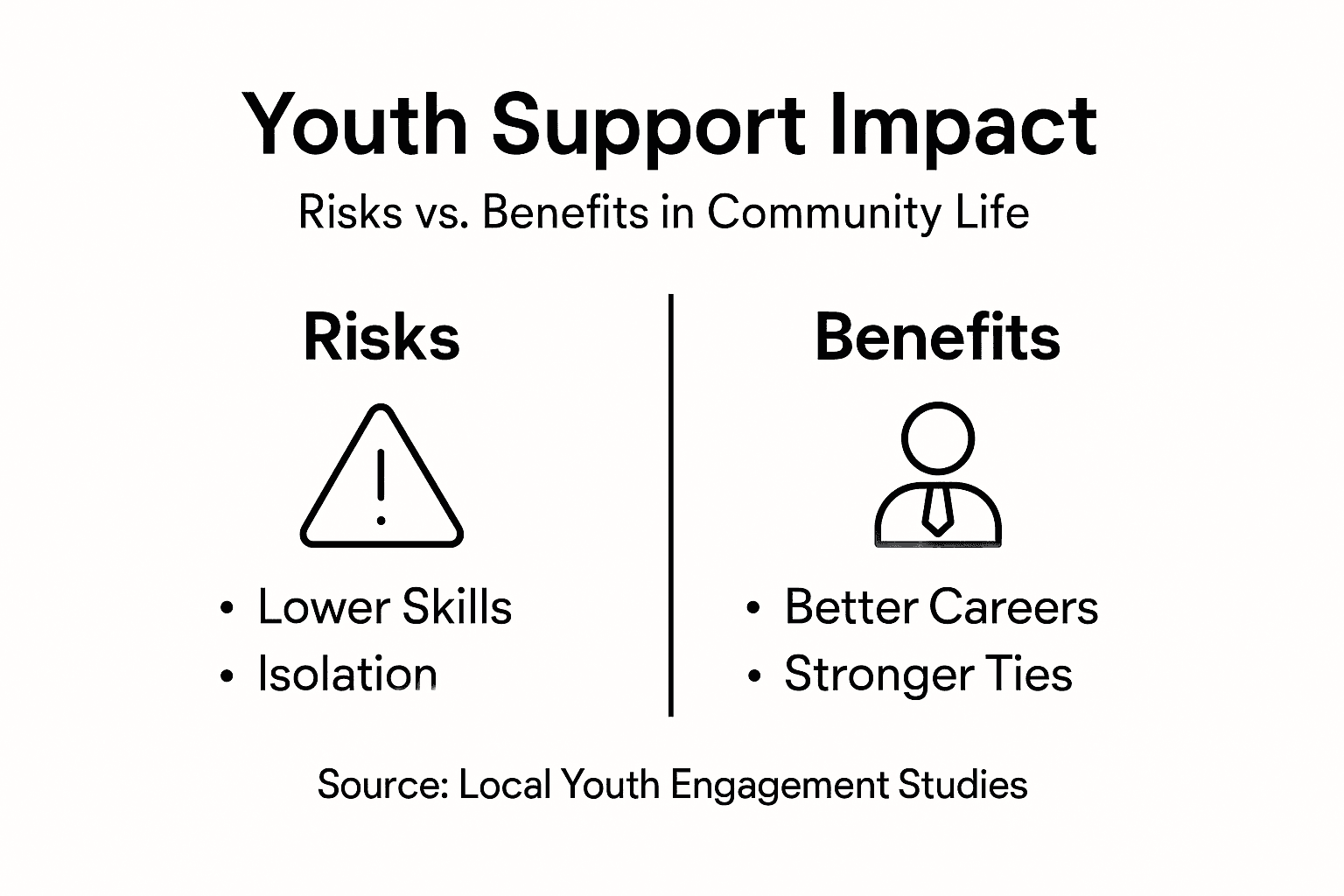
Consider the economic costs. Teenagers without skills development, mentorship, and exposure to career pathways struggle to secure stable employment as adults. This creates a ripple effect: lower incomes mean less tax revenue, greater reliance on social services, and reduced spending in local businesses. Waterlooville itself becomes less vibrant when young people lack reasons to stay engaged and invested in their future. Research demonstrates that inadequate investment in youth education and skills development results in lost economic potential and increased inequality across societies. When you add up the costs of increased incarceration, mental health interventions, unemployment benefits, and lost productivity, the failure to support youth becomes far more expensive than the initial investment would have been. This is not abstract policy talk—this is about whether Waterlooville thrives or stagnates economically over the next two decades.
For your family specifically, inaction carries personal risk. Without community engagement opportunities, your teenager faces higher risk of depression, anxiety, and behavioral problems during formative years. They miss chances to discover their strengths, build their confidence, and develop the resilience needed for adult challenges. They also miss the protective factor that genuine community connection provides—adults who notice them, care about their development, and provide accountability. The teenage years will pass either way. The question is whether your teenager will emerge with skills, relationships, and a sense of purpose, or isolated with fewer options and less direction. Supporting local youth is not charity—it is a practical investment in the kind of community and the kind of teenager you want to have in five years.
Pro tip: Document how your teenager is developing through youth involvement by taking notes on new skills they mention, relationships they form, and ways their thinking shifts—this tangible evidence of growth will motivate continued engagement and reinforce the real value happening.
Empower Your Teenager and Strengthen Waterlooville Today
Supporting local youth means more than just providing activities. It means giving your teenager real opportunities to develop confidence, leadership, and a true sense of belonging within our community. If you worry about missed chances for your child to gain valuable skills or to connect with others beyond the classroom, you are not alone. Local youth programs empower young people to become active participants who help shape Waterlooville’s future while building friendships and resilience.

Explore Waterlooville.co for the latest resources and community events that connect your teenager to local organizations, volunteer opportunities, and activities designed to fit busy family schedules. Discover trusted local businesses and service providers that support youth engagement efforts throughout Waterlooville, Cowplain, Denmead, and Purbrook. Take the first step by visiting Waterlooville.co today to find meaningful youth programs near you and help your family invest in a stronger, healthier community now.
Frequently Asked Questions
What is local youth support?
Local youth support refers to community-based programs and initiatives designed to help young people develop skills, build confidence, and engage meaningfully in their communities, often outside the formal education system.
Why is it important for teens to participate in community programs?
Participation in community programs allows teens to develop essential life skills, foster leadership, build friendships, and gain a sense of belonging, which contributes positively to their mental health and personal growth.
How does local youth engagement benefit families?
When teens engage in local youth activities, families often see improved relationships, reduced stress, and a stronger sense of community. Parents also gain insights into their teenager’s interests and strengths.
What risks can arise from a lack of support for local youth?
Without adequate support, young people may experience higher rates of mental health issues, isolation, and reduced opportunities, which can ultimately lead to negative outcomes for both individuals and the community as a whole.
Recommended
- Blog - Waterlooville News, Tips & Community Stories | Waterlooville.co
- Areas We Cover | Waterlooville Directory | Waterlooville.co
- Waterlooville High Street - Waterlooville Directory | Waterlooville.co
- Editorial Articles | Waterlooville Directory | Waterlooville.co
- Why Choose Local Contractors for Home Projects - J. A. Kelly Contracting Services
- Local Service Marketing Basics: Winning More Local Jobs