
Why Update Business Hours – Boosting Local Trust
Why update business hours? Learn how accurate listings build trust, improve customer engagement, and support local business success in Waterlooville.
Why Update Business Hours – Boosting Local Trust

Most American consumers expect a simple answer when it comes to business hours, but confusion remains widespread. With over 60 percent of shoppers frustrated by outdated or unclear scheduling, the true cost can be missed connections and lost sales. Understanding why American businesses set their hours the way they do helps customers avoid disappointment and gives owners practical ways to stand out in a crowded market.
Table of Contents
- Defining Business Hours And Common Misconceptions
- How Accurate Hours Benefit Local Communities
- Impact On Customer Satisfaction And Sales
- Risks Of Outdated Hours For Businesses
- Best Practices For Keeping Hours Updated
Key Takeaways
| Point | Details |
|---|---|
| Business Hours Vary | Operating hours differ significantly across regions and industries, influenced by customer demand, regulations, and local market conditions. |
| Importance of Accurate Hours | Accurate business hours enhance customer trust and satisfaction, leading to improved community engagement and operational efficiency. |
| Risks of Outdated Hours | Maintaining incorrect business hours can damage a company’s reputation and result in lost revenue and customer trust. |
| Best Practices for Updates | Regularly auditing and updating business hours across all platforms is essential for effective communication and customer relationship management. |
Defining Business Hours and Common Misconceptions
Business hours represent the designated timeframes during which commercial establishments are open and accessible to customers. These operational windows are not universal but instead vary dramatically across different industries, regions, and cultural contexts.
According to research on business hours, standard work periods typically range from 9 am to 5 pm in Western countries, though significant variations exist worldwide. Some businesses operate extended hours, while others maintain more limited schedules based on customer demand, local regulations, and industry standards. Regional differences play a substantial role in determining when companies choose to be open.
Common misconceptions about business hours frequently emerge from assumptions of uniformity. Consumers often mistakenly believe all businesses within a specific sector or geographic area maintain identical operating times. In reality, factors like local market conditions, customer preferences, staffing availability, and economic considerations significantly influence individual business scheduling decisions. Small local shops might have entirely different hours compared to larger corporate establishments, even within the same community.
Key characteristics that impact business hour determination include:
- Customer traffic patterns
- Seasonal demand fluctuations
- Local workforce availability
- Regulatory constraints
- Economic sustainability of extended hours
Understanding these nuanced factors helps both business owners and consumers navigate operational expectations more effectively and reduce potential scheduling misunderstandings.
How Accurate Hours Benefit Local Communities
Accurate business hours serve as a critical communication tool that directly impacts community engagement and customer satisfaction. When local businesses maintain transparent and reliable operating times, they create a foundation of trust and predictability that resonates throughout the entire community.
Maintaining accurate business hours enhances customer convenience by allowing individuals to plan visits effectively, reducing frustrating and time-consuming wasted trips. This level of attentiveness demonstrates a genuine commitment to customer needs and fosters positive sentiment among local residents. When people can depend on consistent and clearly communicated business hours, they feel respected and valued.
Optimizing business hours goes beyond simple scheduling convenience. It represents a strategic approach to meeting community needs by ensuring adequate staffing during peak periods, which leads to reduced wait times and improved service quality. Small businesses that carefully align their hours with local workforce patterns and customer preferences position themselves as responsive and integral community resources.
Key community benefits of accurate business hours include:
- Reduced customer frustration
- Enhanced local economic efficiency
- Improved community planning capabilities
- Stronger trust between businesses and residents
- More predictable local service experiences
Ultimately, transparent and well-planned business hours transform simple operational information into a powerful tool for building community connections and demonstrating genuine customer care.
Impact on Customer Satisfaction and Sales
Customer satisfaction represents a critical metric that directly correlates with accurate business hours and operational transparency. When businesses provide clear, reliable scheduling information, they create a foundational trust that significantly impacts consumer perception and future interactions.
Efficient customer service leads to faster issue resolution and higher overall satisfaction levels. Businesses that strategically align their hours with customer needs demonstrate a commitment to accessibility, which translates into tangible benefits like increased customer loyalty and reduced friction in service experiences. The ability to predict and meet customer expectations becomes a powerful differentiator in competitive markets.
Superior customer service directly influences revenue and profitability. Satisfied customers are more likely to make repeat purchases and spend more per transaction, while positive word-of-mouth recommendations can attract new clientele. This creates a virtuous cycle where transparent communication about business hours becomes a strategic tool for business growth and community engagement.
Key impacts on customer satisfaction and sales include:
- Reduced customer wait times
- Enhanced predictability of service availability
- Increased trust and brand reliability
- Higher likelihood of repeat business
- Improved overall customer experience
Ultimately, accurate business hours transform from mere scheduling information into a sophisticated customer relationship management strategy that can significantly boost a business’s competitive position and financial performance.
Risks of Outdated Hours for Businesses
Business reputation stands as one of the most vulnerable assets when operating with inaccurate or outdated hours of operation. The digital age has transformed how customers interact with businesses, making transparent and current scheduling information more critical than ever for maintaining professional credibility.

Outdated business hours can precipitate significant customer frustration, potentially resulting in negative online reviews and lasting damage to the business’s reputation. When customers arrive during what they believe are standard operating times, only to find a closed establishment, their disappointment quickly transforms into a sense of disrespect. These experiences frequently translate into lost future business and negative word-of-mouth recommendations that can significantly impact a company’s customer acquisition efforts.
Undefined business hours extend beyond customer service challenges and can create substantial legal and operational risks. Ambiguous or incorrect scheduling information may lead to contractual misunderstandings, potential litigation, and operational disruptions that can prove costly for businesses. Professional service providers, in particular, face heightened risks when their published hours do not accurately reflect actual accessibility.
Key risks associated with outdated business hours include:
- Permanent customer trust erosion
- Increased negative online reviews
- Potential revenue loss
- Legal and contractual complications
- Reduced competitive marketplace positioning
- Diminished brand reliability
Effective businesses recognize that accurate hours are more than mere scheduling information—they represent a critical communication channel that directly impacts customer relationships, operational efficiency, and long-term organizational success.
Best Practices for Keeping Hours Updated
Business scheduling represents a dynamic landscape that requires consistent attention and proactive management. Successful organizations understand that maintaining accurate operational hours is not a one-time task but an ongoing commitment to customer communication and service excellence.
Regularly auditing and updating business hours across multiple platforms ensures customers receive consistently accurate information. This practice prevents missed opportunities and significantly enhances overall customer satisfaction. Businesses should implement systematic review processes that include checking hours on websites, social media profiles, online directories, and third-party listing platforms to eliminate potential discrepancies.
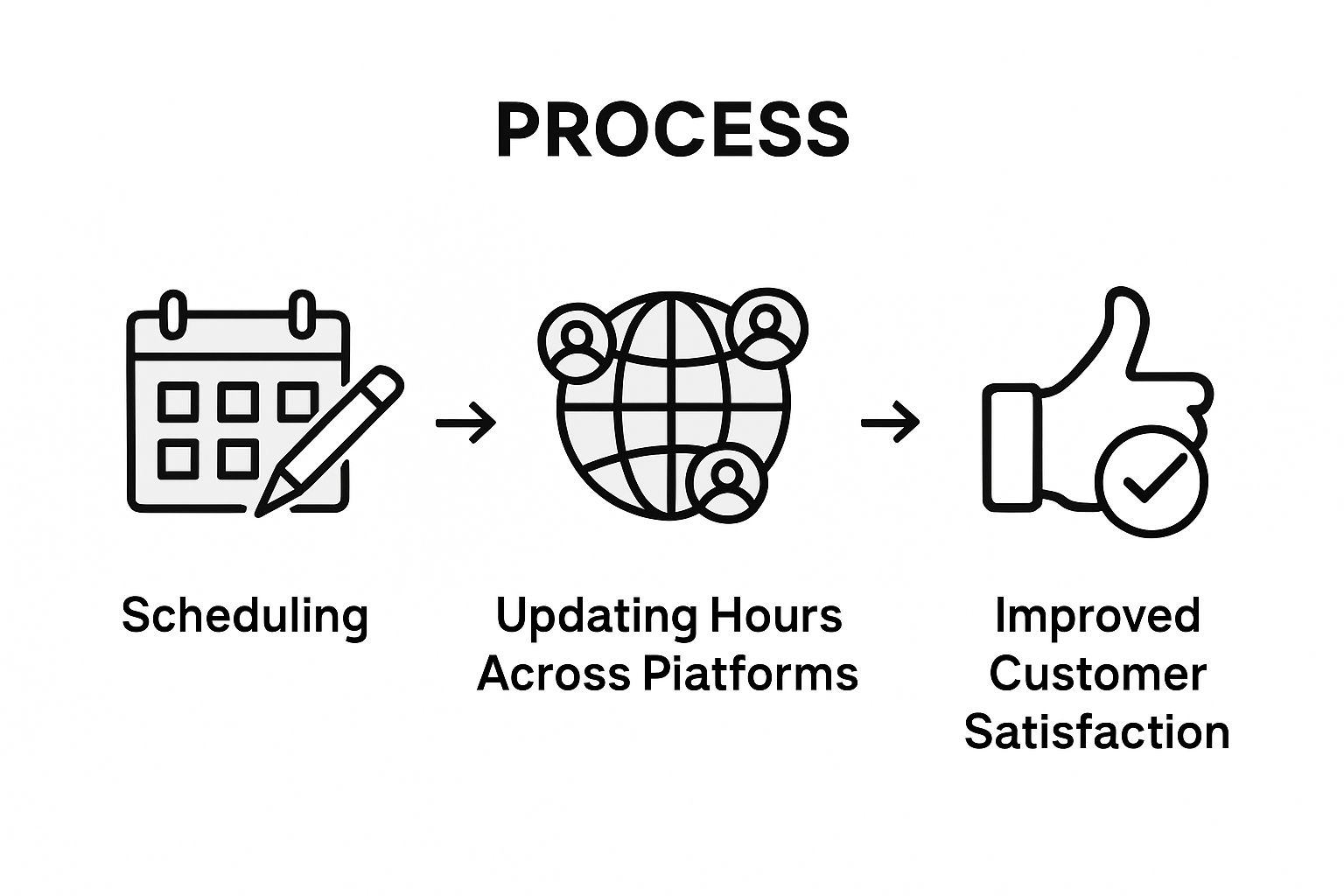
Consistent listing of precise business hours across digital platforms dramatically enhances customer trust and professional credibility. Modern consumers rely heavily on online information, making it critical to project a transparent and reliable image through meticulously maintained scheduling details. Technological tools and automated systems can help streamline this process, reducing manual tracking efforts and minimizing human error.
Key strategies for maintaining updated business hours include:
- Conduct monthly digital platform audits
- Use scheduling management software
- Set automatic update reminders
- Train staff on hour change protocols
- Create a centralized hour tracking system
- Implement real-time communication channels
Effective hour management transforms from an administrative task into a strategic customer relationship tool that communicates professionalism, reliability, and commitment to exceptional service experiences.
Elevate Your Business Reputation with Updated Hours in Waterlooville
Accurately updating your business hours is essential to building trust and reliability in the local Waterlooville community. The article highlights how outdated or inconsistent scheduling creates frustration, lost sales, and potential damage to your professional reputation. Customers expect clear communication about when your services like hair salons or heating engineers are available. Staying current with your operational hours demonstrates genuine care and commitment to meeting community needs while reducing confusion and missed opportunities.

Explore how Waterlooville.co supports local businesses by featuring up-to-date hours, customer reviews, and vital contact details all in one place. Take control now by getting your business listed or updated to ensure customers find accurate, reliable information every time. Don’t let outdated hours hold you back. Visit Waterlooville.co today and connect with your community in the most transparent way. Your next customer is waiting.
Frequently Asked Questions
Why is it important to keep business hours updated?
Keeping business hours updated helps build trust with customers, reducing frustration and ensuring they have accurate information before visiting. It enhances customer satisfaction and encourages repeat business.
What are the risks of having outdated business hours?
Outdated business hours can lead to customer dissatisfaction, negative reviews, loss of revenue, and possible legal complications. It can also harm a business’s reputation and customer trust.
How can businesses effectively manage their operating hours?
Businesses can effectively manage their operating hours by regularly auditing their hours across platforms, using scheduling management software, and setting reminders for updates. Consistent communication with customers is essential.
What are the community benefits of accurate business hours?
Accurate business hours foster community trust, enhance planning capabilities for customers, reduce their frustration, and contribute to the local economy by improving the efficiency of local businesses.