
Why Use Local Suppliers: Impact on Waterlooville
Why use local suppliers? Learn how buying local boosts Waterlooville’s economy, strengthens community ties, and ensures service reliability for residents.
Why Use Local Suppliers: Impact on Waterlooville

Choosing a supplier is more than just a business decision for many Waterlooville families and small business owners. Local suppliers bring real value by keeping resources and opportunities right in the community while making supply chains more flexible and reliable. When you know what sets local businesses apart, you can make choices that boost Waterlooville’s economic health, provide dependable service, and create deeper connections with those who share your neighborhood. Local suppliers are at the heart of building a stronger, more resilient community.
Table of Contents
- Defining Local Suppliers And Their Role
- Types Of Local Suppliers In Waterlooville
- How Local Sourcing Supports Community Growth
- Economic And Environmental Benefits Explained
- Challenges And Misconceptions About Buying Local
Key Takeaways
| Point | Details |
|---|---|
| Role of Local Suppliers | Local suppliers enhance community resilience by creating jobs and supporting local economies. |
| Economic and Environmental Benefits | Local sourcing fosters economic growth and reduces environmental impact through shorter supply chains. |
| Challenges and Misconceptions | Local suppliers may have higher costs, and sourcing can involve complex challenges that demand careful evaluation. |
| Commitment to Community | Prioritizing suppliers dedicated to community development enhances social capital and fosters sustainable economic dynamics. |
Defining Local Suppliers and Their Role
Local suppliers represent businesses and service providers operating within a specific geographic region, typically serving communities like Waterlooville and surrounding areas. Local procurement strategies emphasize purchasing goods and services from domestic enterprises that create tangible economic value for the immediate community.
In practical terms, local suppliers can be defined through multiple interconnected criteria. These include geographic proximity, local business ownership, and the ability to produce or deliver products and services within a relatively compact regional area. Supply chain research indicates that local suppliers play a critical role in creating resilient economic ecosystems that can rapidly respond to changing market conditions and potential disruptions.
The landscape of local suppliers in Waterlooville encompasses various sectors, from small manufacturing workshops to professional service providers, independent retailers, and specialized craftspeople. These businesses contribute significantly to the local economy by generating employment, supporting regional infrastructure, and maintaining a robust economic network that keeps financial resources circulating within the community.
Pro tip: When searching for local suppliers, prioritize businesses that demonstrate a genuine commitment to community development and offer transparent, personalized service approaches.
Here’s a comparison of the main advantages of engaging with local suppliers versus non-local suppliers:
| Aspect | Local Suppliers | Non-Local Suppliers |
|---|---|---|
| Response Speed | Fast, flexible | Slower, less adaptable |
| Community Benefit | Supports local jobs and growth | Minimal local community impact |
| Environmental Impact | Less transport, reduced emissions | Higher carbon footprint |
| Service Approach | Personalized, relationship-driven | Standardized, less personal |
Types of Local Suppliers in Waterlooville
Waterlooville hosts a diverse ecosystem of local suppliers spanning multiple industries and service sectors. Local supplier categories range from small manufacturing workshops to professional service providers, each contributing uniquely to the community’s economic landscape.
The local supplier network includes several key segments. Retail businesses form a significant component, with independent shops offering specialized products and personalized services. Professional service providers such as plumbers, electricians, heating engineers, and landscapers represent another critical category of local suppliers. These businesses not only meet immediate community needs but also generate local employment and maintain economic circulation within Waterlooville.
Local government supplier networks in the region encompass additional important segments, including infrastructure maintenance contractors, technology service providers, administrative support companies, and social service vendors. These suppliers play a crucial role in supporting municipal functions and community development initiatives, ensuring that Waterlooville’s administrative and social infrastructure remains robust and responsive.
Pro tip: When exploring local suppliers, research their community involvement and track record to ensure you’re supporting businesses genuinely committed to Waterlooville’s economic ecosystem.
How Local Sourcing Supports Community Growth
Local sourcing represents a powerful strategy for driving sustainable economic development in communities like Waterlooville. Local sourcing strategies fundamentally transform economic dynamics by creating interconnected networks of business relationships that generate multiple layers of community benefit.
The economic impact of local sourcing extends far beyond simple financial transactions. When businesses and residents prioritize local suppliers, they create a multiplier effect that strengthens the entire community infrastructure. Each pound spent with a local business typically circulates multiple times within the local economy, generating additional jobs, supporting local tax bases, and creating a more resilient economic ecosystem. Professional services, retail establishments, and small manufacturers all contribute to this intricate economic web.

Community development benefits demonstrate that local sourcing is about more than financial exchanges. It builds social capital by fostering deeper connections between businesses, creating networks of mutual support, and establishing a sense of shared economic destiny. Local suppliers become more than service providers; they transform into community partners invested in collective prosperity and sustainable growth.
Pro tip: Actively seek out local suppliers who demonstrate commitment to community development and maintain transparent, ethical business practices.
Economic and Environmental Benefits Explained
Local sourcing strategies reveal a comprehensive approach to simultaneously addressing economic growth and environmental sustainability. By prioritizing local suppliers, Waterlooville businesses can create a robust economic ecosystem that generates multiple layers of community benefit while minimizing ecological impact.
The economic advantages of local sourcing are particularly profound. When businesses choose local suppliers, they generate a multiplier effect that keeps financial resources circulating within the community. Each transaction supports local jobs, generates tax revenue, and creates a more resilient economic infrastructure. Small businesses and independent suppliers become critical components of this economic network, generating employment opportunities and fostering innovation at the local level.
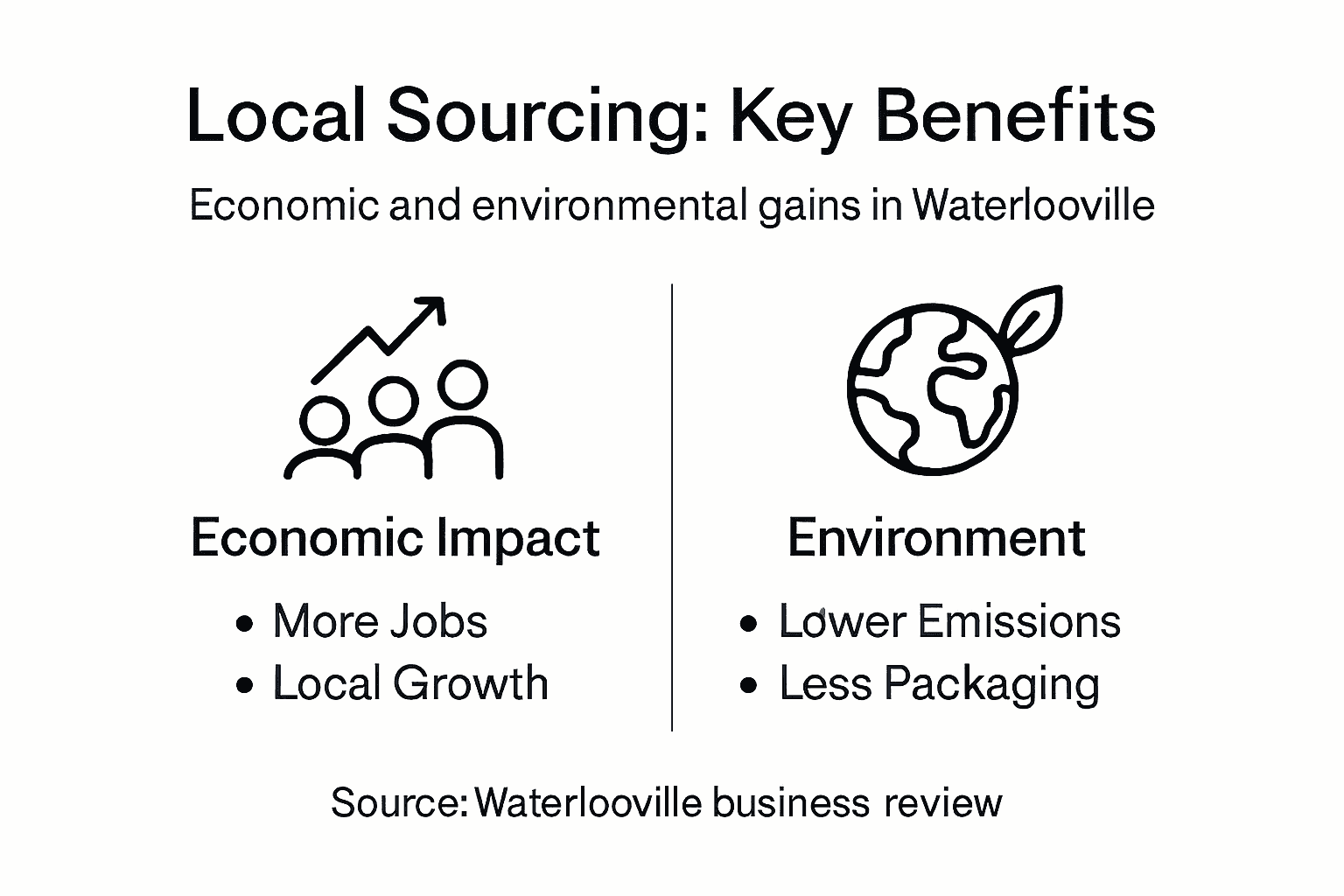
Supply chain sustainability research demonstrates significant environmental benefits beyond traditional economic metrics. Reduced transportation distances mean lower carbon emissions, decreased fuel consumption, and minimal logistical overhead. Local suppliers typically require shorter supply chains, which translates into reduced packaging waste, lower energy consumption, and a more environmentally responsible approach to commerce.
Pro tip: Conduct a comprehensive audit of your current supplier relationships to identify opportunities for transitioning toward local, sustainable procurement strategies.
Challenges and Misconceptions About Buying Local
Local sourcing challenges reveal that buying local is not always a straightforward decision. While supporting community businesses sounds appealing, organizations must navigate complex considerations including product availability, pricing structures, and strategic procurement requirements.
One significant misconception is that local suppliers are automatically less expensive or more reliable than larger, established companies. In reality, local businesses must balance competitive pricing with sustainable operational costs. Some local suppliers might have higher prices due to smaller production scales, but they often compensate through superior customer service, faster response times, and more personalized product offerings. Businesses must carefully evaluate the total value proposition rather than focusing solely on initial purchase price.
Local procurement barriers extend beyond simple economic calculations. Institutional constraints, limited support systems, and structural challenges can complicate local sourcing efforts. Small businesses in Waterlooville frequently face difficulties in meeting complex procurement requirements, scaling their operations, and demonstrating consistent capacity to serve larger organizational needs. Successful local sourcing requires a nuanced approach that considers these multifaceted challenges.
This summary outlines common misconceptions and actual challenges when procuring locally:
| Issue Type | Typical Misconception | Actual Challenge |
|---|---|---|
| Pricing | Always cheaper than big suppliers | May cost more due to lower volume |
| Reliability | Always more reliable | Varied capacity and consistency |
| Procurement | Simple integration | Complex compliance, scaling barriers |
Pro tip: Develop a comprehensive evaluation framework that assesses local suppliers across multiple dimensions including price, quality, reliability, and long-term strategic alignment.
Discover the Power of Local Suppliers in Waterlooville
Supporting local suppliers can feel challenging when balancing price, reliability, and quality. This article highlights common pain points like evaluating the true value beyond cost and overcoming procurement barriers that many Waterlooville residents and businesses face. By choosing suppliers who prioritize community growth and sustainable practices, you contribute to a thriving local economy and reduce environmental impact. Understanding these factors empowers you to make smarter sourcing decisions that benefit everyone around you.
Ready to explore trusted Waterlooville businesses that put community first Explore our comprehensive local business directory featuring highly rated service providers such as heating engineers, plumbers, and retailers dedicated to personalized care.

Start supporting local today and unlock the benefits of a resilient Waterlooville economy. Visit Waterlooville.co to find reliable suppliers with transparent practices that meet your needs. Act now to build stronger community connections while accessing essential services close to home.
Frequently Asked Questions
What are the benefits of sourcing products from local suppliers?
Sourcing products from local suppliers provides numerous benefits, including faster response times, support for local job creation, reduced carbon emissions due to shorter transport distances, and enhanced personalized service. It also helps keep financial resources circulating within the community, creating a more robust local economy.
How does local sourcing contribute to community economic growth?
Local sourcing can stimulate economic growth by creating interconnected networks of businesses. Each purchase made from local suppliers generates a multiplier effect, where the money spent circulates within the community, creating additional jobs and fostering a more resilient economic ecosystem.
What challenges might businesses face when choosing local suppliers?
Businesses may face challenges such as higher prices compared to larger suppliers due to smaller production scales, complex procurement requirements, and potential variability in reliability. It’s essential to evaluate the overall value of local suppliers, not just focusing on initial costs.
Why is it important to consider environmental impact when sourcing locally?
Sourcing locally can significantly reduce environmental impact by decreasing transportation distances, leading to lower carbon emissions and fuel consumption. This promotes a more sustainable and responsible approach to commerce while also supporting local economies.
Recommended
- Areas We Cover | Waterlooville Directory | Waterlooville.co
- Blog - Waterlooville News, Tips & Community Stories | Waterlooville.co
- Best Shops in Waterlooville - Shopping Guide & Retail Directory | Waterlooville.co
- Waterlooville News - Waterlooville Directory | Waterlooville.co
- Why Choose Local Contractors for Home Projects - J. A. Kelly Contracting Services
- Why Choose Local HVAC Company in Louisville & Southern Indiana 2025 - HVAC Service and Repair | Louisville, KY | Project Heating & Cooling
- Why Use Local Locksmiths: Complete Guide for 2025